
HIFI HISTORY: Paul W. Klipsch – the center of everything – 80 years later

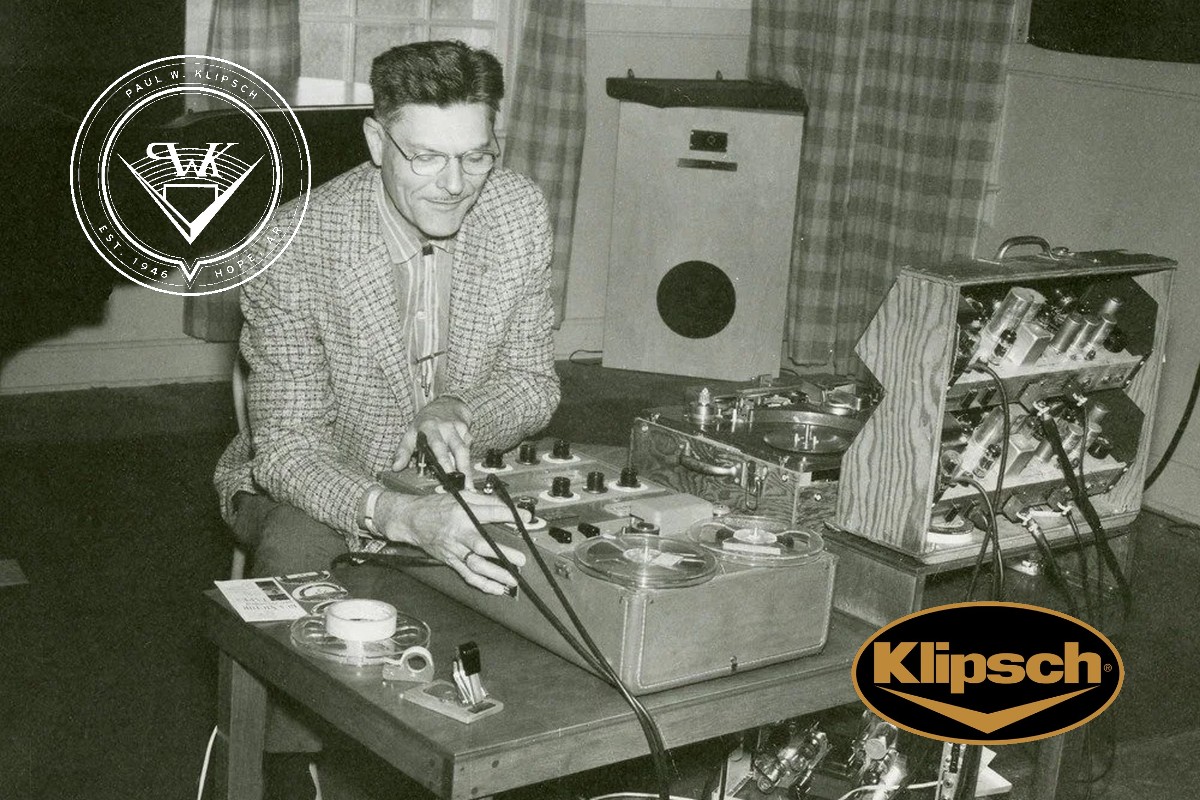
Klipsch is one of the most recognizable loudspeaker brands in the history of hi-fi – especially in the United States, but also in Europe. The brand was founded by Paul W. Klipsch, an engineer who was interested in radio technology, acoustics, and loudspeaker efficiency. His goal was a loudspeaker that could produce live music with the smallest possible distortion and with an efficiently used amplifier power. This idea led to the Klipschorn, a corner loudspeaker introduced into production in 1946, whose influence can still be seen in the Klipsch range even after 80 years.
The Klipsch story begins Paul Wilbur from Klipsch, Born in 1904 in Elkhart, Indiana, but raised in El Paso, Texas. As a young man, he built radios, dabbled in radio technology, experimented with headphones, and became interested in sound reproduction through practical means. This background would later influence his loudspeaker design. The loudspeaker was not primarily a furniture or design product for him; it was an electroacoustic system whose operation had to be justified through measurements and principles of acoustics.
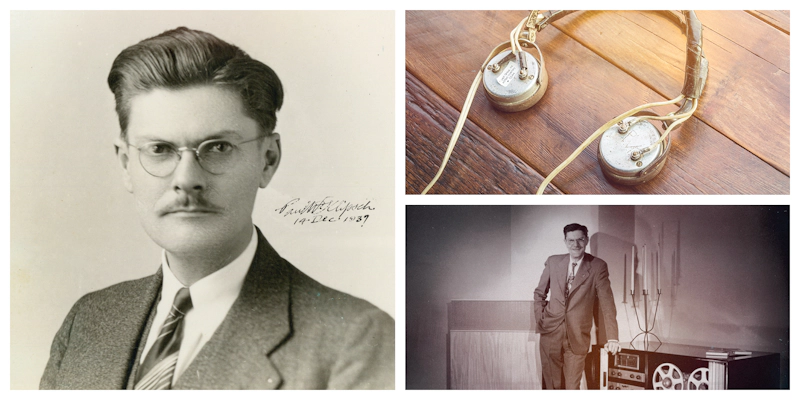
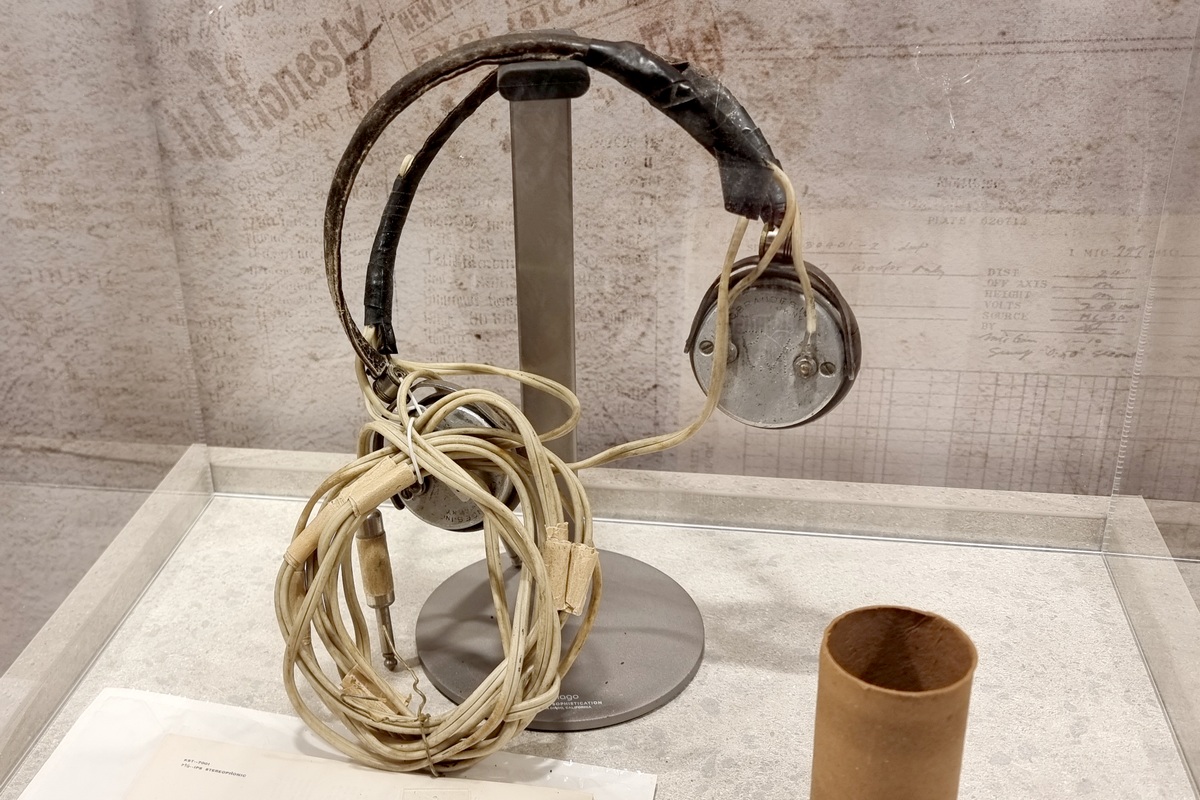
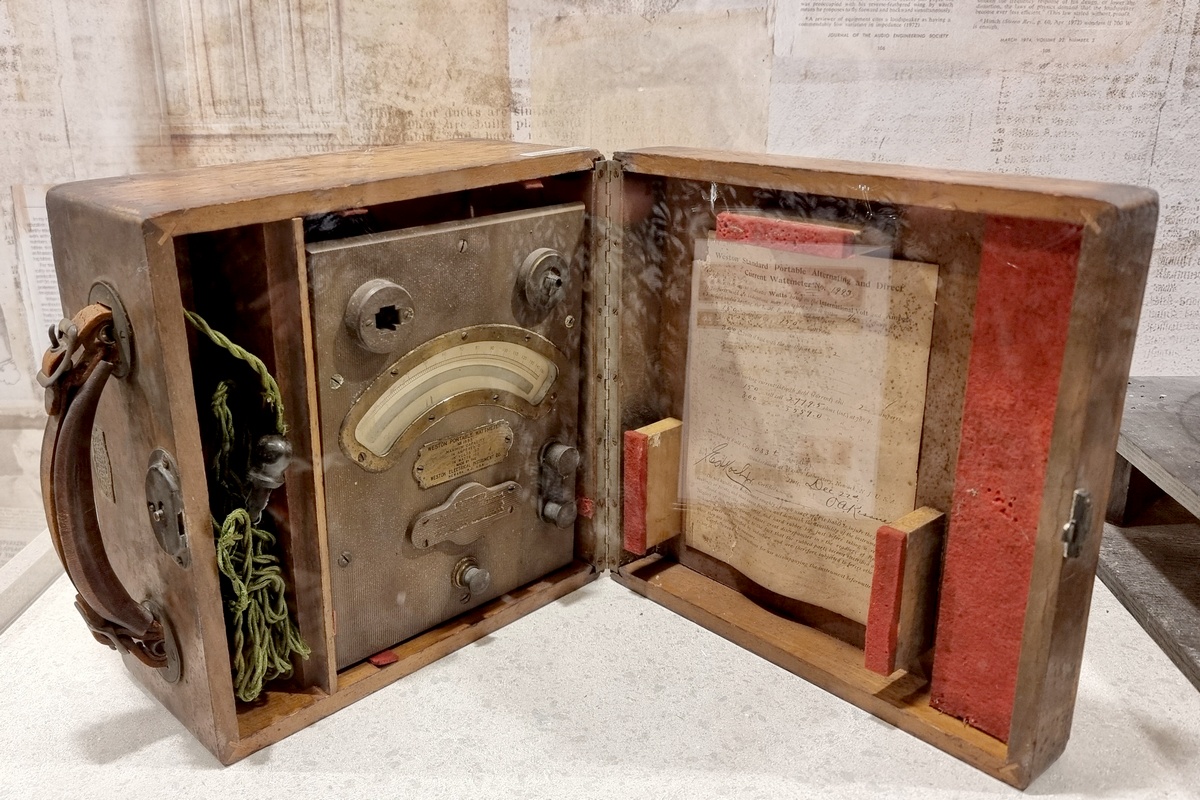
Paul W. Klipsch's early experiments involved radio technology and sound reproduction. As early as age 15, he conducted an acoustic experiment using a small speaker, Brandes headphones, and a cardboard tube, and the radio amateur equipment was part of the same technical background.
Torven’s idea came about “by accident”
Klipsch’s key insight related to the efficiency of the horn speaker. The horn adapts the movement of the speaker element more effectively to the surrounding air, allowing more sound to be produced with the same electrical power. In practice, this meant greater sensitivity, less need for high amplification power, and less movement of the element. In Klipsch’s thinking, this also meant less distortion.
The 1930s were a kind of exploration period for Klipsch. He was not yet a loudspeaker manufacturer; he was an electrical engineer who gained experience in industry, radio technology, and acoustics. He worked, among other places, for General Electric and later for the Anglo-Chilean Consolidated Nitrate Corporation in Chile. In Chile, his interest in horn loudspeakers grew through practical listening experience. Klipsch compared his horn-loaded radio to his friend's transistor radio and noticed that the horn could produce more sound with the same power. In an era when amplifier power was scarce, the efficiency of the loudspeaker was not an afterthought but a key component of the entire audio reproduction system.
Later at Stanford University, Klipsch’s thinking took on a second essential component. He heard an observation that the speakers sounded better in the corner of the room. Klipsch did not regard this as just an investment tip, but as an acoustic opportunity. If the walls and corners of the room affected the speaker’s performance, they could be used as part of the speaker’s structure.
From these observations, the basic idea of the Klipschorn began to take shape: a loudspeaker placed in a corner, where the room is not a problem but part of the bass sound. The solution did not remain only an idea, but also progressed to the patent level. Klipsch’s early US 2,310,243, “Horn for loud-speaker”, was filed in 1940 and granted in 1943. It concerned a folding loudspeaker structure where the acoustic length of the horn could be accommodated in a shorter physical structure. This was essential because the biggest problem with a bass loudspeaker suitable for home use was the whole thing.
Later, Klipsch also patented a solution related to corner placement. US 2,731,101, “Loud speaker”, described a loudspeaker in which the walls of the room acted as part of the soundproofing structure. This was directly related to Klipschorn’s corner horn principle: the loudspeaker did not seek to be independent of the room, but used the room as part of its own operating principle.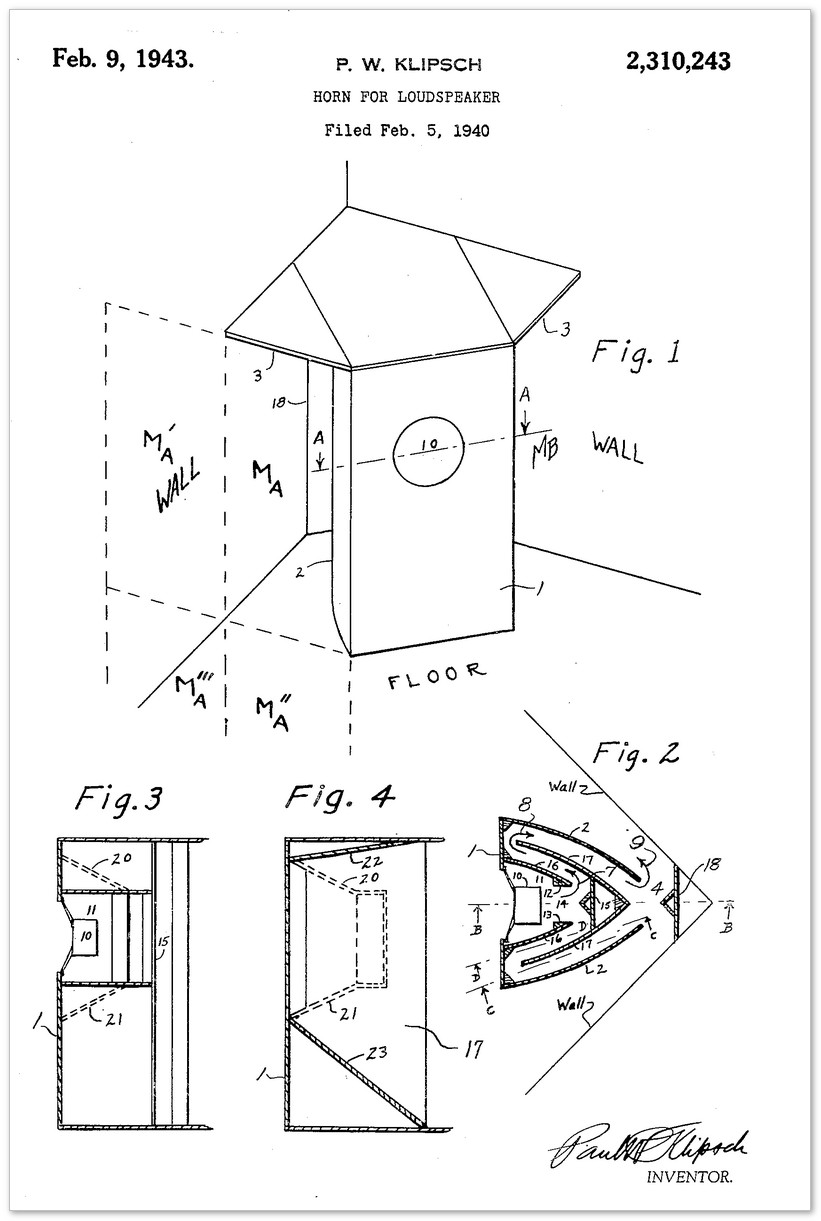
The war took the birthplaces away
The Second World War did not spawn the Klipsch loudspeaker idea, but it did take Paul W. Klipsch to the place where the idea eventually became a company.
In addition to his electrical engineering training, he had a military officer training background, and the United States Army commissioned him to the Hope, Arkansas, Southwestern Proving Ground.
It was a large military engineering test area that required construction, measurement, monitoring, and practical engineering work. Klipsch progressed to become the chief engineer and one of its key technical leaders.
The work during the war was not directly related to audio, but the environment suited Klipsch’s thinking. At the Southwestern Proving Ground, systems were tested and technical problems were solved based on measurements. At the same time, Klipsch developed a corner-mounted intercom for his spare time, which would later become the Klipschorn.
Klipsch presented his early loudspeaker solution at his officer accommodation in Hope. The naturalness and dynamics of the sound made such a strong impression on the listeners that they encouraged him to bring the loudspeaker into production. A patent-based system was already being developed: in 1943, Klipsch had obtained a patent for the folding horn solution, and in 1945 he also obtained a patent for the low-frequency part of the Klipschorn, which would become visible to the naked eye by day. On the basis of these solutions, he founded the company Klipsch & Associates the following year.
This is how Hope became the workplace of Klipsch's home. At first, the loudspeakers were manufactured in a small tin shed, and in 1948 operations moved to the old telephone exchange building at Southwestern Proving Ground. It became the company's first actual factory, office, and laboratory.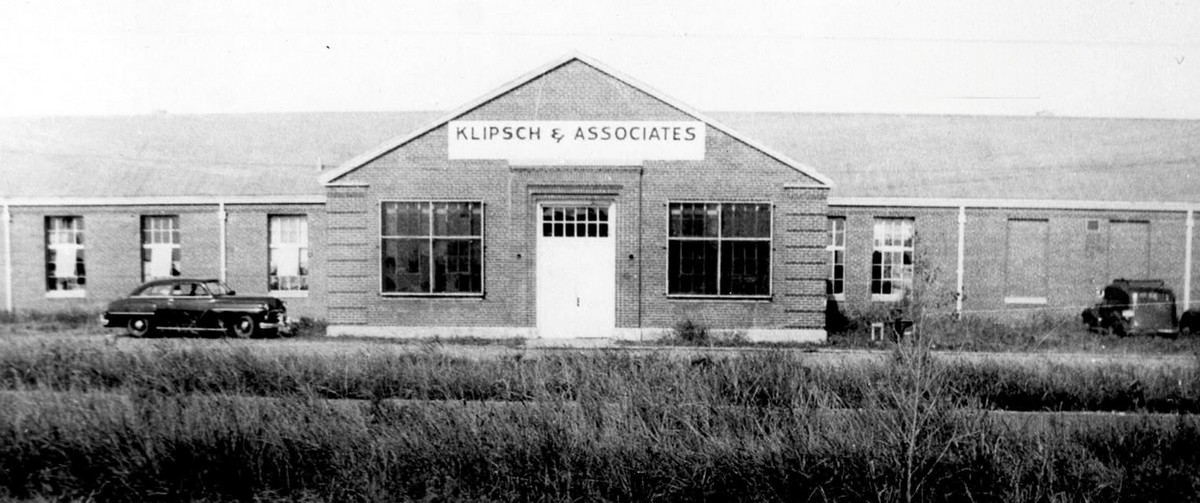
Klipschorn – this is where it all started
The first real product from Klipsch & Associates was the Klipschorn. Its structure and operating principle differed significantly from conventional home speakers. The speaker was designed to be placed closely to the corner of the room, and this placement was not just a recommendation but part of the speaker’s functionality. The bass response was based on a tuned horn, where the walls of the room acted as an extension of the horn. This way, the room was not just a placement point, but part of the speaker’s acoustic structure.
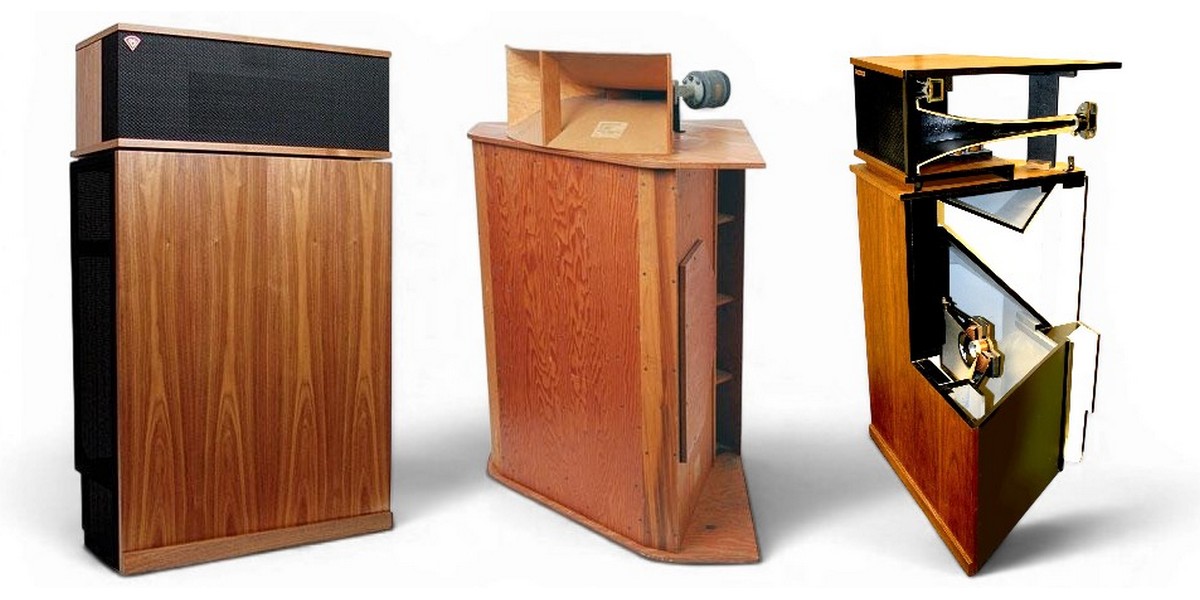
The Klipsch horn principle didn’t just apply to bass. The bass output was based on a large, tuned horn cone, but the mid-range and upper frequencies were also reproduced through its own horn structures. This was an essential part of the speaker’s high sensitivity and controlled directional characteristics. Klipsch’s goal was to keep the efficiency high and the movement of the elements small within the widest possible frequency range.
The solution had a clear objective. Once the efficiency ratio was improved, the loudspeaker was able to produce high sound pressure with less amplifier power and with less movement of the elements. In Clipch's thinking, this was directly related to reducing distortion. The less the elements needed to move to produce a given sound pressure, the more controlled they were able to operate.
The start of production was modest. The first mid- and high-range speakers were manufactured in a tin shed, and the local carpenter and the Baldwin Piano Company helped in the production of the first Klipschorn bass cabinets. In 1948, operations moved to the old telephone exchange building at Southwestern Proving Ground. An office and an acoustic research room were located on the main floor, and a loudspeaker assembly room was built in the basement. The high basement space and the hand-operated elevator were suitable for assembling the large loudspeakers.
The practical humor of Klipsch was illustrated by the early numbering system. The first Klipschorn manufactured in this building received the serial number 121 because one hundred was added to the numbers. In this way, the young company appeared to be a little larger to the outside world.
The Klipschorn became the model around which Klipsch's loudspeaker identity was largely built. Its exceptional longevity shows that the solution did not remain just an early experiment but became part of the company's enduring tradition.
Heresy, Cornwall and La Scala – coming classics
The Klipschorn was the starting point for Klipsch, but it did not suit all situations. It was large, required a niche placement and was built around a specific acoustic principle. The following models were therefore born from practical needs: Klipsch needed to apply turbine technology to different spaces, installations, and usage patterns.
Heresy, presented in 1957 This was a good example of that. It was originally designed as a center speaker for a three-channel stereo system between two Klipschorns. The name came from the fact that Klipsch was making a speaker that wasn’t really a bookshelf speaker. The idea was almost “heretical” in Klipsch’s world, and this became the model’s name: Heresy.
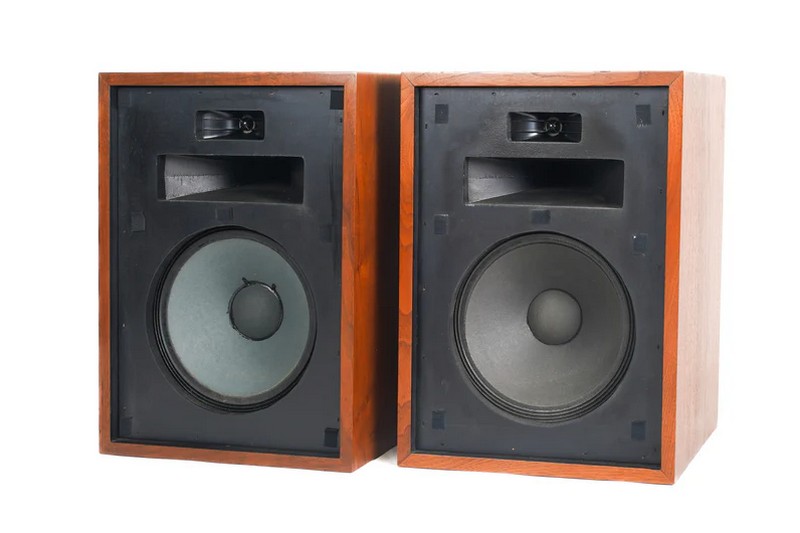
Heresy gained visibility early on even outside the United States as well. At the 1958 World’s Fair in Brussels, it was used as a center speaker between two Klipschorns in an American hi-fi presentation. The following year, Klipschorn and Heresy were also featured at the American National Exhibition in Moscow, where American technology was presented amidst the Cold War. Thus, Klipschorn’s loudspeakers soon found a wider international connection as well.
Cornwall followed in 1959. It was developed to be a fuller-bodied center speaker between the two Klipschorn units, but at the same time it also became an independent speaker model. The name referred to the placement: the speaker could be placed either in a corner or against a wall. The Cornwall combined the traditional bass resolution of the heavy-loaded mid- and treble regions with a more flexible bass solution for home use, making it more flexible than the Klipschorn.
Cornwall models also featured versions where the mid- and treble drivers were positioned vertically on the side of the bass unit. In later and current Cornwall models, the drivers are positioned horizontally above the bass unit. This in turn indicates that the structure of the Cornwall model, in its early years, although the basic concept remained the same: a driver-loaded mid- and treble region combined with a large, reflex-cased bass unit.
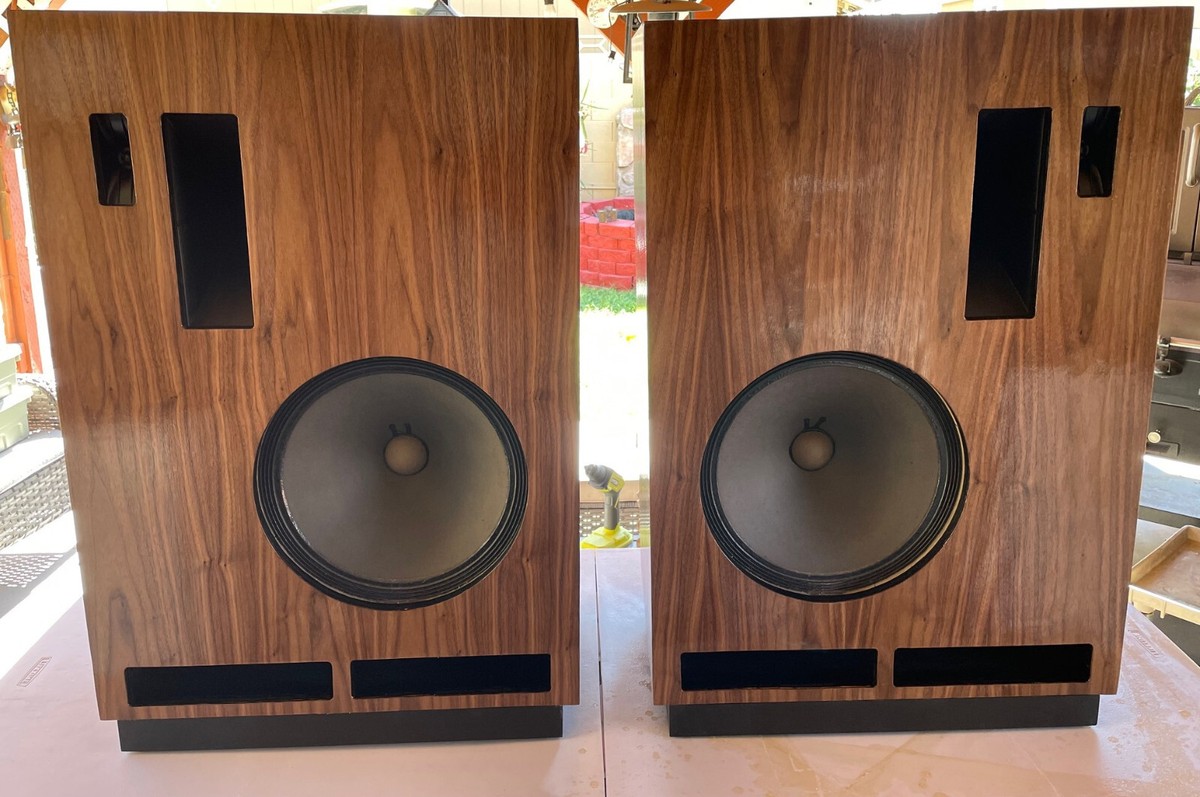
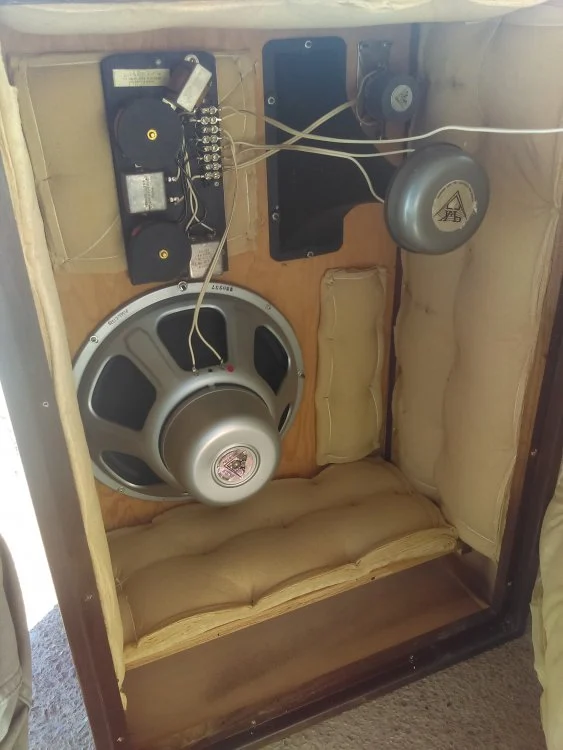
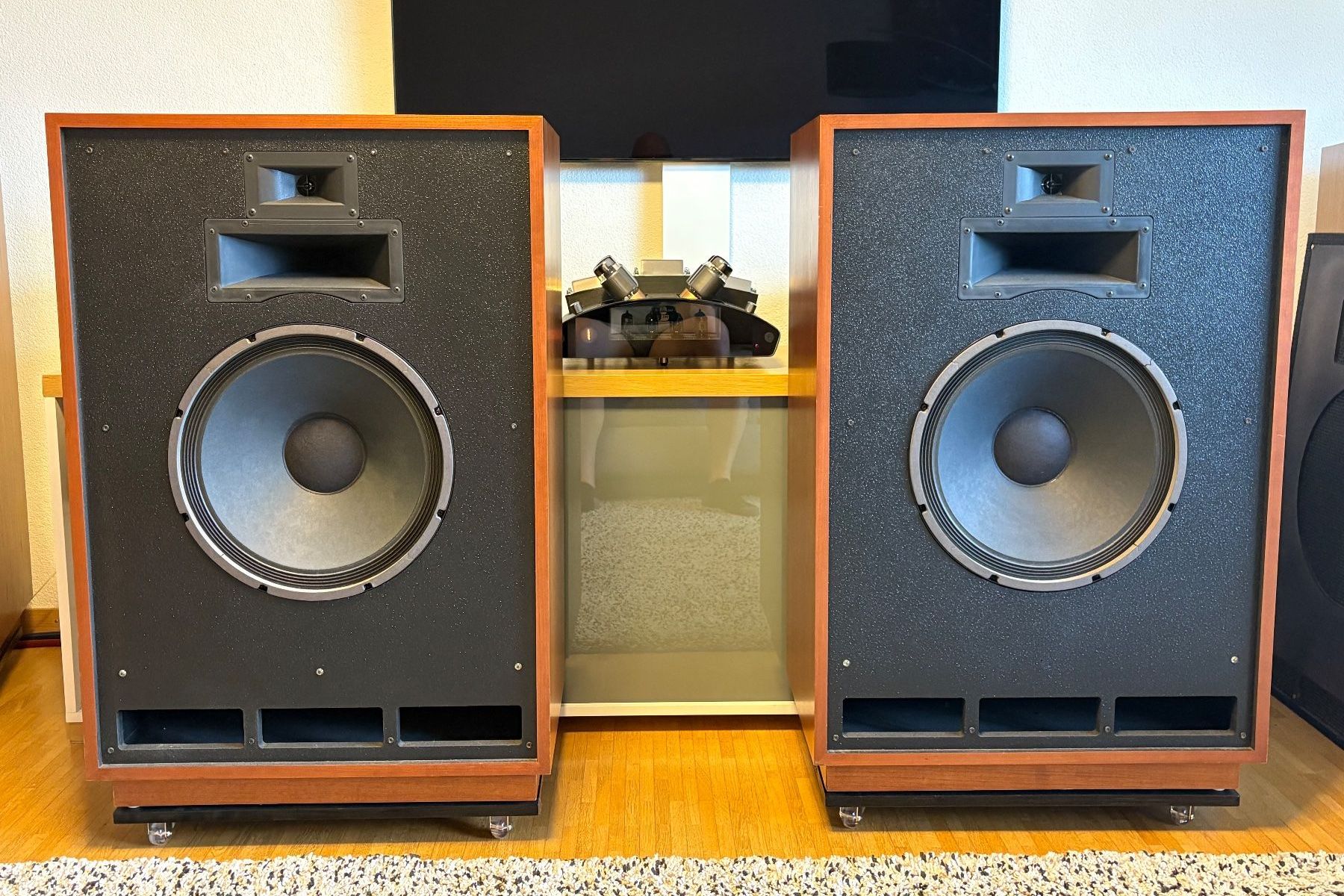
La Scala In 1963, a different kind of need emerged. It was originally designed for Arkansas gubernatorial candidate Winthrop Rockefeller's campaign, where effective and powerful public sound was needed. The model's name referred to the Milan Teatro alla Scala. Although it was intended for speech and event use, La Scala later became a classic model for home cinema as well.
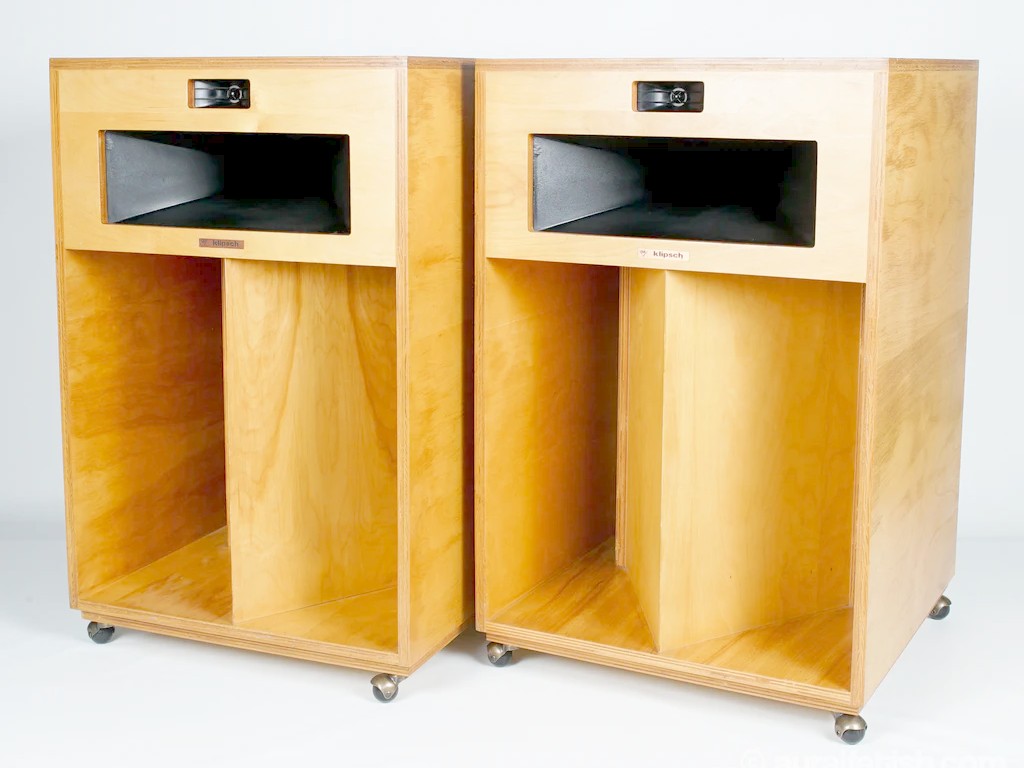
Belle Klipsch introduced in 1971 It was a more finished and furniture-like relative of La Scala. It was named after Paul Klipsch’s first wife, Eva Bellen. Belle belongs to Klipsch’s historical Heritage line, although it is not in the current actual Heritage range.
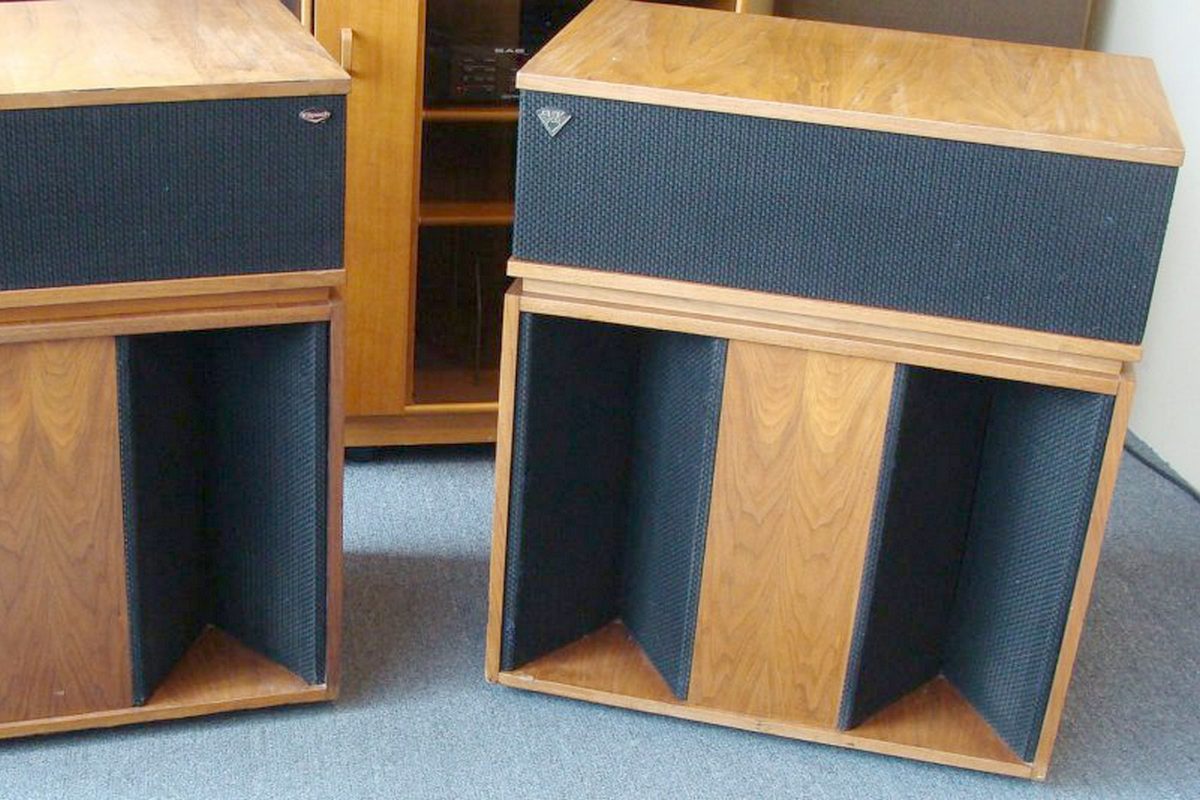
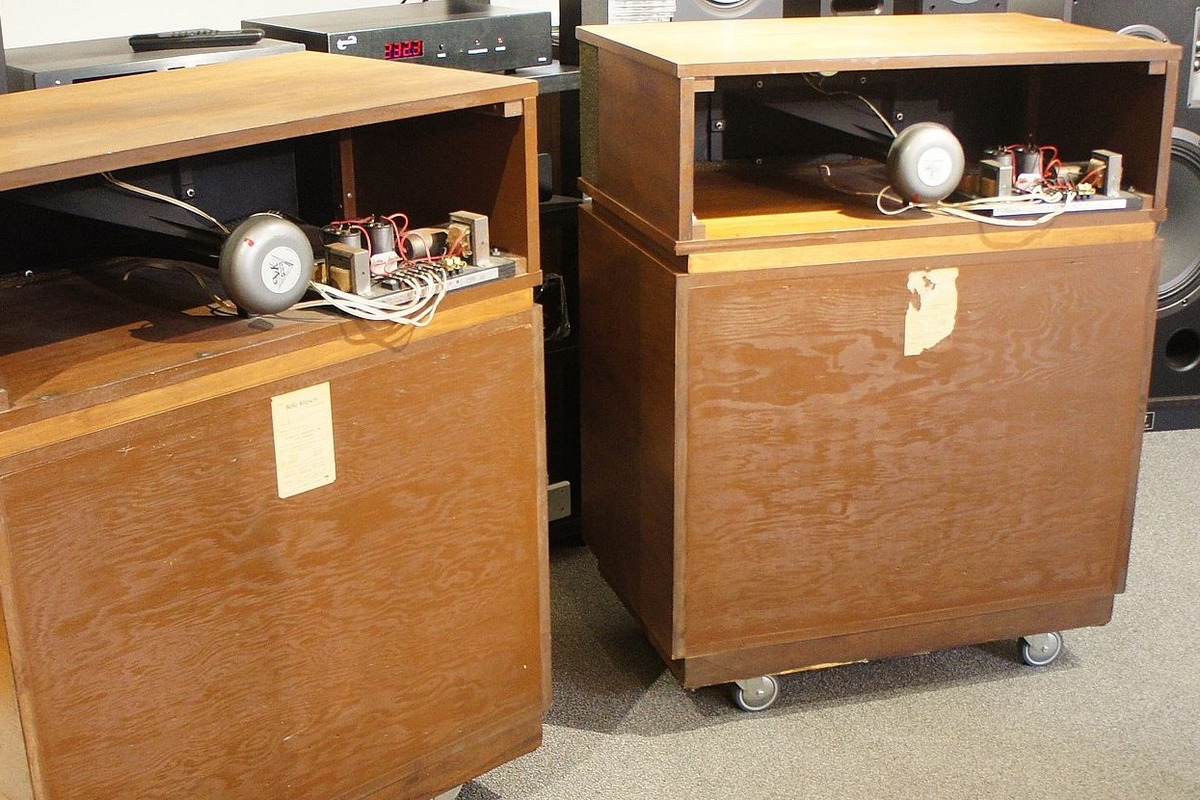
These models formed the core of the Klipsch Heritage tradition. Klipschorn, Heresy, Cornwall and La Scala are still available as models, and in the current Heritage collection they are also joined by Forte and Jubilee.
Forte introduced in 1985 It brought Klipsch's high sensitivity and the mid- and upper-range loaded housing into a clearly more compact enclosure than the large Heritage models. Its bass solution used a passive driver that allowed the speaker to produce bass that extended in size. Forte became one of Klipsch's most successful models, and it was later further developed into the Forte II version, among other things. The model's return as Forte III in 2017 and the current Forte IV show that even 1980s Klipsch design became part of the company's enduring Heritage heritage.
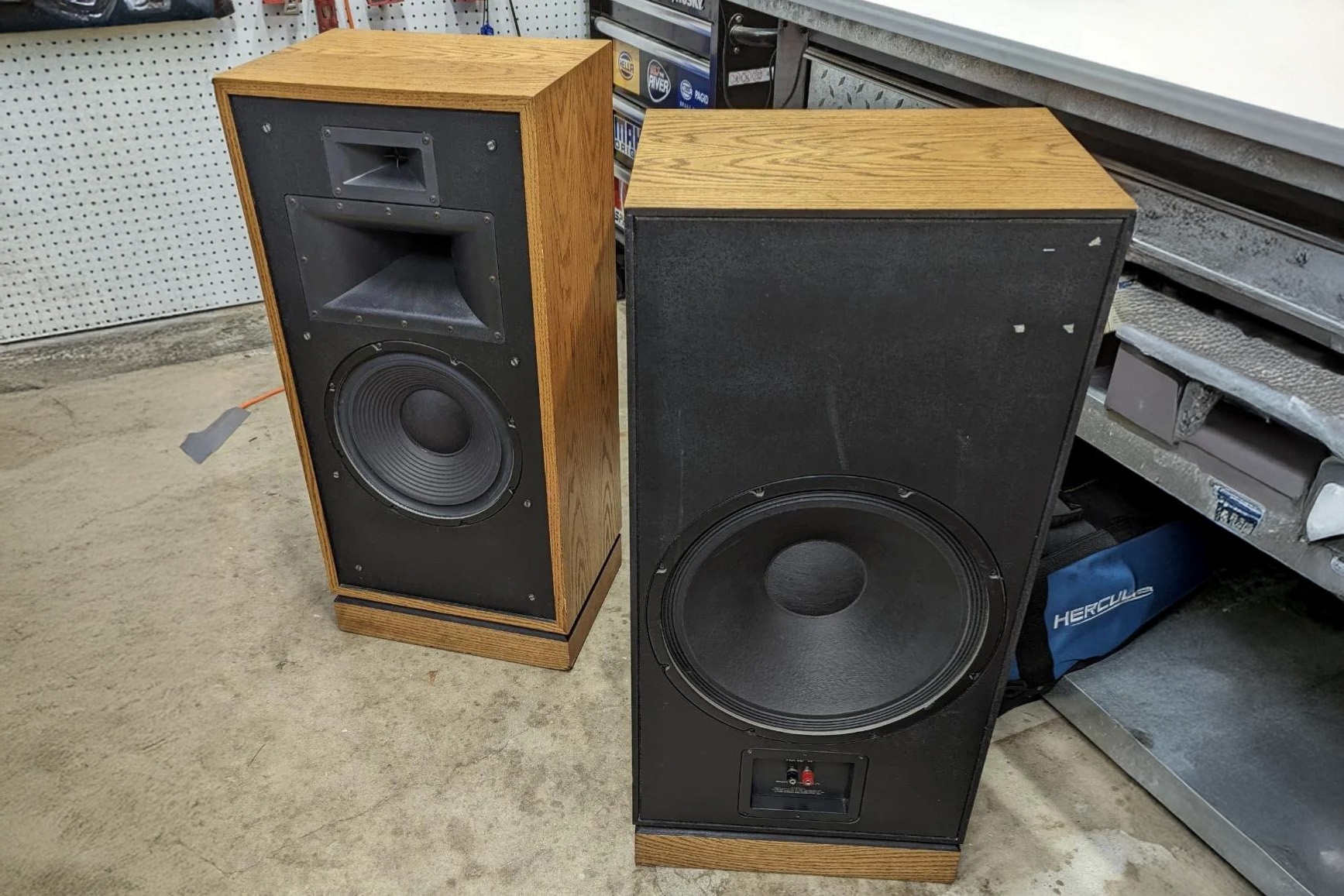
The Klipsch Forte II continued the idea of the original Fort with a "more compact" but powerful Heritage speaker. The model used a horn-loaded midrange and treble and a passive tweeter to support bass reproduction. The Forte II was also important because it introduced the Tractrix midrange cone, which later became one of the many horn solutions used by the brand.
The Forte was also an important model because in its later development Klipsch introduced the Tractrix horn. The Tractrix midrange horn used in the Forte II anticipated a direction that later became a central part of the Klipsch lineup. Tractrix refers to the horn shape designed to combine the high efficiency of the horn tweeter with a more controlled directionality. In practice, the goal is to direct the sound more precisely towards the listening area and reduce unwanted reflections from the room surfaces. Today, the Tractrix shape is widely used in Klipsch loudspeakers, even outside the Heritage lineup.
Also recordings on speaker conditions
There is also a less well-known side story in the history of Klipsch. In the late 1950s, the company established the KlipschTape Division. The reason was a practical problem: the introduction of Klipschorn required sufficient high-quality stereo material at a time when high-quality stereo recordings were not widely available.
Paul W. Klipsch and John Eargle toured to record, among other things, jazz, classical music, choral performances, and various sound effects. These recordings were sold to retailers and hi-fi enthusiasts for demonstration use. The project was short-lived and, according to Klipsch, resulted in a loss of about $10,000 in 1959, but it illustrates an essential aspect of the company’s thinking. The speaker was not an isolated product, but part of the entire audio reproduction chain. Later, some of the KlipschTape recordings were rediscovered in 2011.
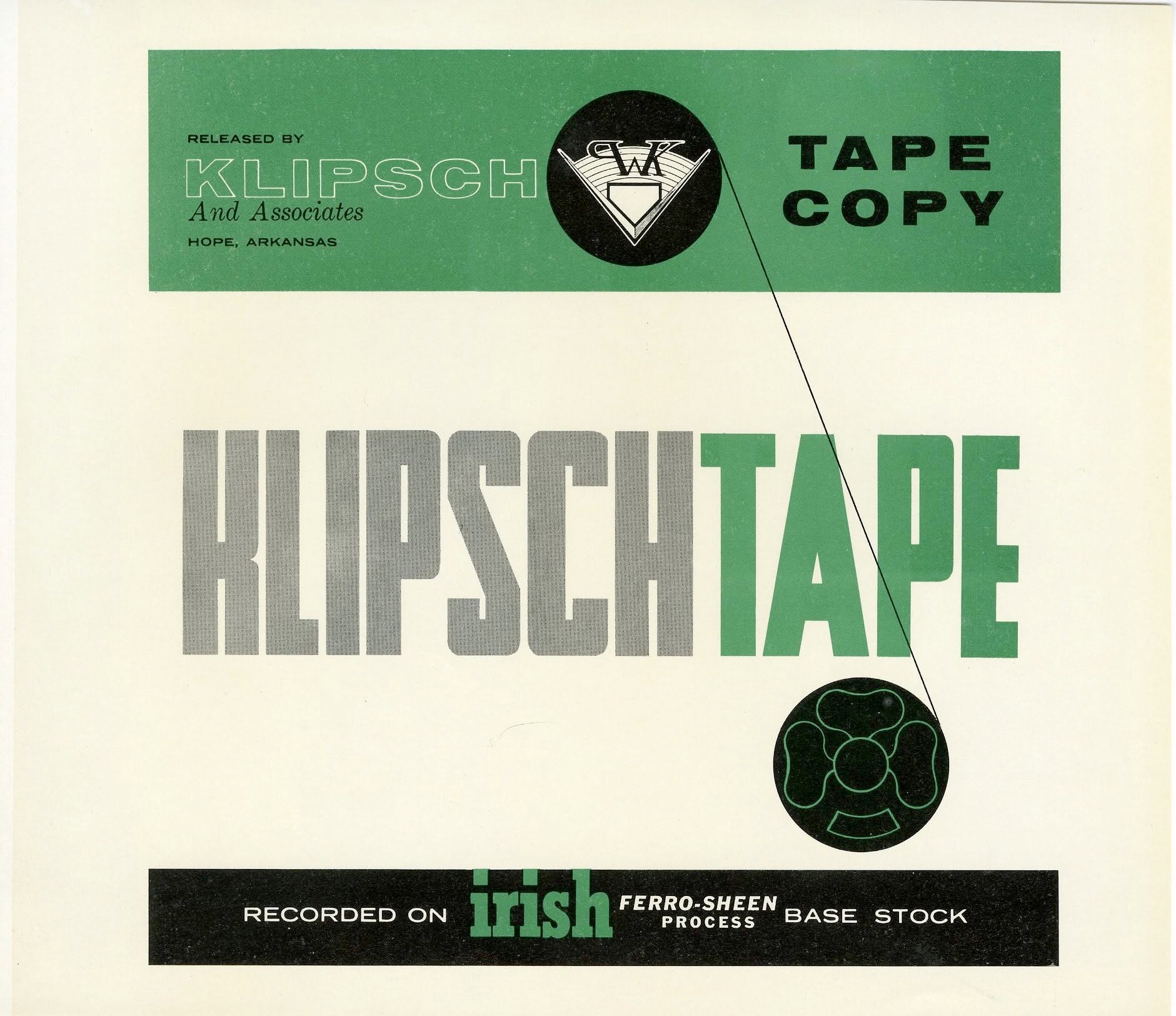
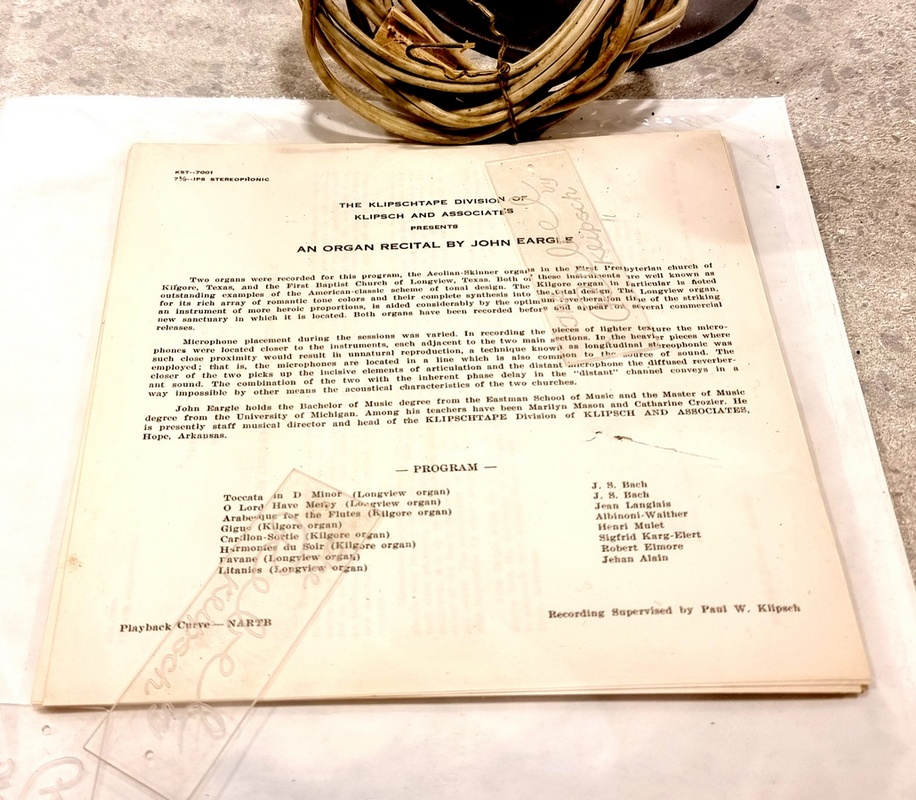
The KlipschTape Division was a short-lived audio project of Klipsch & Associates in the late 1950s. The program flyer for the record player pictured here shows that the company made its own stereo recordings during the presentation of its loudspeakers, at a time when high-quality stereo material was still limited.
John Earglen's own career continued later as a prominent sound engineer and product developer. He worked, among other places, for JBL and received Grammy and Oscar awards during his career.
Allocation methods and measurements at the center
Klipsch is often associated with treble, high sensitivity and high dynamics, but the speaker’s performance is not determined by treble alone. The treble-loaded elements, bass resolution and enclosure must also be matched electrically. This crossover plays a key role: it determines which frequency range each element operates in, how their levels are matched and what kind of load the speaker presents to the amplifier.
In the case of Klipsch, this was particularly important because the Heritage models were not simple loudspeakers with one element, but systems built from many differently loaded components. For example, in the Klipschorn, the bass reproduction was based on a tuned horn, while the mid- and treble regions were handled with their own horn solutions. The baffle’s task was to connect these components into a functioning whole so that the loudspeaker’s high efficiency, directionality, and frequency response remained under control.
Paul W. Klipsch did not view the crossover filter as just an essential component. He had at least two patents directly related to the crossover filter. US 2,612,558, “Crossover filter network”, dates from 1952. It related to the crossover filter of a multi-way loudspeaker, namely how the different frequency ranges are routed to the different elements. The patent is also mentioned in Paul W. Klipsch’s patent listings.
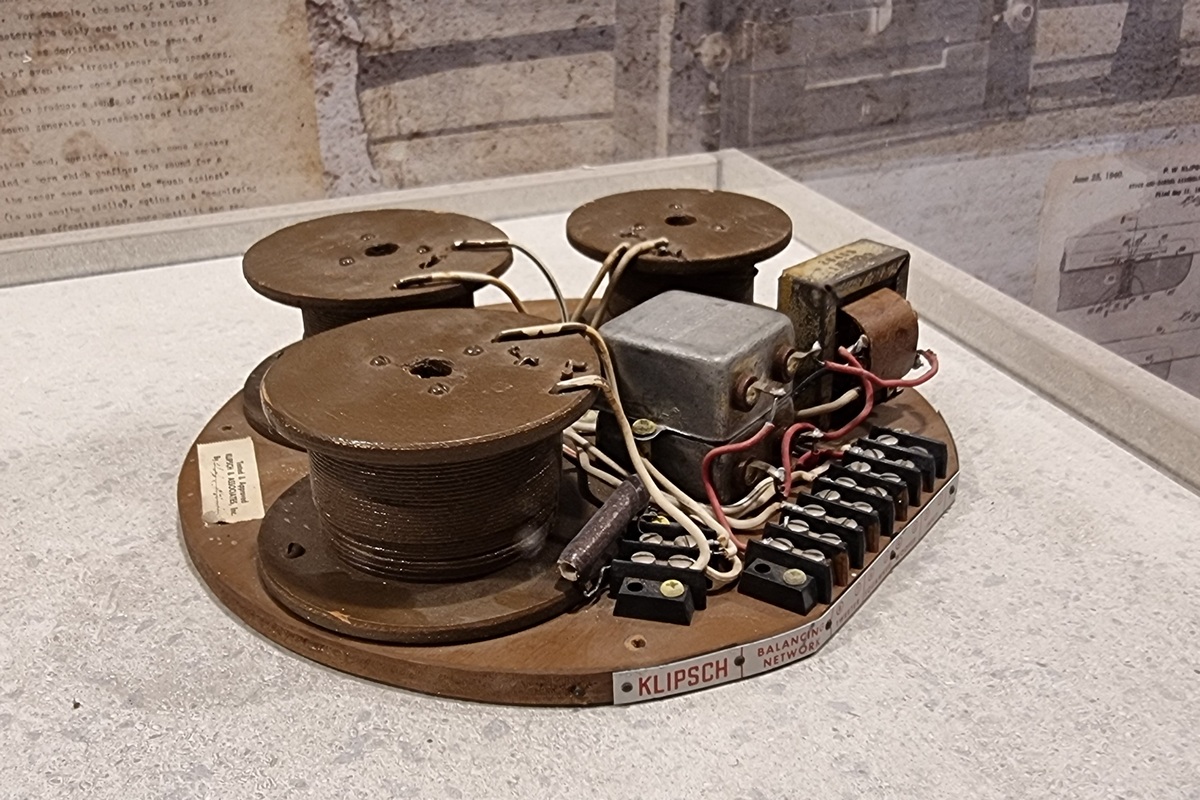
The old Klipsch split-drive illustrates the electrical side of loudspeaker design. The cabinet design determined the brand's sound concept, but the overall performance also depended on the matching of the elements, the dividing frequencies, the attenuations, and the load of the loudspeaker on the amplifier.
Another key patent was US 4,237,340, “Crossover network for optimizing efficiency and improving response of loudspeaker system”. This was a later patent, with inventors Paul W. Klipsch and James R. Hunter. The patent concerned a crossover filter designed to improve the efficiency and response stability of the loudspeaker system. The patent discussed, among other things, auto-transformers and circuits that adjust the levels and responses of the various elements.
Also in 1980, the research laboratory built at Hope was an important step for Klipsch towards more systematic product development. The new loudspeaker room was designed for a situation where the company was moving further and further towards element design, loudspeaker structures, and the development of distribution drivers. The loudspeaker room enabled the measurement of loudspeakers in a controlled environment without the influence of room reflections.
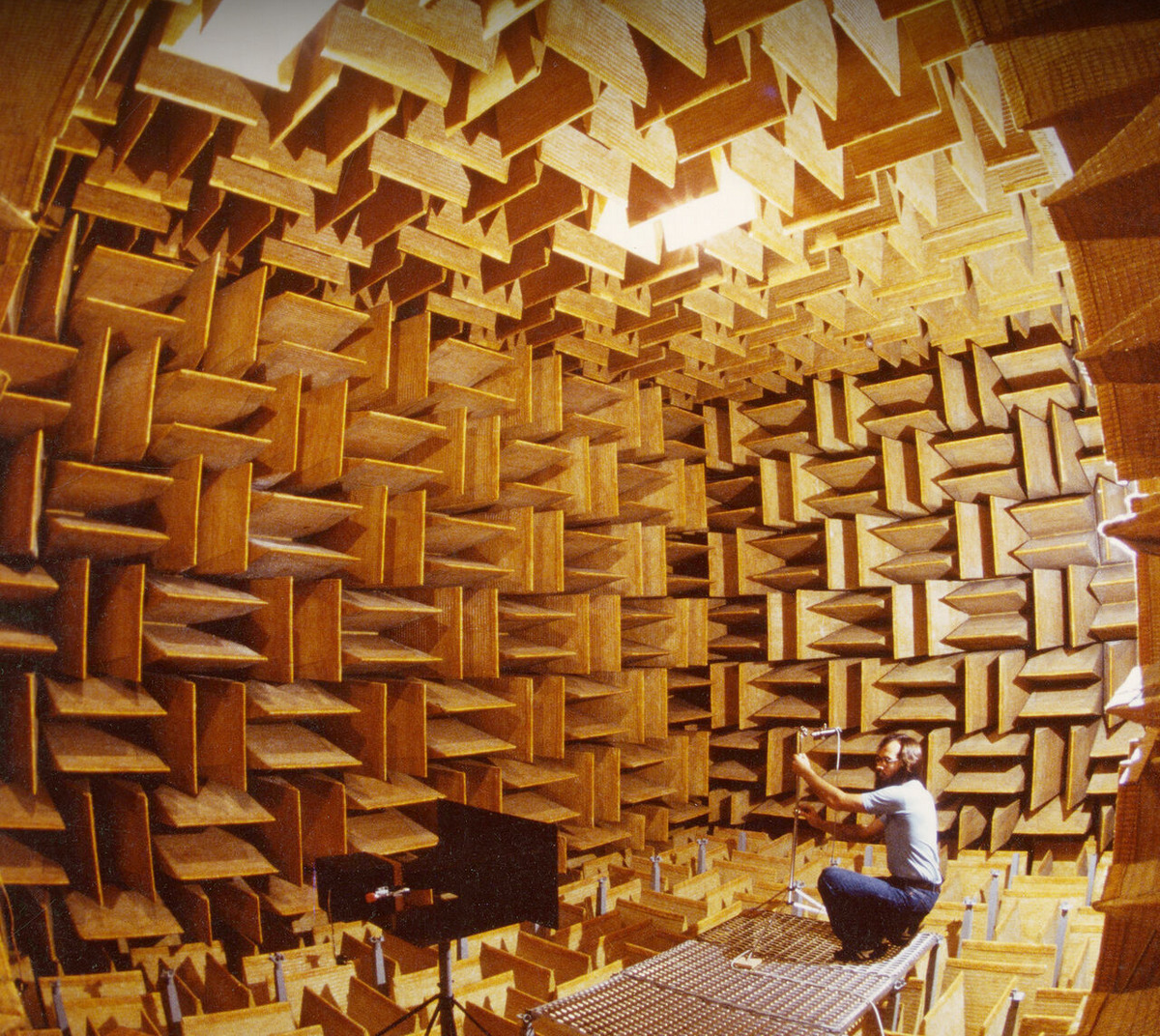
“Anechoic Chamber, 1982”, where Jim Hunter measures the frequency response in a Hopen speakerless room. According to the publication, the photo was taken by Gary Gillum and was originally featured on the cover of the Summer 1982 issue of Inside Arkansas magazine.
For Klipsch, this was not exactly a standard measurement room, because the company’s flagship product, the Klipschorn, was designed to operate in a room corner. Therefore, Paul W. Klipsch and Jim Hunter designed a special solution to patent the soundless room: a three-ton rotating door that also allowed for testing the corner speakers. The patent granted in 1983 US 4,387,786, “Anechoic chamber arrangement”, was related to this arrangement.
“The ”bullshit” button and the outspoken engineer
One of Klipsch’s most famous anecdotes involves a small yellow button. In the 1960s, Paul W. Klipsch grew frustrated with the claims made by loudspeaker manufacturers, which he believed violated the laws of physics or were based on exaggeration. This led to the “Bullshit” slogan and the advertising concept “Ho Hum Another Major Breakthrough”.
Klipsch began distributing small yellow buttons at hobby stores and trade shows. The button idea was simple: it could be waved when the sound became technically unbearable. Although the story is humorous, it tells a lot about Klipsch’s thinking. He did not want to build a brand based on mere imagination, but emphasized acoustics, measurements, and the limits of physics.

This directness was also evident in Klipsch’s own technical communications. “Dope from Hope” was his irregularly published technical newsletter series, whose name referred to Hope, Arkansas, where Klipsch’s company was located.
The presentations covered loudspeaker design, measurements, acoustic principles, and practical issues of sound reproduction. They were aimed at dealers, hobbyists, and customers who wanted to understand why Klipsch designed its loudspeakers in a certain way.
“Dope from Hope” later also received a new life. In 2023, the Klipsch Museum of Audio History announced a Kickstarter project in which Paul W. Klipsch’s “Dope from Hope” statements were compiled into a hardcover book of about 300 pages. The project well illustrated the position of the statements in the Klipsch history: they were not just marketing material, but part of Paul W. Klipsch’s technical legacy.

You can also read the Dope from Hope press release On the Klipsch Museum of Audio History website, For whom the original numbers of the series and the related background have been compiled.
Also "professional sound"
Klipsch was born around Klipschorn, a product intended for home use, but its basic technical concept naturally suited public sound reproduction as well. Gravel loading, high sensitivity and a large sound pressure reserve were useful in situations where the loudspeaker had to fill a large space without requiring high amplification power or uncontrollable distortion.
This was particularly evident at La Scala. The loudspeaker, introduced in 1963, was originally designed for use by Arkansas gubernatorial candidate Winthrop Rockefeller in his campaign, where powerful and resonant sound was needed for speeches.
In 1977, Klipsch also moved into the professional audio sector by starting production of the large MCM series loudspeakers for touring, live performance and film use.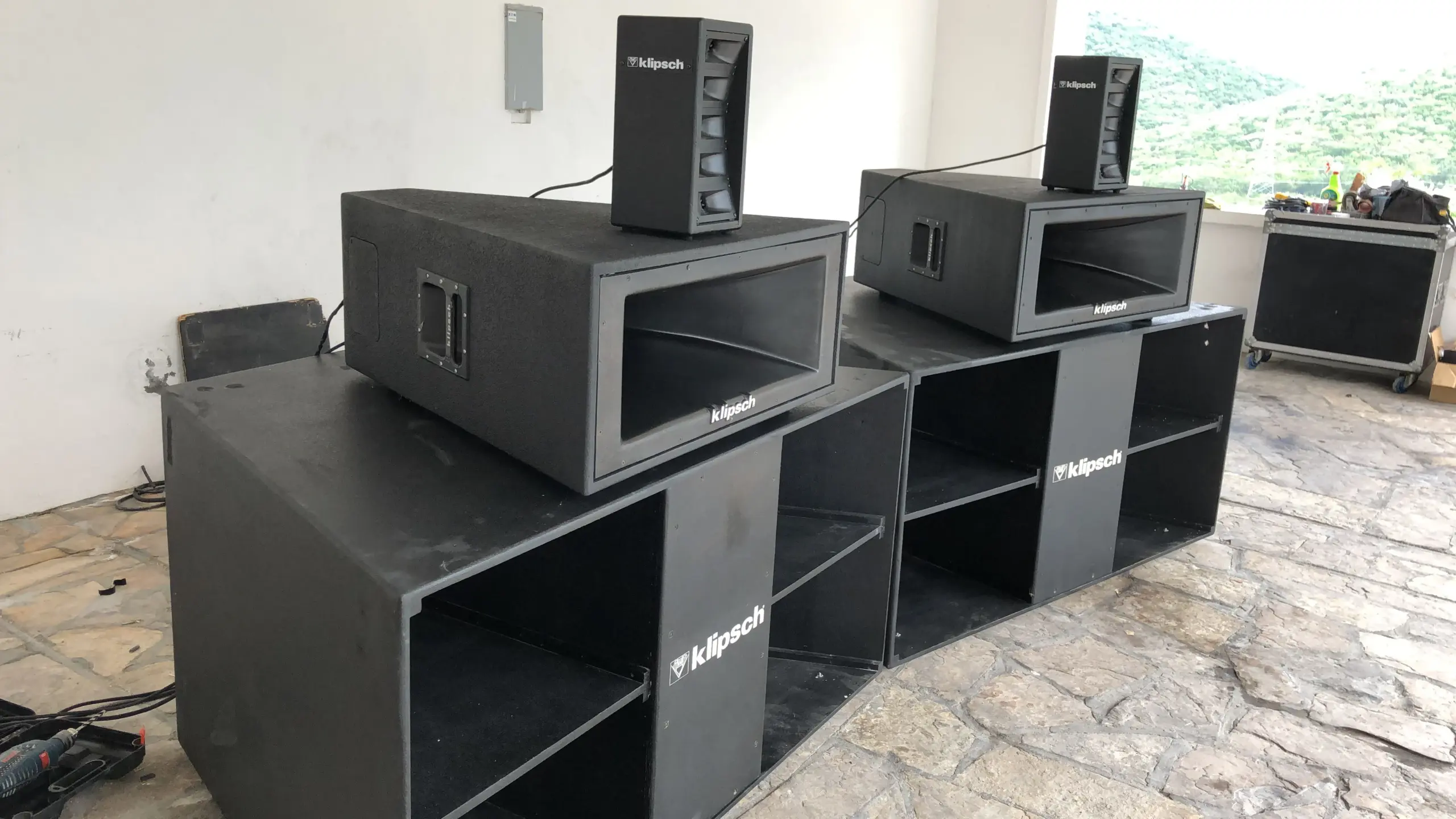

The connection to theater and PA sound reproduction also partly explains Klipsch's later position in semi-pro home theater speakers, where high dynamics, controlled directionality, and high sensitivity are of great importance.
In 1978, Paul W. Klipsch received the Audio Engineering Society Silver Medal for his contributions to loudspeaker design and sound measurement. The award aptly describes his position: Klipsch's reputation was based not only on his products but also on acoustic research, measurement, and technical arguments.
The generation change and the era of home theater
In 1989, Paul W. Klipsch sold Klipsch & Associates to his cousin Fred S. Klipsch and his wife, Judy. Production continued in Hope, but the business's focus shifted to Indianapolis. Paul Klipsch remained the company's founder and advisor, and he continued working on the Jubilee speaker as well.
In connection with the ownership change, the company’s name was changed to Klipsch, LLC, and a new logo was introduced. The change represented the transition from the founder-driven Klipsch & Associates to a broader consumer audio company.
In the 1990s, Klipsch expanded strongly into the home theater market. The Synergy, Legend, Quintet, Reference, and THX product lines took the company to new customer groups during a time when multi-channel home theater became more common. Klipsch was no longer just a manufacturer of large Heritage speakers; it became an international brand of consumer audio.
Klipsch today
The current Klipsch is part of Premium Audio Company (PAC). The range has expanded far beyond the original Klipschorn: in addition to the Heritage speakers, there are also the Reference series, home theater speakers, soundbars, active speakers, headphones, Bluetooth speakers, and audio systems tailored for car manufacturers.
The historical connection is still evident in the torvi elements, but most clearly in the Heritage series. The Klipschorn, La Scala, Cornwall, Forte and Heresy are still available models. And although the structures and components have been updated over the years, the foundation remains the same as 80 years ago.
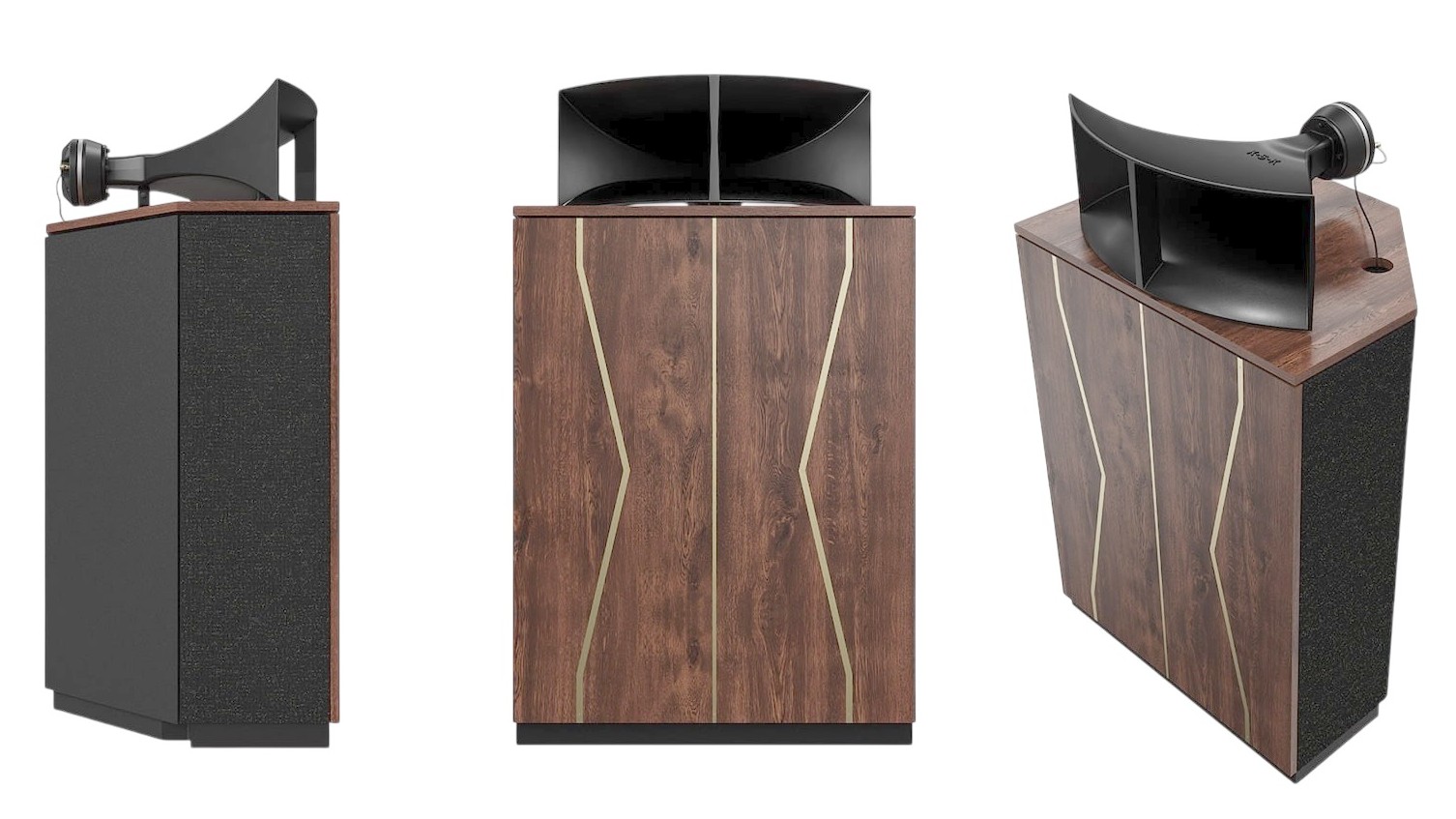
In 2026, Klipsch brought history into the present with the Klipschorn 80th Anniversary Limited Edition. A limited edition of 280 pairs returns to the original Klipschorn two-way design, but uses new components and an active DSP crossover filter. The included 180 gram KlipschTape vinyl release also ties the model to the company’s own audio history from the 1950s.
A newer direction is evident in the active The Fives II, The Sevens II, and The Nines II speakers. They combine the typical crossover design of Klipsch with amplifiers, HDMI eARC connectivity, wireless streaming, and app control. The Sevens II and The Nines II models also feature Dirac Live room correction.
Klipsch has grown from a small one-man dream to an international consumer audio brand. However, its most recognizable technical features have not disappeared: bass weight, high sensitivity and high dynamics are still associated with the brand, especially in the Heritage models, in home theater speakers and in newer active speakers.
Further information: www.klipsch.com
Importer/Representative in Finland: Loud Group Oy
More photos of the history of Klipsch:
Clipsch Museum Facebook photo archive
Sources:
Klipsch: Klipsch Timeline and Milestones
https://www.klipsch.com/klipsch-milestones
Klipsch: Founder Biography – Paul W. Klipsch
https://www.klipsch.com/founder
Klipsch: Heritage Premium Audio
https://www.klipsch.com/heritage-premium-audio
Klipsch Museum of Audio History: Dope from Hope
https://www.klipschmuseum.org/dope-from-hope-2
Google Patents: Paul W. Klipsch's loudspeaker, horn, waveguide and measurement patents
https://patents.google.com/?inventor=Paul+W.+Klipsch
Most read today
Latest
Subscribe to the newsletter
Subscribe to our newsletter and stay up to date with the latest news in technology and entertainment electronics.
Survey
Quiz
Nokia phones
Related Posts

TESTISSÄ KAIKU WAVE wireless noise cancelling headphones – a Finnish challenger in the tough premium category
The Kaiku Wave is a wireless noise-canceling headset costing 449 euros, combining partly Finnish design, Finnish wood, restrained design, long battery life and...

Philips The Roller and The Tube – Moving sound with its own style
Philips The Roller and The Tube bring back the 1980s boombox spirit without cassettes or radio. It comes with Bluetooth, a battery, Auracast, and...
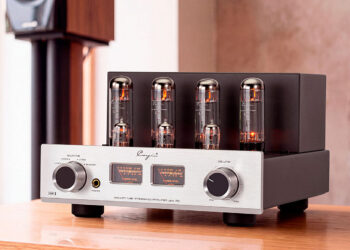
Cayin Jazz 70 – genuine tube sound and style at a reasonable price
The tube amplifier doesn't need to cost several thousand euros. The new Jazz 70 from Cayin brings classic EL34 tube technology, visible tubes, analog meters, and hand-crafted controls...

The use of artificial intelligence in music is growing rapidly, but there is still a lot to be learned about its use – at least in Finland.
Artificial music evokes significantly more reservations in Finns than the use of artificial intelligence in general. Artificial intelligence is rapidly becoming a part of everyday life, but the output it produces...
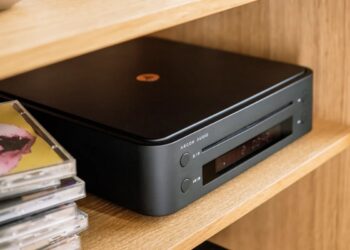
The new arrival of CDs is also reflected in devices – the Argon Audio CD1 is a new CD player priced at 399 euros
The arrival of vinyl records has been ongoing for a long time, and now a similar trend is also evident in CD records. Argon Audio responds to this interest with the new CD1 player,...

Audio-Technica ATH-AL5NC combines an open design and wireless connectivity – battery life up to 75 hours
Audio-Technica expands its range of open headphones with the ATH-AL5NC model, which is the manufacturer's first wireless open headphone. In addition to Bluetooth connectivity, it also features LDAC, noise reduction, and sound leakage...
 Suomi
Suomi  English