
In the test, the stunning ProAc Response DT8 speakers

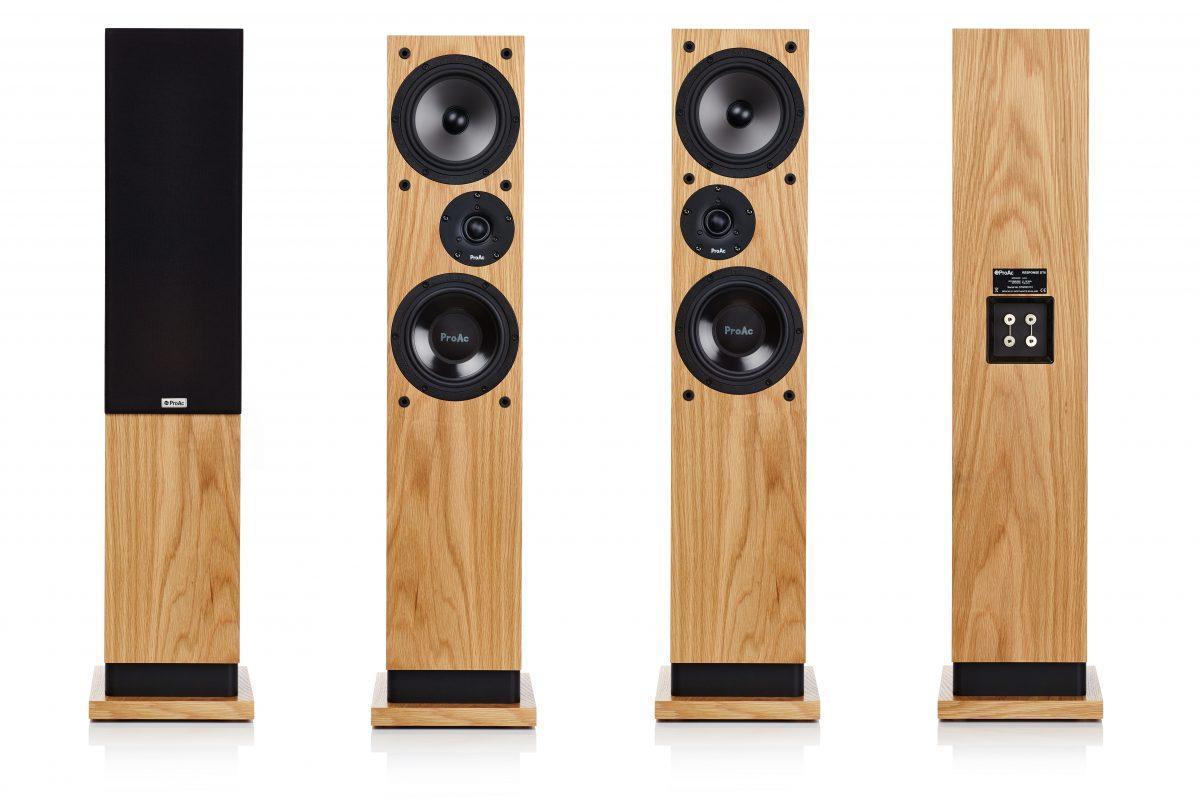
”ProAc doesn’t make cheap speakers, and especially not cheap sound.” This long-winded tirade from the chief designer has been the backbone of ProAc’s operations for over 35 years, with the latest creation being the DT8 floor speaker.
Text: Kari Nevalainen
Photos: Manufacturer
For those who did not actively pursue hi-fi in the 1990s, it is difficult to imagine how popular ProAc’s loudspeakers were at the time. The flagship models 2.5 and 3.5 at the end of the 1990s were a stunning phenomenon in the audio world when they appeared. Their popularity was on a par with that of the Wilson or Avalon loudspeakers ten years later or with that of Magico today.
And on the other end of the spectrum, the little ProAcit – Response One SC and Tablette 50/50 – are equally legendary in their respective competition categories. They will certainly be mentioned in the annals of history as icons of their time.
Compared to its strong start, ProAc’s star did not take off in the 21st century in the way expected. It might have been that, like many other companies, ProAc committed itself to excessive optimism, but there were just as many reasons of a more intrinsic nature.
"ProAc made a conscious choice to manufacture smaller quantities of more expensive speakers rather than in bulk quantities of cheaper ones."
ProAc is not alone. The same seemingly fading fate has befallen the hyped companies Thiel, Egglestonworks, Kharma, Avalon, Wilson and many other notable brands. Some of them have already given up; some have not. ProAc is not. Holding on to its own criteria and starting points stubbornly, it has been able to bring new loudspeakers to the market in rare cases and with a low profile.
The 2.5 and 3.5 floor models were released in 1997, and around the same time the Tablette 50/50 came out; two years later it was the turn of the Tablette 2000/2000 Signature, and in 2000 the special Future series was released. In 2001, the Response D series was in the spotlight, which subsequently in 2007 received vinyl records starting with the models Response D38R and D20R. The most expensive and largest so far is the ProAc Carbon Pro series from 2008. The K6 from 2011 was the first speaker where ProAc experimented with Kevlar in the design. In 2015, the Response series was further expanded with the K8 speaker.
So far, the latest ProAc speaker is the DT8 from 2017 together with the Tablette 10 Signature. The Response DT8 took its place in the ProAc lineup as a entry-level floor speaker, presenting the technical solutions previously tried by ProAc but taking the ”mixing and matching” principle practiced by ProAc to a new level.
Speaker elements at the heart of design
Speaker manufacturing is such that very often the work starts with the dream of one man, and companies build their reputation around his name. In the case of ProAc, this is Stewart Tyler. Tyler is ProAc (Professional Acoustics), which is what Peter Walker is to Quad, Alan Shaw to Harbeth, Jurgen Reis to Mbl, Brian Wilson to Audi, Jim Thiel to Thiel. The list is long. Many of these are permanent influences on the entire industry in terms of speaker design.
In a partnership, Tyler is a British-born loudspeaker designer. He believes that there are two things that set loudspeakers apart from others: custom-made loudspeaker elements and the carefully coordinated crossover circuitry.
"The packaging is of course important too, but it comes in second place anyway. Why is that?"
The question can be answered in more than one way, but at its core it comes down to the sought-after sound quality. And when we talk about British loudspeakers, we are primarily talking about the coherence of the sound and the superb reproduction of the mid-range.
According to Tyler, this type of magical sound is achieved only by targeting the money where its impact is most effective: the speaker elements and especially their cone materials, and finally the tuned crossover. Tyler is known for using years of live music as a benchmark to fine-tune the latter, choosing the right-quality components, placing the elements precisely on the front panel, and the like.
If anyone wonders why ProAc’s loudspeakers have a very distinct sound, it is precisely due to Tyler’s consistent design philosophy, where the crossover is used to find the ideal balance between the carefully constructed loudspeaker elements.
An unusual element solution
The speaker elements’ frame, magnet, spider, and voice coil are all under the microscope, but above all Tyler has been obsessively interested in the right card material. The card material on Tyler’s head has a decisive influence on the sound production.
In his previous speakers, Tyler has tried paper pulp, polypropylene, carbon fiber, and Kevlar as bass-midrange materials, but only one material at a time. In the new DT8 floor speaker, Tyler is experimenting with a combination of materials for the first time, with one of the 6.5-inch bass-midrange speakers having a different material than the other.


The ProAc Response DT8 is a 2-way speaker despite its three elements; it’s not even a 2.5-way speaker, and its bass-midrange drivers are not yet different from each other. The treble element is located on the side of the midrange, to unify the radiation patterns of the elements. The openings in the reflex channel are located on both sides of the speaker’s base. Of course, the speaker has the option of dual wiring.
In the lower bass-midrange cone, the silica and paper pulp are there for the purpose of producing high-quality mid- and treble bass. The upper bass-midrange cone is made of hard polypropeene, which many manufacturers consider an excellent material for reproducing the mid-range. Both elements have a dust cup that takes into account the material of the cone.
In between are Tyler's one-inch textile dome. The treble element is slightly off to the side from the midrange, apparently to better align the elements' radiating patterns and sound.
The most amazing aspect of this configuration is that this three-element speaker is not a three-way or even a 2.5-way speaker, but a pure two-way speaker. In a conventional two-way speaker, the second element, usually the upper bass-midrange, reproduces the entire frequency range below the second element, while the electrical limit for the lower midrange and bass frequencies is only set to the lower range. On the other hand, if two similar two-way speakers have been used with two bass-midrange elements, they are usually always of the same type.
So what does it mean that in a two-way speaker, both the bass and the mid-range are optimized for reproducing a specific frequency range?
"According to ProAc, the bass and midrange sounds of DT8 work as if in tandem."
This usually means some kind of isobaric solution, where for example two elements in the same phase placed one after the other produce a sound in such a way that there is a closed air space between the elements, which compresses the elements equally.
The DT8 bass driver does not seem to work with the traditional isobaric principle, however. Instead, both elements are in a bass reflex enclosure, with the reflex duct openings on both sides of the bottom of the enclosure, repeating exactly the same frequency band. The idea is that the elements, thanks to their purely natural characteristics (different card material produces a mechanically different response), repeat different parts of the band in different ways: the lower element at bass frequencies, where the paper mass has a relatively better response, and the upper at mid frequencies, where the polypropylene is stronger.
It’s quite common in three-way speakers that the bass-oriented material is different from the mid-range material, but it doesn’t immediately come to mind another manufacturer that would have tried to apply the idea in a three-way speaker in the same way as the ProAc DT8.
A two-way crossover is inherently simpler than a three-way crossover, but Tyler's solution in the DT8 does require that the crossover itself is on par with its tasks, so that the three elements (time and phase) operate seamlessly within the crossover frequency range as if they were cut from the same fabric.
In any case, with this unconventional solution, Tyler has achieved surprisingly low-range bass output from a relatively small enclosure, as well as its famous smooth, nuanced and undistorted mid-range, which is what ProAc loudspeakers are known for.
The DT8 enclosure is made of MDF sheets, which are arranged in different layers at different points of the enclosure. A dense mesh runs inside the enclosure, and the lifelessness is finished by cladding the walls with bitumen.
Externally, the DT8 is familiar to ProAc. The design is neat, reserved and unpretentious without any frills. The footplate equipped with spikes gives the speaker a certain stance. The color options include black spruce, white, mahogany, cherry wood, maple and oak.
Smart and civilized voice
In the listening test, the speakers were placed about one meter from the rear wall, which almost completely eliminated the harmful rubber seals. The openings in the floor border of the reflex channel also make it easier to position the speaker in the room, because the sound leaking from the bottom does not cause room resonances in the same way as the openings at the front or back. As a amplifier, the Naim Uniti Star system was connected to the Naim Fraim stand, and the speaker cable was TCI Python.
When a few years ago I evaluated the ProACIN D20R speaker (two-way floorstanding speaker with a turntable), I recorded its sound, its tone, silky smooth and mellow like a well-developed wine, yet with sufficient neutrality.
The voice of DT8 clearly has the same cultivated character, even though it is not quite as self-absorbed as 20R. There is the same sense of quality, the same musical refinement that manifests itself as irresistible coherence.
The surface of the sound has a slightly matte effect on the impression level, but not a dull, soft one; rather, it is round. At its best, it is silky smooth. The sound also has a certain filter-like quality. In this respect, the DT8 (and other ProAcit models) is related to the BBC monitors. Despite a deliberately edited presentation style, the central area of the music is sufficiently bright and natural. The speaker does not hum but still retains its expressive power.
When evaluated retrospectively, the effect would seem to be that the tonal balance is slightly brighter than in the ProAce I’ve heard before, which may be due to the added airiness brought by the extra element in the center area. Only in the sound of some stringed instruments did I occasionally notice slight hardening.
"There is power in bass playing, but not the kind of brutal power."
When the music gets really loud, the speaker’s audio capabilities come into play, even though by its size the speaker performs surprisingly well for even larger drumming and, for example, Jonny Lang’s guitar arrangements.
The sound stays between the speakers without the mid-range moving too far to the rear. The treble may lack the airiness and intangibility of the tweeters, but otherwise ProAc has found a good balance between the aggressiveness and the retreat of the sound.
The DT8 is not primarily an audio soundbar, but rather one that allows you to enjoy the musical sound from outside the stereo cone. The speaker seems to be able to give weight to the tonal aspects and details that really matter in any given music. How it does this is a mystery, but this is especially true for classical music.
Skrjabin's piano sonatas: what elegance, what inner strength! Vincent Belanger's cello in Bach's solo cello series: magnificent, magnificent! But also Ben Webster's piano: the refinement of the sound enhances the musicality! and Ella Fitzgerald's song collection: the focus remains and the music flows elegantly and consistently!
Of course, what helps here is that the speaker doesn’t jiggle in the dynamic department, but clearly indicates where the brake pedal is pressed and where the ignition is turned on. However, here we are testing the speaker’s compromise, as the indirect performance style of the DT8, which serves certain types of music, loses its explosive power with other types of music.
Most read today
Latest
Subscribe to the newsletter
Subscribe to our newsletter and stay up to date with the latest news in technology and entertainment electronics.
Survey
Quiz
Nokia phones
Related Posts

TESTISSÄ KAIKU WAVE wireless noise cancelling headphones – a Finnish challenger in the tough premium category
The Kaiku Wave is a wireless noise-canceling headset costing 449 euros, combining partly Finnish design, Finnish wood, restrained design, long battery life and...

Philips The Roller and The Tube – Moving sound with its own style
Philips The Roller and The Tube bring back the 1980s boombox spirit without cassettes or radio. It comes with Bluetooth, a battery, Auracast, and...
Cayin Jazz 70 – genuine tube sound and style at a reasonable price
The tube amplifier doesn't need to cost several thousand euros. The new Jazz 70 from Cayin brings classic EL34 tube technology, visible tubes, analog meters, and hand-crafted controls...

IN THE TEST: TCL 65C7L – Bright Mini LED with Wide Color Reproduction
TCL has invested heavily in Mini LED TVs in recent years and has also brought high brightness, rich local contrast, and comprehensive gaming features to clearly...
TCL Z100 and Z100-SW FlexConnect speakers – Easily almost like a real home theater
Dolby Atmos FlexConnect promises to solve one of the eternal problems of multichannel sound: the speakers don't need to be exactly in the right positions. The TCL Z100 speakers can...
Sony expands the ULT POWER SOUND series with three festive speakers – flagship model delivers up to 2,150 watts
Sony has introduced three new ULT POWER SOUND series party speakers. The new products are the ULT TOWER MAX, ULT TOWER 7 and ULT...
 Suomi
Suomi  English