
Two great options for home theater: 4K UHD for 1,100 euros or FullHD for 600 euros?

Size and investment
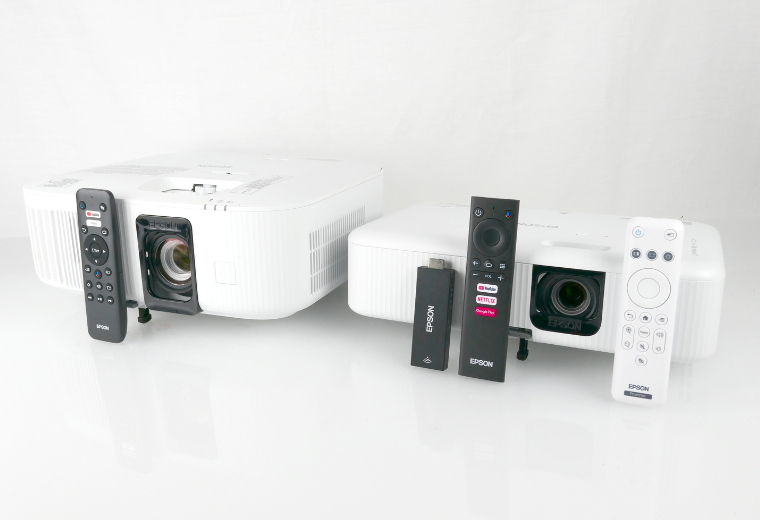
The EH-TW6250 is not a mini projector, but in its class it is quite compact. The zoom lens, which allows for a wide throw ratio, also makes positioning it easier. For example, a 2.34–3.81 meter distance yields an image of 80 inches, and for a really large 120-inch image, 3.53–5.74 meters are required. There is a so-called keystone adjustment for the vertical/horizontal perspective distortion caused by indirect reflection, and there is also automatic correction in the vertical direction. With the so-called lens shift feature, the image can be shifted vertically without requiring the projector to be tilted. The adjustment of the image height enabled by the lens shift also expands the projection projector’s placement and mounting options. However, with Epson, the image can only be shifted downward from the base level, which means that in this case the bottom edge of the image is normally only slightly higher than the center of the lens (the so-called offset value is approximately 108 percent). From this point on, the image can be moved quite a lot. This is useful if the projector is placed high up, for example on a shelf on the back wall of the room. In this case, the image must be projected well down. More information about offset and other issues can be found in the link at the end of the article.
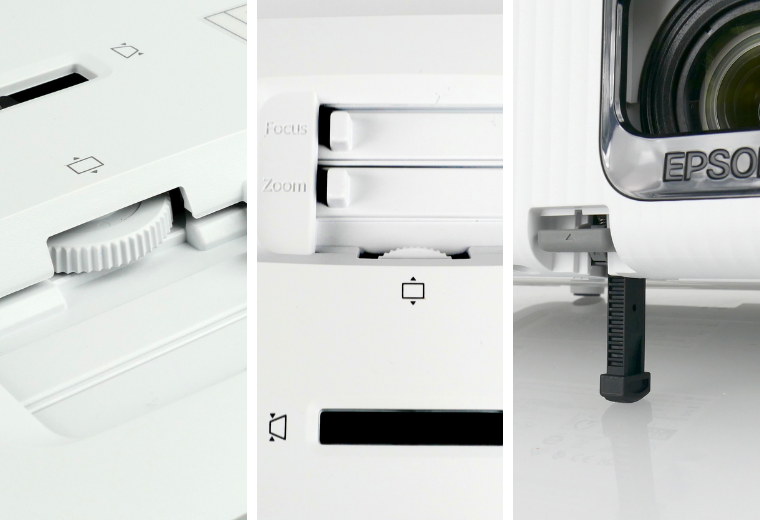
In CO-FH02, the adjustments are implemented digitally, and for example, the adjustment of the image size is much more limited and there is no corresponding adjustment for the vertical position of the image; instead, it must be done by tilting the projector, which again requires correcting for geometric errors.
Jatka artikkelin lukemista
Tämä artikkeli kuuluu AVPlus Extra -sisältöön. Jatka lukemista 1 krediitillä.
Login if you have purchased
Lukuoikeus artikkeliin
Tämän artikkelin lukeminen maksaa 1 krediitin. Lukuoikeus avaa artikkelin kokonaisuudessaan ja tallentaa sen käyttäjätilillesi. Alkaen 0,39 €Most read today
Latest
Subscribe to the newsletter
Subscribe to our newsletter and stay up to date with the latest news in technology and entertainment electronics.
Survey
Quiz
Nokia phones
Related Posts
TESTISSÄ: JBL EasySing Mics ja Mic Mini – mikrofonit tekoälypohjaisella lauluäänenpoistolla
Nyt karaokelaulannan pariin pääsee helpommin kuin koskaan ennen. JBL EasySing Mics ja EasySing Mic Mini lupaavat poistaa tekoälyn avulla lauluäänen...
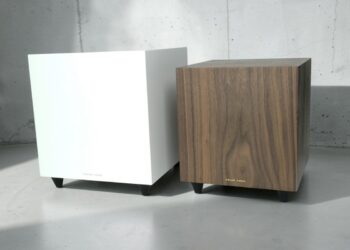
Testissä Argon Audio Berlin SUB 10 ja SUB 12 -aktiivisubbarit – Napakkuutta ja säädettävää
Tanskalainen Argon Audio on tullut tunnetuksi etenkin kohtuuhintaisista hifituotteistaan. Nyt valmistaja näyttää pyrkivän myös vaativampaan hintaluokkaan. Uudet hyvinkin kompaktin kokoiset...
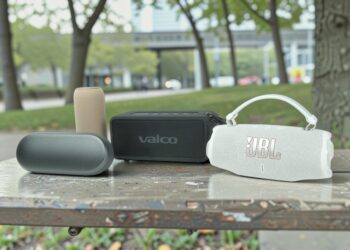
Valitse paras Bluetooth-kaiutin: Vertailussa neljä erilaista Bluetooth-kaiutinta – JBL vs.Valco ja Harman Kardon vs. Motorola
Bluetooth-kaiuttimien markkinoita hallitseva JBL ja sen järeä Charge 6 saa vastaansa kotimaisen Valco Nordell Maxin. Kohtaako JBL voittajansa? Entä miten...
IN THE TEST: TCL 65C7L – Bright Mini LED with Wide Color Reproduction
TCL has invested heavily in Mini LED TVs in recent years and has also brought high brightness, rich local contrast, and comprehensive gaming features to clearly...
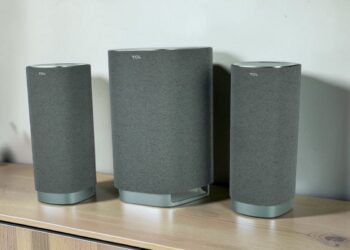
TCL Z100 and Z100-SW FlexConnect speakers – Easily almost like a real home theater
Dolby Atmos FlexConnect promises to solve one of the eternal problems of multichannel sound: the speakers don't need to be exactly in the right positions. The TCL Z100 speakers can...

IFA 2026 – these were the most interesting AV and technology innovations from Berlin
The Berlin IFA 2026 was not built around a single major announcement. TVs with RGB backlighting are making a strong entrance, soundbars are growing into full multi-channel systems, and projectors...
 Suomi
 English