
A whirl of streams from the ground – Test with Arendal 1723 Subwoofer 1S

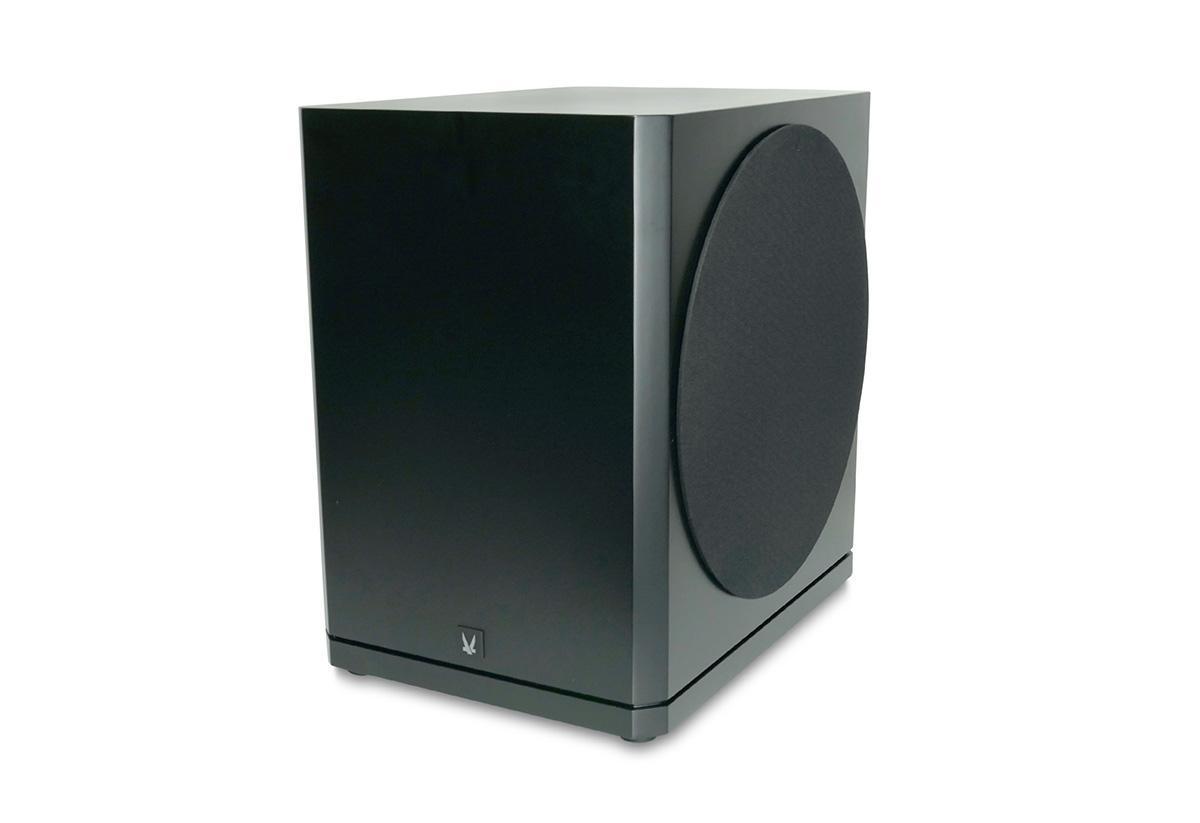
Norwegian Arendal has in recent years struggled to make it to the top of the loudspeaker market with its affordable yet high-quality creations. The same trend continues with the new 1723 series subwoofers, at least based on the closed active 1S model we tested here!
Text: Heikki Kivelä
Photos: Teppo Hirvikunnas & manufacturer
Over the past couple of years, Arendal has managed to impress not only us but also many other international hi-fi publications with quite capable loudspeakers and subwoofers. The relatively new Norwegian brand’s series 1961 and 1723 have both featured in our tests in various configurations, with mostly very commendable results. Most recently, we got to know the 1S and 1V active subwoofers of the 1961 series about a year ago in issue 10/2019. At that time, we concluded that both models were more expensive (1S at 799 euros and 1V at 999 euros) and more capable.
In principle, the same description applies to the newly released, starting at 1,299 euros, closed active 1S model of the 1723 series, which we were able to test just before the international release of the subwoofer. The updated 1723 subwoofer lineup also includes the reflex-based 1723 1V (starting at 1,599 euros) and the dual-element versions of both models, the 1723 Subwoofer 2S (starting at 1,999 euros) and the 2V (starting at 2,499 euros).
Creative business idea
Arendal differs from more traditional loudspeaker brands in that it sells its products directly in its own online store. The price of the speaker shown on the website includes VAT and shipping, and Arendal also handles duties and taxes for example. The company uses DHL or UPS for delivery depending on the size of the package.
What is also special is that Arendal promises a 60-day money-back guarantee for its products. Products can be returned (at your own expense) and you can get your money back if you are not satisfied with the quality for some other reason.
The speakers themselves are designed in Norway, but the manufacturing and assembly take place in China. However, having tested several Arendal speakers, we can assure you that the company has not compromised on cost optimization; the quality of workmanship and overall impression of the product are very high. Arendal also places such great faith in its products that it guarantees them a 10-year warranty (five years for electronics).
The entire amount
While many manufacturers have focused on designing streamlined and sleek speakers today and the market no longer really favors home theater series like before, Arendal is no exception. The manufacturer’s selection is primarily defined by its distinct, bold overall design and its own, in a way, brutal style. Furthermore, both of Arendal’s model years are full-fledged home theater speaker series, including all the necessary speaker models and offering even a choice of different configurations.
The trick here is that in principle – apart from the center and ceiling speakers – each pair of speakers works just as well in a stereo setup, and the same applies to the subwoofers in the lineup in a 2.1 configuration. Although the internal synergies of the brand certainly do matter, for example the 1723 Subwoofer 1S can be integrated into any configuration, whether it’s a two-channel or multi-channel system.
Still in reasonable dimensions
The closed-back Arendal 1723 Subwoofer 1S may not be quite as large in size as the brand’s largest reflex cabinet models. In fact, the 1723 1S is still just on the edge of being able to blend quite effortlessly into any room and decor. The enclosure’s height of just under half a meter corresponds exactly to the conventional TV stand, and the width is only 33.5 centimeters, so the 1S is relatively easy to place, for example, in the corner of the living room. The mass of the hdf enclosure has accumulated a relatively moderate 24.5 kilograms, so when moving the subwoofer, it is still quite effortless to find the right spot, as long as you take care of the lifting technique.
The efficiency ratio of the housing volume is probably optimized to a certain extent, because the 1723 1S element is nevertheless relatively large at 13.8 inches. It has been redesigned for the model series and now offers, among other things, a half-larger contact area. The material used for the card is a mixture of long-fiber paper pulp and glass fiber.
As a booster in the 1723 1S, there is Arendal’s own Avalanche IQ, in this case at 800 watts (rms). The connection options are a stereo RCA and xlr connection that can be pulled directly from the preamp, as well as the same connectors for the outputs if you want to, for example, chain two subwoofers to the system.
Practical adjustability
One thing that makes the Arendal 1723 Subwoofer 1S even more intelligent solution is its versatile adjustability. While the back of most subwoofers usually only have volume and crossover controls, the Avalanche IQ amplifier in some models may include many advanced adjustment options, such as signal phase inversion and fine-tuning, fine-tuning of the low-pass filter, three preset frequency correction profiles, a parametric equalizer, volume and input level control, and so on.
So far, adjusting the equalizer is done only by hand using the finessed 180-degree rotating display behind the subwoofer, the rotary control, and two buttons; but according to the manufacturer, in the future there should be a mobile app available. This should make the adjustment process much easier, especially in the installation phase, and also significantly speed up the exploration of different frequency correction profiles.
Trying it out
Evaluating the sound quality of a subwoofer is not as straightforward a process as, for example, with speakers. While speakers either fit into a space based on their design and features and can be judged fairly on that basis, getting to the true capabilities of a subwoofer often requires several rounds of adjustment and listening and then again adjusting.
The most important thing when placing speakers and a subwoofer in the audio system is, first and foremost, finding the right place. While speakers must maintain their proportions and distance from the listening position in a triangle, the subwoofer’s position can be chosen with a little more freedom. This is because the lower frequencies are not as directional as the higher ones, which are handled by the main speakers.
The subwoofer can therefore be placed in the room a little more freely, but a good starting point is to try to keep it in terms of distance from the main speakers using the same wires. Positioning it in a corner doesn’t necessarily hurt; in some cases it can even be a viable solution, as long as you simply adjust the subwoofer’s level to the correct setting.
In our case, the 1723 1S was placed in the corner on the same line as the main speakers, and the level of the input signal was reduced immediately by 10 dB from the factory settings. Once the appropriate level was reached, we looked for suitable values for the low-pass filter in relation to the main speakers’ playback. In our case, the subwoofer was located primarily by using the right volume control, but depending on the situation and placement, it may be convenient to try using the amplifier’s subsonic filter, which can attenuate the 12–31 Hz band with a steep 6 or 12 dB reduction.
The most important thing when adjusting the subwoofer is that it locks into place relative to the main speakers. You could say that the subwoofer’s adjustments are in place when its effect is not actually noticeable in the overall picture.
Fast low-frequency sound wave
Once the Arendal 1723 1S’s position and level had been found, we followed the manufacturer’s recommendation and let the subwoofer play for a good 50 hours so that the playback could burst into its full glory. However, one might have different opinions about this so-called break in phase. Some might wonder why some kind of finishing of the product is left to the consumer. Shouldn’t it be ready from the factory when it leaves the factory? The other side of the coin is that the in-ear connection and the adjustments made during it get the listener to pay a little more attention to the playback – at the same time as, for example, the mounting of the cartridge gets optimized.
In any case, with 1723 1S, we didn't actually notice any changes during the break in period or afterwards, so the invitation to enter the channel is probably more of a suggestion.
For those accustomed to compact subwoofers, the 1723 1S was a bit of a shock – in a good way. The amount of power and volume crammed into the enclosure felt unusually concrete, and when needed, the subwoofer managed to let out enough powerful sound to make pants tremble. However, in our tests, full-volume listening ended up playing a minor role, as the volume output was so high that it tested the limits of comfort – which, however, is to be said in the benefit of the 1723 1S. It’s rare that a listener runs out of breath before reaching the speakers.
However, astonishing power is not in itself worth much of a plus. Instead, the sensible use of power reserves and scalability for silent listening are the things that make a high-quality subwoofer recognizable. And in this area, Arendal has again succeeded.
As mentioned, the subwoofer is in place when you can hardly even notice it. In this role, the 1723 1S continued the playback of the main speakers very naturally and seamlessly, to the extent that the music – even the heavy bass-heavy kind – demanded it.
It should be mentioned, however, that the optimal place in the repeat chain required its own adjustments. With the factory settings, the subwoofer was completely too harsh and distinct, but by adjusting the level and focusing on the equalizer settings, a suitable setting was found. And once that was found, listening was equally enjoyable afterwards.


Most read today
Latest
Subscribe to the newsletter
Subscribe to our newsletter and stay up to date with the latest news in technology and entertainment electronics.
Survey
Quiz
Nokia phones
Related Posts

TESTISSÄ KAIKU WAVE wireless noise cancelling headphones – a Finnish challenger in the tough premium category
The Kaiku Wave is a wireless noise-canceling headset costing 449 euros, combining partly Finnish design, Finnish wood, restrained design, long battery life and...

Philips The Roller and The Tube – Moving sound with its own style
Philips The Roller and The Tube bring back the 1980s boombox spirit without cassettes or radio. It comes with Bluetooth, a battery, Auracast, and...
Cayin Jazz 70 – genuine tube sound and style at a reasonable price
The tube amplifier doesn't need to cost several thousand euros. The new Jazz 70 from Cayin brings classic EL34 tube technology, visible tubes, analog meters, and hand-crafted controls...

The use of artificial intelligence in music is growing rapidly, but there is still a lot to be learned about its use – at least in Finland.
Artificial music evokes significantly more reservations in Finns than the use of artificial intelligence in general. Artificial intelligence is rapidly becoming a part of everyday life, but the output it produces...

The new arrival of CDs is also reflected in devices – the Argon Audio CD1 is a new CD player priced at 399 euros
The arrival of vinyl records has been ongoing for a long time, and now a similar trend is also evident in CD records. Argon Audio responds to this interest with the new CD1 player,...

Audio-Technica ATH-AL5NC combines an open design and wireless connectivity – battery life up to 75 hours
Audio-Technica expands its range of open headphones with the ATH-AL5NC model, which is the manufacturer's first wireless open headphone. In addition to Bluetooth connectivity, it also features LDAC, noise reduction, and sound leakage...
 Suomi
Suomi  English