
INFORMATION & TIPS: The placement of the subwoofer matters

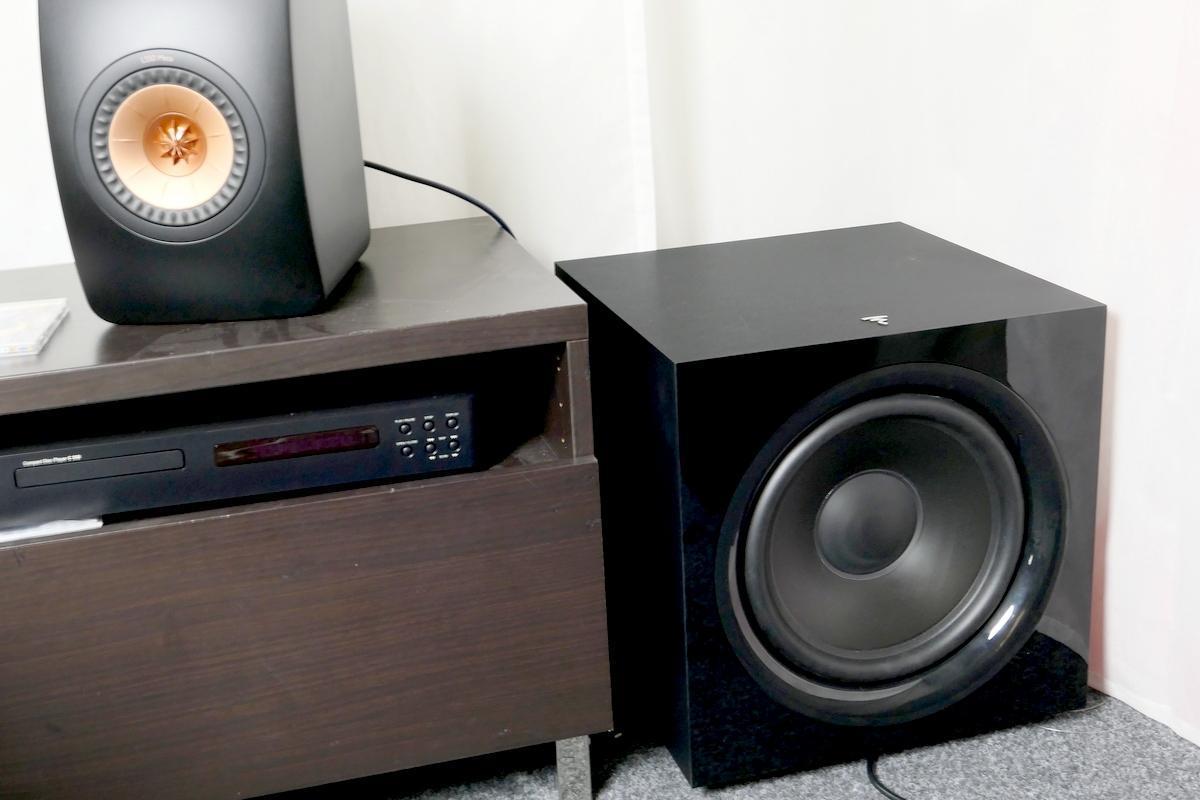
It is often said (even in subwoofer manuals) that the subwoofer can be placed quite freely, because the direction of the low frequencies is difficult, if not impossible, to locate. This is true in itself, but only in terms of locating the direction of the sound.
The location of the subwoofer has a major impact on its performance
This is mainly due to the so-called standing waves formed in the listening mode, which cause alternating attenuations and enhancements during repetition. Their location and intensity depend on the acoustics of the listening room, the size, proportions, and position of the subwoofer and the listening position relative to the interfaces. This is easy to verify simply by moving around the room. The bass response changes noticeably at different points in the room. Therefore, the position of the subwoofer also plays a major role in the repetition.
The measurement below is from the AVPlus magazine (8/2020) Comparison test of affordable 12-inch subwoofers, In it, we tried several different investment options for one model in the listening room.
No corrections were used in the measurements. The location has a huge impact on repetition. Therefore, the location is really important.
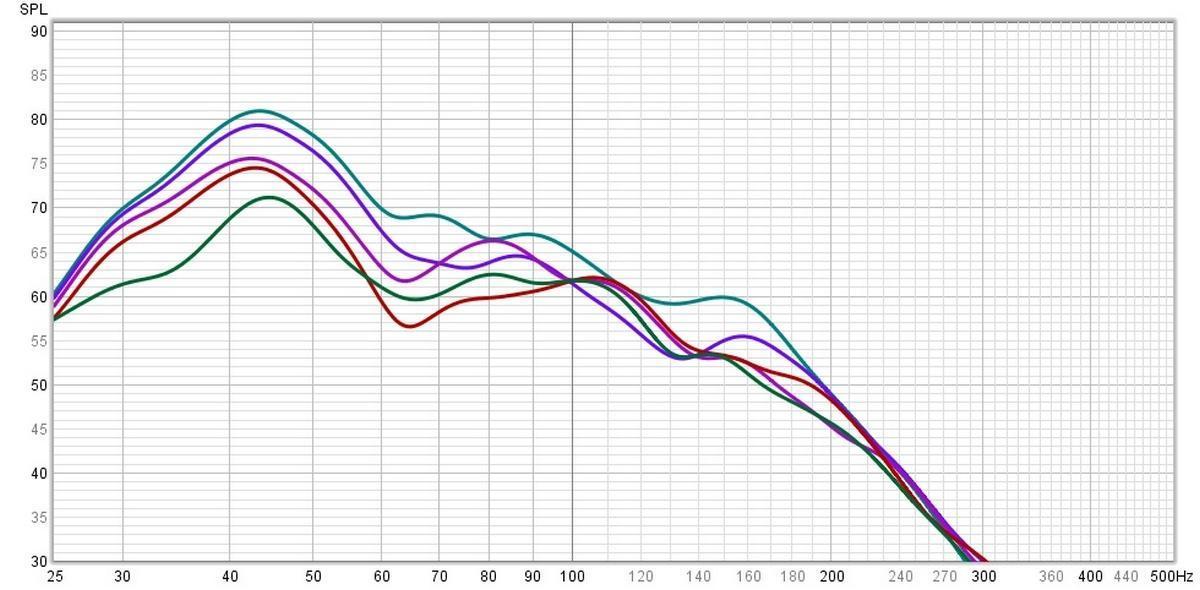
Playback response of the subwoofer (Focal SUB600) in different positions. The frequency range is 80 Hz and the subwoofer level control is the same in all measurements at the same point. Positions from top to bottom: 1) in the corner (right) and the element facing the wall, 2) in the corner (right) and the element facing forward, 3) in the corner (right) one meter forward moved towards the wall and the element facing the side (not towards the wall), 4) in the center of the speakers (but not in the center of the room) about 50 centimeters from the rear wall and the element facing forward, 5) next to the left speaker about 50 centimeters from the rear wall and 2.5 meters from the side wall (at their respective sides of the room, halfway from the room's rear wall).
As a rule, the best placement for a subwoofer is in the corner of the room. It is an asymmetrically positioned location, and because the interfaces are close together, the effect of standing waves is minimized. The interfaces also enhance the sound, so the subwoofer produces more volume.
In principle, the subwoofer should also be located as close as possible to the main speakers, at least on the same side of the room as the main speakers. There may be exceptions to this. Especially when the subwoofer’s frequency range is filtered lower.
The best location for a subwoofer can only be determined by experimenting. Sometimes a very unusual place can turn out to be the best.
Change of location
One good, albeit perhaps special, method has proven to be putting the subwoofer in a listening position, playing music, and going around the corners to listen to how the bass sounds. Once the best spot is found, then just change the positions of the subwoofer and listener. Even a small change can have a surprisingly big impact on the playback.
What about the home audio amplifier repairs? Don’t they mostly fix these kinds of room-related problems? Unfortunately, the echo and distortion caused by standing waves are difficult to fix successfully. When the echo is caused by the opposite phase, accentuating the sound in the area only produces a zero sum. Using a room amplifier can even make the situation worse. First, the right place for the subwoofer must be found before any kind of repairs are performed.
Jatka artikkelin lukemista
Tämä artikkeli kuuluu AVPlus Extra -sisältöön. Jatka lukemista 1 krediitillä.
Login if you have purchased
Lukuoikeus artikkeliin
Tämän artikkelin lukeminen maksaa 1 krediitin. Lukuoikeus avaa artikkelin kokonaisuudessaan ja tallentaa sen käyttäjätilillesi. Alkaen 0,39 €Most read today
Latest
Subscribe to the newsletter
Subscribe to our newsletter and stay up to date with the latest news in technology and entertainment electronics.
Survey
Quiz
Nokia phones
Related Posts

TESTISSÄ KAIKU WAVE wireless noise cancelling headphones – a Finnish challenger in the tough premium category
The Kaiku Wave is a wireless noise-canceling headset costing 449 euros, combining partly Finnish design, Finnish wood, restrained design, long battery life and...

Philips The Roller and The Tube – Moving sound with its own style
Philips The Roller and The Tube bring back the 1980s boombox spirit without cassettes or radio. It comes with Bluetooth, a battery, Auracast, and...
Cayin Jazz 70 – genuine tube sound and style at a reasonable price
The tube amplifier doesn't need to cost several thousand euros. The new Jazz 70 from Cayin brings classic EL34 tube technology, visible tubes, analog meters, and hand-crafted controls...

The use of artificial intelligence in music is growing rapidly, but there is still a lot to be learned about its use – at least in Finland.
Artificial music evokes significantly more reservations in Finns than the use of artificial intelligence in general. Artificial intelligence is rapidly becoming a part of everyday life, but the output it produces...
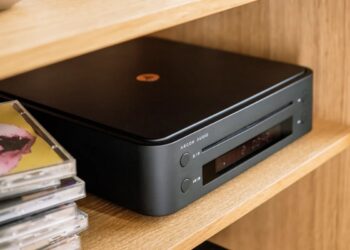
The new arrival of CDs is also reflected in devices – the Argon Audio CD1 is a new CD player priced at 399 euros
The arrival of vinyl records has been ongoing for a long time, and now a similar trend is also evident in CD records. Argon Audio responds to this interest with the new CD1 player,...
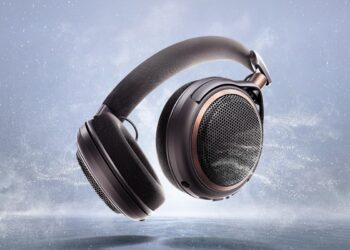
Audio-Technica ATH-AL5NC combines an open design and wireless connectivity – battery life up to 75 hours
Audio-Technica expands its range of open headphones with the ATH-AL5NC model, which is the manufacturer's first wireless open headphone. In addition to Bluetooth connectivity, it also features LDAC, noise reduction, and sound leakage...
 Suomi
Suomi  English