
IN THE TEST: Motorola Edge 70 – Thin and light only in size

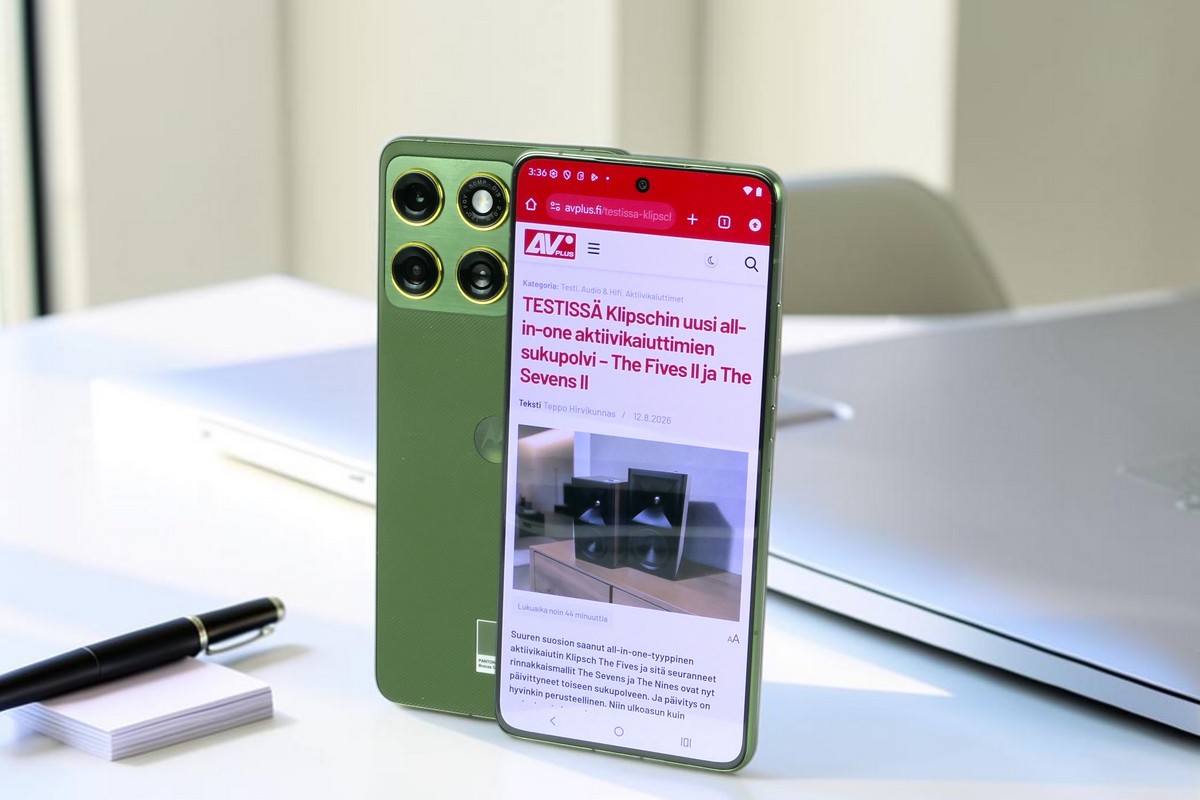
The Motorola Edge 70 was originally released back in November 2025, and its price at the time was 799 euros. And in principle it still is, but in practice it is already being sold for less than 500 euros. This is a mid-range phone, but the competition is fierce.
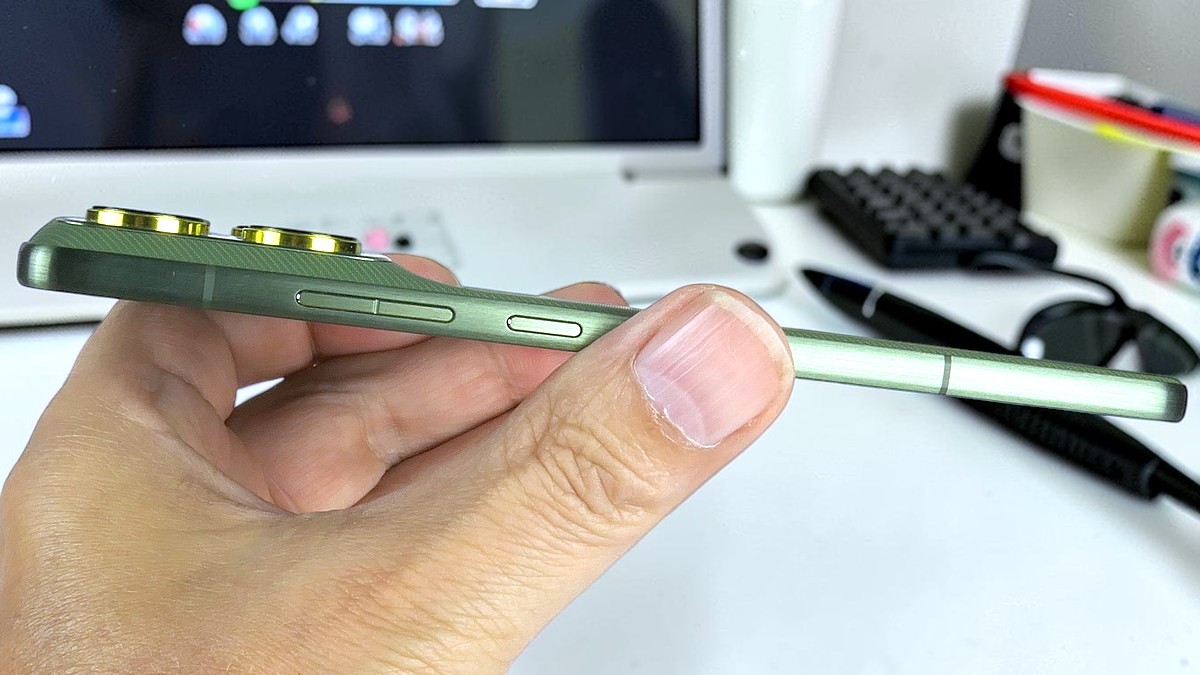
The selling point and specialty of the Motorola Edge 70 is its exceptionally thin and lightweight design. At just six millimeters thick and weighing 159 grams, it feels noticeably different in the hand than most current smartphones. And the quality feel is also on a good level. Despite this, a 6.67-inch OLED display has been achieved, a 4800 mAh battery, and quite extensive features.
The main selling point of the Edge is clearly its size. A typical smartphone weighs about 200 grams and is 8–9 millimeters thick, so you immediately notice the difference compared to the Edge. In numbers, a few millimeters and a few tens of grams don’t sound like much, but in the touch feel the difference is clear.
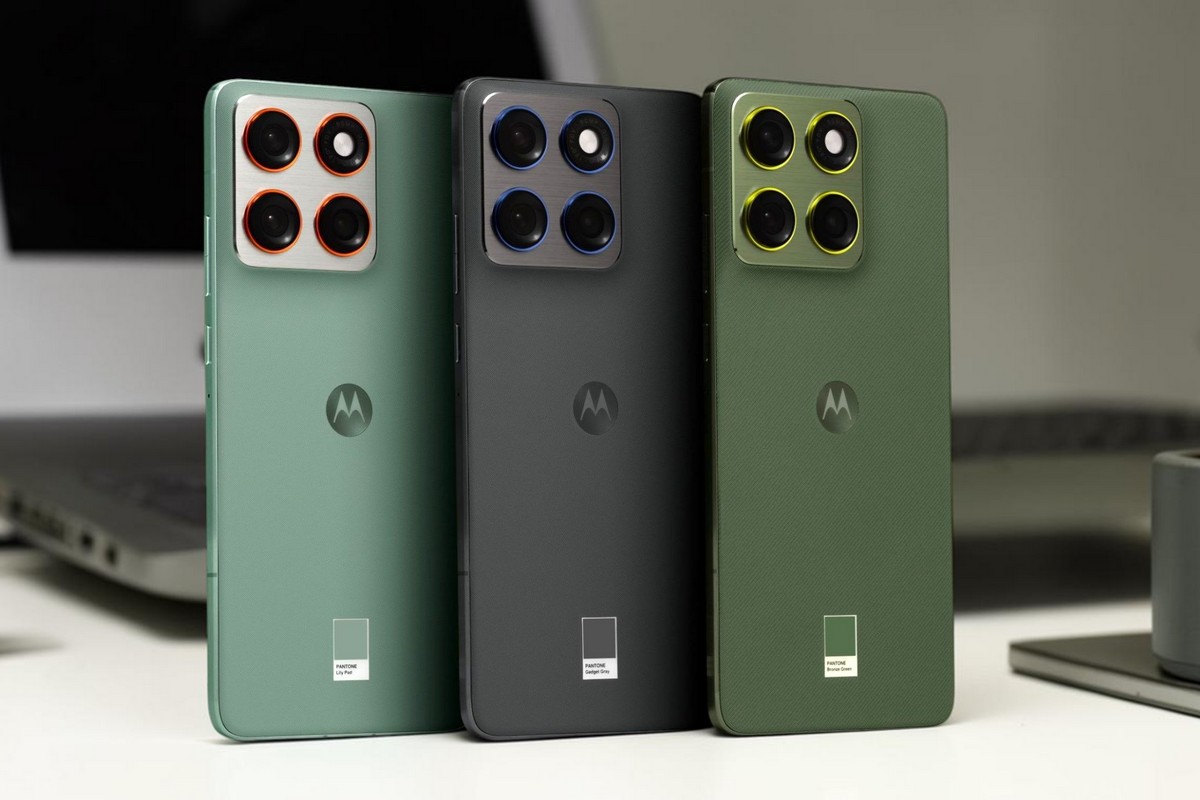
The Edge also attracts with its 512 GB storage capacity and a more personalized color palette than usual. There is no memory card slot. The color options include the gray and light shades, as well as the green Lily Pad and Bronze Green.
Under the hood is a Snapdragon 7 Gen 4 processor and 12 GB LPDDR5X memory. Four Android version updates and six years of security updates are promised for Android 16. The 6.67-inch P-OLED display offers 2712 × 1220 pixel resolution, 120 Hz refresh rate, and HDR10+ support. There are two 50-megapixel cameras on the back and a 50-megapixel camera on the front as well.
Thin but durable
As a phone, the Edge is really thin and it seems to be exceptionally durable as well. Its plastic, aluminum, and glass construction has received both IP68 and IP69 ratings, meaning the phone is very protected against dust and water. However, the IP rating does not indicate impact resistance.
Edge has also been tested based on MIL-STD-810H standards, among other things to account for various environmental and stress conditions. This indicates a more robust structure than usual, but of course does not mean that the phone is unbreakable. In practice, we did not test durability.
This in itself is good news, because even if the protective case is included in the box, you might not want to use it. The edge's greatest advantage is its slim design, and a thick protective case would practically take away some of that joy.
The design of the camera grip is also successful. Typically, the phone has a flat back plate, from which the camera grip rises quite steeply. At the edge, the back cover rises gently to the edge of the camera grip, which means that the structure does not stick to the edges of, for example, the trouser pockets as easily. The back cover is also pleasantly textured, so you can grip it with your fingers with good comfort.
In addition to the basic buttons, there is a separate button on the other side of the phone for using Motorola’s artificial intelligence functions. By holding it down, the user can activate various AI-powered features, such as voice control and an internet search based on what the camera sees.
The package includes a SIM tool, a USB-C cable, a clear plastic protective case, and quick instructions. A charger or separate protective film is not included, so these must be purchased separately if necessary.
The display also works in the rain
The 6.67” display is bright and colorful. The 2712 x 1220 pixel resolution, 10-bit DCI-P3 color reproduction, and HDR10+ support are more than adequate for all entertainment use, and the 120 Hz refresh rate keeps the display pleasant to watch. The manufacturer has stated that the maximum brightness of the display is 4500 nits, and although we couldn’t personally measure the brightness, the display’s brightness was more than adequate even in bright sunshine.
Although the Edgen Snapdragon 7 Gen 4 processor isn't a powerhouse by any means, it has enough power to handle everyday tasks without any problems. Applications open and switch quickly, the interface doesn't lag, surfing the internet is smooth, and taking photos is fast and seamless.
A particularly interesting usability feature is the Edgen Water Touch feature, which makes using the phone in the rain or when it’s wet easier. The water flow from the shower was too much for it, but in rainy weather operating the phone wasn’t at all impossible, even if the screen did make a few small misinterpretations of what letter I wanted to press in the instant message at the end of the day.
Daily use is smooth, measurements are less demanding
In more detailed power measurements, the Motorola Edge 70 performed quite modestly. In the 3DMark test program measuring graphical performance, the Edge's results rose to within the top 300 of the best phones. For example, in the Steel Nomad Light test batch, the Edge scored 772 points, while the leading models pull in over 3000 points. In the Wild Life test cycle, on the other hand, the Edge scored 7661 points and ranked 206th, while the top three teams pull in around 24,000 points. In some stress tests, stability remained in the approximately 70 percent range.
In the Geekbench 6 test program measuring the performance of the processor, Edge scored 1336 points on one core and 4170 on multiple cores. For example, the iPhone 16 Pro and similar super-phones score approximately 2950 and 7700 points, respectively.
Both results are still better than what the old favorite Samsung Galaxy A54 can manage, however. In Geekbench, the A54 scores around 850 and 2600 points, while in 3DMark's Steel Nomad and Wild Life, it scores around 280 and 2800 points, respectively.
Although the results are far from the top, they are just numbers. The truth is that Edge’s performance is more than adequate for normal entertainment and gaming use. Edge performs quite well with typical games: for example, in Minecraft, the lag was almost non-existent, and in Call of Duty Mobile, the gameplay was just as fast as it should be. Therefore, Edge’s performance can be considered quite reasonable, considering its intended use and price range.
Good battery life
Reasonable performance and a large battery are also reflected in the usage time. Motorola claims that the 4800 mAh battery provides up to 29 hours of video playback, eight hours of video recording, 66 hours of music streaming, and about 10 hours of social media usage. True enough, the fully charged battery in the Edge managed to last for a couple of days during the testing cycle, even though the phone occasionally got drained more often than it would have been good for even during the testing period.
3x 50 megapixels
The camera lineup already includes a main camera, a selfie camera, and an ultra-wide-angle camera; all of them are 50-megapixel sensors. The cameras’ autofocus works quickly enough, but manual focus may tend to be a bit off, and at the same time, it adjusts the exposure of the image in the wrong direction. The photos themselves are all decent, with no unnecessary color noise or extraneous noise that doesn’t belong in the picture.
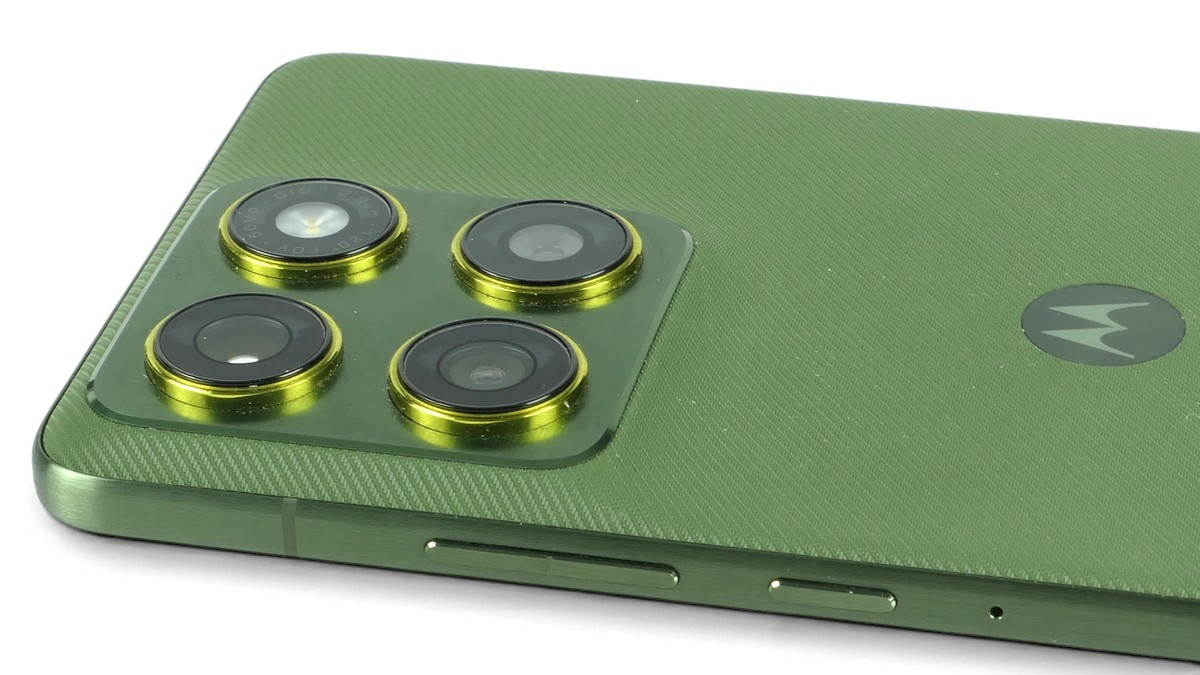
According to the manufacturer, the digital zoom reaches 30x Super Zoom magnification, but when using it, artifacts and interference start to creep into the images quickly. It is unfortunate that the phone does not have a separate telephoto camera with optical zoom.
Video recording is possible at 4K resolution at 30 frames per second. 60 fps is only available at Full HD resolution. In this price range, some competitors already offer 4K/60 fps, but this feature is not yet a given. Slow motion can be achieved at Full HD at speeds of up to 240 fps, so you can already create clearly slowed-down and impressive footage from the action.
Motorola's cameras and software offer various additional functions that make it easier to take photos and edit them. However, they do not change the basic nature of the camera system: the main and ultra-wide-angle cameras deliver quite good results in their class, but the absence of a telephoto camera limits the versatility of the whole package.
Sound and connections are fine
On the audio side, Edgest features stereo speakers with Dolby Atmos support. Although mobile speakers tend to fall short in terms of sound quality when listening to music, the Edge performed flawlessly with background music and speaker calls, with no issues whatsoever. Especially with audiobooks, the Edge was quite a good companion.
The phone can, of course, be connected to additional devices. There is no separate headphone port in the case, which is not surprising given the phone's slim profile. In addition to the standard 5G support, the Edge also features Bluetooth 5.4 and Wi-Fi 6E, which also supports the 6 GHz frequency band. The phone also has NFC support for near-field payments and GPS tracking.
The whole thing matters
Overall, the Motorola Edge 70 is a reasonably decent and above all a pleasantly thin phone. It has a good display and good battery life, and the IP68/IP69 protection, the MIL-STD-810H-tested construction, and the ability to use the display in the rain are welcome features.
With a current price of under 500 euros, the Edge 70 is also already more attractive than in its original price range. In this category, however, the competition is fiercely fierce: for the same money, you can find more powerful and camera-wise more versatile options. The choice of the Edge 70 is primarily based on how much value you place on an exceptionally slim and lightweight design.
Most read today
Latest
Subscribe to the newsletter
Subscribe to our newsletter and stay up to date with the latest news in technology and entertainment electronics.
Survey
Quiz
Nokia phones
Related Posts
TESTISSÄ KAIKU WAVE wireless noise cancelling headphones – a Finnish challenger in the tough premium category
The Kaiku Wave is a wireless noise-canceling headset costing 449 euros, combining partly Finnish design, Finnish wood, restrained design, long battery life and...

Philips The Roller and The Tube – Moving sound with its own style
Philips The Roller and The Tube bring back the 1980s boombox spirit without cassettes or radio. It comes with Bluetooth, a battery, Auracast, and...
Harry Potter fan's new phone is here? Only 100 units of the Realme 16 Pro are available in Finland
For Harry Potter fans, there is now a slightly more special smartphone available. Realme has brought the Realme 16 Pro 5G Harry...
IN THE TEST: TCL 65C7L – Bright Mini LED with Wide Color Reproduction
TCL has invested heavily in Mini LED TVs in recent years and has also brought high brightness, rich local contrast, and comprehensive gaming features to clearly...
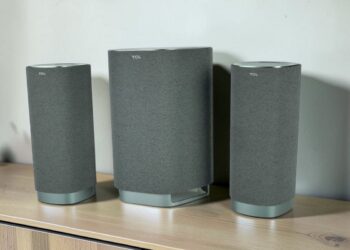
TCL Z100 and Z100-SW FlexConnect speakers – Easily almost like a real home theater
Dolby Atmos FlexConnect promises to solve one of the eternal problems of multichannel sound: the speakers don't need to be exactly in the right positions. The TCL Z100 speakers can...

IFA 2026 – these were the most interesting AV and technology innovations from Berlin
The Berlin IFA 2026 was not built around a single major announcement. TVs with RGB backlighting are making a strong entrance, soundbars are growing into full multi-channel systems, and projectors...
 Suomi
Suomi  English