
In the test with JBL Club One: ”On the side of a better club”

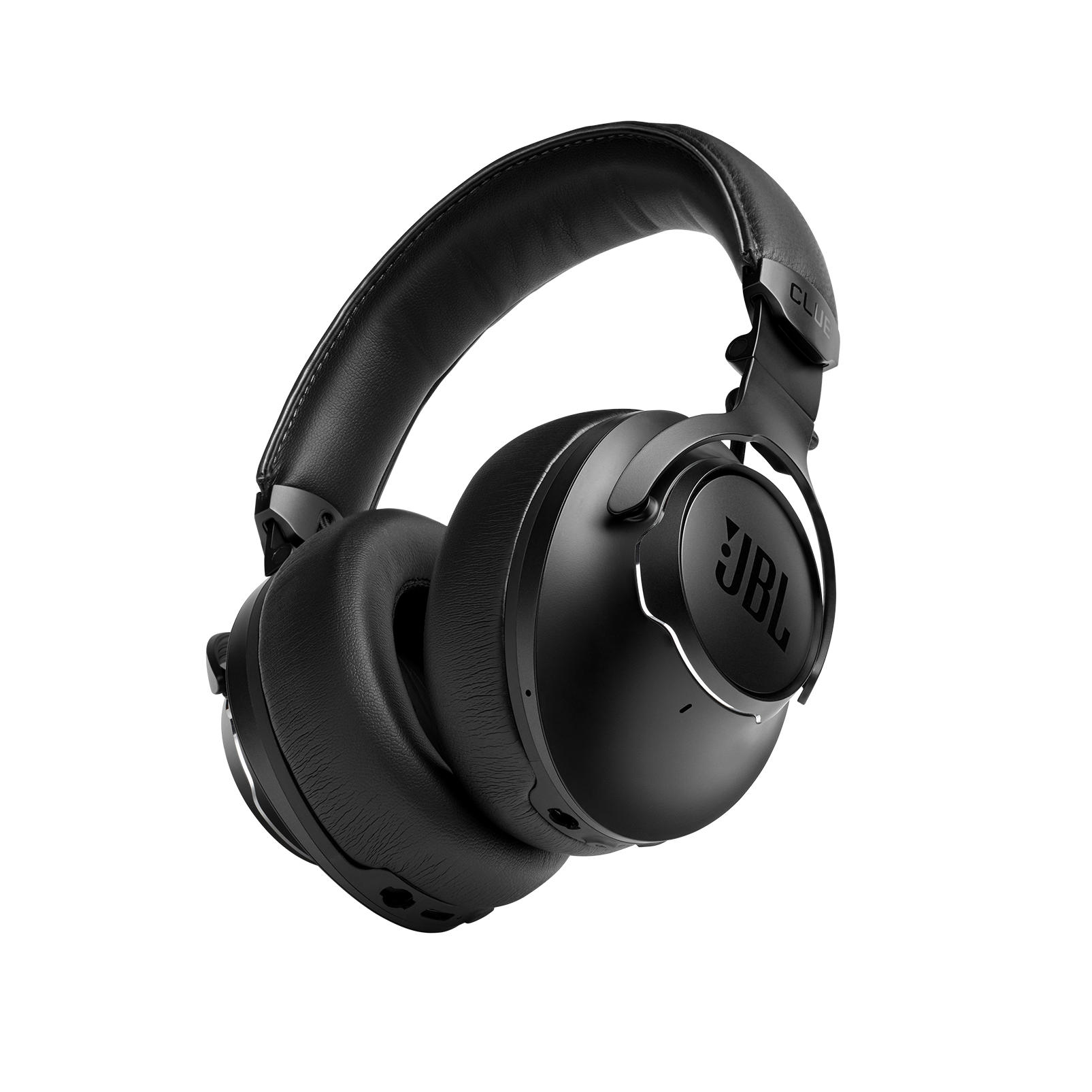
JBL is now known primarily for its stylish lifestyle and sports headphones, but now the classic brand has decided to take a step towards more understated elegance. We tested the flagship model of the new Club range, the Onen active noise-canceling headphones.
Text: Heikki Kivelä
Photos: Manufacturer
The popularity of wireless active noise cancelling headphones does not seem to be waning. On the contrary, there is a growing number of new entrepreneurs innovating in the market and competition from classic brands to see who can bring the most advanced version of their own vision to the market at any given time.
Judging by the city image and ad volume, the field of slightly more expensive, around 400 euro headphones has been dominated recently by Sony and Bose, but now they are joined by JBL, whose new Club range represents a somewhat more salon-worthy line in some ways.
JBL has left a positive impression in the past mainly in the category of models suitable for a more affordable lifestyle, but the new Club headphones are not only more elegant in design but also more expensive in price. The set of three headphones includes the usual wireless Club 800BT headphones (149 euros) and two active noise-canceling headphones, the Club One, which is currently under review, costs 349 euros. Alongside them is the surprisingly similar Club 950NC, which costs 100 euros less and offers longer battery life, but is also weaker in terms of power output.
Structure and implementation
Externally, Club One is largely an active noise-canceling headset that meets modern standards with high-quality leather, metal, and plastic components. The construction is sturdy enough that the impression is that the Club One also holds up relatively well in use. This, however, also feels quite sturdy in the relatively heavy 378.5 gram weight of the headset.
The fit of the headphones is good and comfortable, although users of glasses may have to rest their temples from time to time; the actual pressure or strain is not so much on the pads that rest around the ears as on the temples of the glasses. In cooler seasons, the headphones didn’t particularly pinch the ears when in use, but in the summer the situation may be different.
The Club Onet earbuds can move around quite freely, and why not even go for a walk? However, due to their heavy weight and leather-like ear pads, they are not really suitable for sports use. Furthermore, there is no mention of any IP protection for the headphones, so you should be careful with splashes and dust – especially since the ports for the cable and charging connectors cannot be sealed.
For connection, Club One uses version 5.0 Bluetooth, and it also has hands-free functionality for calls, as well as playback and assistant control buttons. During our testing, we found that the Bluetooth connection itself worked properly and did not drop, for example when changing rooms in the apartment. The sound quality of the calls in both directions was also excellent in all aspects.
The control buttons on Club One are located at the bottom on the edges of the earcups at the back. They work flawlessly, are firm enough and are logically arranged, making operation effortless even in that regard. The left earcup has power connection, connection configuration, and Smart Ambient activation, while the right one controls playback and adjusts the volume.
Battery and usability
According to the manufacturer, the battery in the JBL Club One is lithium-ion and has a capacity of 750 milliamps. In practice, this meant that according to our measurements, it took about a solid hour and a half to charge from zero to 100 percent and with the active noise cancellation on in basic use, a maximum of about 23 hours of listening time via Bluetooth. Both measurements correspond to the manufacturer’s promises and are roughly in the same class as the most important competitors. The Club One does not have a real quick-charging feature, which is something to keep in mind. Without the noise cancellation function, the music playback time reaches 45 hours.
The headphones can also be used with a cable connection in both active and passive mode. In passive mode, the Club One does not require power, so its operating time is basically unlimited. In active mode, however, the noise cancellation can be turned on even when using a wired connection, giving a playback time of 25 hours. The retail package includes two headphones with a 3.5 mm connector (the connector on the headphone is 2.5 mm), one coiled cable suitable for home use, and one straight cable. It also includes a flight adapter and a 6.3 mm adapter.
Driver application and connection
The JBL Club One can be controlled via the smart device with the JBL Headphones app, which proved to be one of the weakest links in the whole package during our test. For some reason, the app never found the headphones, even though they worked normally when connected to the iPhone. The reason for this was never clear, and we were using the most recent software versions.
Using the controller app itself is also somewhat secondary, as the most essential functions can also be controlled directly from the headphones. Primarily, the app is needed for making frequency correction settings during basic use, and it also provides a more detailed view of the battery status.
Club One also allows, like most of its competitors, a Bluetooth connection to two different devices simultaneously. In practice, this means that the headphones can be connected simultaneously to a smartphone and a computer, allowing the user to, for example, watch a YouTube video on a laptop and answer a call while not changing the connection.
However, we concluded that when connecting the two devices, there were significant problems with the functionality of the headphones. On a few occasions, the playback of the headphones started to stutter so badly that they had to be restarted. Additionally, at some point, the connection would just disconnect and the headphones would turn off. The battery life also seemed to affect the quality of the connection, as the interruptions increased when the battery was low – even though other Bluetooth devices and connections were turned off in the environment.
However, JBL is not alone in experiencing problems with the Bluetooth connection; similar issues have also been reported with competitors’ headphones. There seems to be some fundamental problem with the same Bluetooth components used by different devices at the root of the issue. And it should be emphasized that, in general, the experience was very good, even though we cannot say the same about the flawless performance in this case.
Features and functions
The most important feature of the JBL Club One is the active noise cancellation function in the headphones, which in this case worked as expected. In essence, it is about the two microphones in the headphones that, as it were, listen to the sounds around them and reproduce them in the user’s ear in a counter-phase, whereby the sounds cancel each other out. The effectiveness of the noise cancellation function varies depending on the frequency range, and it works best at reducing static noise or noise originating from machinery, such as air conditioning systems and other mechanical noise, as well as human conversation and traffic sounds. In practice, therefore, for example, air conditioning systems and other mechanical noise, as well as the sounds of people talking and traffic, are significantly reduced compared to using purely structural passive sound insulation.
Sometimes the effective noise cancellation function can cause the user to perceive some kind of psychophysical pressure, but in the case of the JBL Club One, nothing unpleasant was manifested. The noise cancellation function also did not cause significant background noise to the signal and thus did not interfere with the listening experience in any way. The effectiveness of the noise cancellation function may not have been particularly impressive, but it functioned quite well nevertheless. However, in outdoor conditions, the wind gusts caused some noticeable noise in the headphones, which is also a characteristic feature of many other similar headphones.
Club One is also equipped with a kind of noise-canceling function, which JBL calls Smart Ambient. By activating it, the headphones allow ambient sounds to be heard in a controlled way, making it possible to have a conversation with a friend while wearing the headphones. However, in basic use, it may still be easier to remove the headphones from the ear than to take advantage of this feature – unless, of course, you specifically want to eavesdrop on your surroundings.
Sound quality
The sound quality of the JBL Club One was impeccable throughout the test, and there was really no need to adjust the playback profile to achieve the desired result. Compared to its closest competitors, the sound of the Club One had a good touch of presence and tight punch in the bass department. Therefore, the playback can be said to be quite good by default.
Although the sound might seem a bit flat and slightly subdued at first, the neutral profile is easy to get used to and become fond of over the longer term. Additionally, the more moderate natural bass emphasis extends the enjoyment of listening, especially when listened to quietly.
The volume of the headphones offers a sensible level of loudness mostly. Perhaps some careless user might need more of it, but in basic use the volume limits don’t need to be tested. Thanks to their good durability, the headphones can also be used wirelessly, for example connected to a headphone amplifier, so in principle they offer the possibility of louder listening as well.

The headphones come with a sturdy travel case, two headphone cables for passive use, as well as adapters and a charging cable.

The buttons on Club One are cleverly designed and easy to use. At the bottom of the left earbud is a power button, a Bluetooth connection button, and the Smart Ambient function that allows for transparent listening. On the right side, next to the charging port, there is an audio volume control and playback control. The cable can be connected to either side.

Using the JBL Headphones app is quite optional. First of all, it doesn't offer a more detailed display of battery status or a frequency adjuster, let alone anything else useful, and second of all, in our test it didn't always find the Club One headphones, even though the connection between the smartphone and them worked flawlessly.
Most read today
Latest
Subscribe to the newsletter
Subscribe to our newsletter and stay up to date with the latest news in technology and entertainment electronics.
Survey
Quiz
Nokia phones
Related Posts
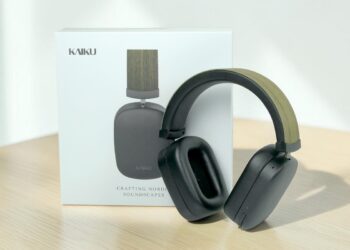
TESTISSÄ KAIKU WAVE wireless noise cancelling headphones – a Finnish challenger in the tough premium category
The Kaiku Wave is a wireless noise-canceling headset costing 449 euros, combining partly Finnish design, Finnish wood, restrained design, long battery life and...
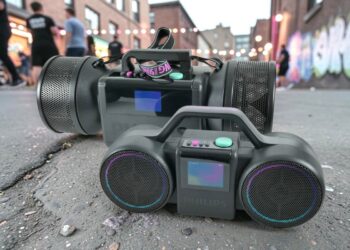
Philips The Roller and The Tube – Moving sound with its own style
Philips The Roller and The Tube bring back the 1980s boombox spirit without cassettes or radio. It comes with Bluetooth, a battery, Auracast, and...
Cayin Jazz 70 – genuine tube sound and style at a reasonable price
The tube amplifier doesn't need to cost several thousand euros. The new Jazz 70 from Cayin brings classic EL34 tube technology, visible tubes, analog meters, and hand-crafted controls...
The use of artificial intelligence in music is growing rapidly, but there is still a lot to be learned about its use – at least in Finland.
Artificial music evokes significantly more reservations in Finns than the use of artificial intelligence in general. Artificial intelligence is rapidly becoming a part of everyday life, but the output it produces...
The new arrival of CDs is also reflected in devices – the Argon Audio CD1 is a new CD player priced at 399 euros
The arrival of vinyl records has been ongoing for a long time, and now a similar trend is also evident in CD records. Argon Audio responds to this interest with the new CD1 player,...
Audio-Technica ATH-AL5NC combines an open design and wireless connectivity – battery life up to 75 hours
Audio-Technica expands its range of open headphones with the ATH-AL5NC model, which is the manufacturer's first wireless open headphone. In addition to Bluetooth connectivity, it also features LDAC, noise reduction, and sound leakage...
 Suomi
Suomi  English