
Hifiman Isvarna headphones – Planaari and dynamic bass element in the same housing


Unusual structure
The Isvarna looks silver-plated and sharp, but also quite special – because of the oval-shaped subwoofers, the aluminum frames have been made exceptionally wide from the back. A striking feature is also the large black bass ports, which stylistically resemble the air intakes of sports cars. The metallic structure of the hero model, on the other hand, corresponds to the Hifiman HE1000 speaker series.
An expensive headset is always supposed to feel high-quality, as evidenced by the Meze Audio Empyrean models. Compared to them, the Isvarna doesn’t quite convince despite its all-metal construction; the tolerances between the parts are loose and the hinge brackets sometimes squeak like a rusty door. The inner cup is also not properly padded, so the rattling of the structure makes them sound like empty storage bins. The design budget has therefore been spent elsewhere.
Comfort is what makes a bigger difference. The Isvarna sits evenly on the head and is quite discreet despite its 462 gram weight. This is thanks to the gentle pressure of the webbing and the wide harness on the head. There would also be plenty of adjustment options for height, and there would be no need to change the soft ear pads even if some of them would certainly need to be slightly larger in the vertical direction. The pads attach to the straps with an interesting velcro tab, so they are easy to remove. Although a tighter fastening solution might improve the sound insulation of the structure, in the case of the Isvarna it hardly matters, because the sound would still leak in and out through the large bass ports in any case more than usual.
The product packaging and comprehensive equipment selected by Hifiman also deserve a mention. The box, covered in brown faux leather, includes not only the headphones, but also a hard-bound user manual and as many as three different cables. One of these is designed for mobile use thanks to its length of 1.5 meters and a 3.5 mm plug positioned at an angle of 90 degrees, while the 3-meter cables (XLR/6.35 mm) cope with even more challenging listening situations. The wires running inside the tubular casing do, however, raise doubts about the long-term durability of the cables, and the rough surface material is not the best choice due to its microphone sensitivity.


Jatka artikkelin lukemista
Tämä artikkeli kuuluu AVPlus Extra -sisältöön. Jatka lukemista 1 krediitillä.
Login if you have purchased
Lukuoikeus artikkeliin
Tämän artikkelin lukeminen maksaa 1 krediitin. Lukuoikeus avaa artikkelin kokonaisuudessaan ja tallentaa sen käyttäjätilillesi. Alkaen 0,39 €Most read today
Latest
Subscribe to the newsletter
Subscribe to our newsletter and stay up to date with the latest news in technology and entertainment electronics.
Survey
Quiz
Nokia phones
Related Posts

TESTISSÄ KAIKU WAVE wireless noise cancelling headphones – a Finnish challenger in the tough premium category
The Kaiku Wave is a wireless noise-canceling headset costing 449 euros, combining partly Finnish design, Finnish wood, restrained design, long battery life and...

Philips The Roller and The Tube – Moving sound with its own style
Philips The Roller and The Tube bring back the 1980s boombox spirit without cassettes or radio. It comes with Bluetooth, a battery, Auracast, and...
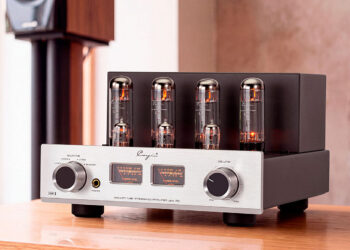
Cayin Jazz 70 – genuine tube sound and style at a reasonable price
The tube amplifier doesn't need to cost several thousand euros. The new Jazz 70 from Cayin brings classic EL34 tube technology, visible tubes, analog meters, and hand-crafted controls...

The use of artificial intelligence in music is growing rapidly, but there is still a lot to be learned about its use – at least in Finland.
Artificial music evokes significantly more reservations in Finns than the use of artificial intelligence in general. Artificial intelligence is rapidly becoming a part of everyday life, but the output it produces...

The new arrival of CDs is also reflected in devices – the Argon Audio CD1 is a new CD player priced at 399 euros
The arrival of vinyl records has been ongoing for a long time, and now a similar trend is also evident in CD records. Argon Audio responds to this interest with the new CD1 player,...

Audio-Technica ATH-AL5NC combines an open design and wireless connectivity – battery life up to 75 hours
Audio-Technica expands its range of open headphones with the ATH-AL5NC model, which is the manufacturer's first wireless open headphone. In addition to Bluetooth connectivity, it also features LDAC, noise reduction, and sound leakage...
 Suomi
Suomi  English