
Freedom without cables – in comparison, wireless earbuds cost between €59 and €350

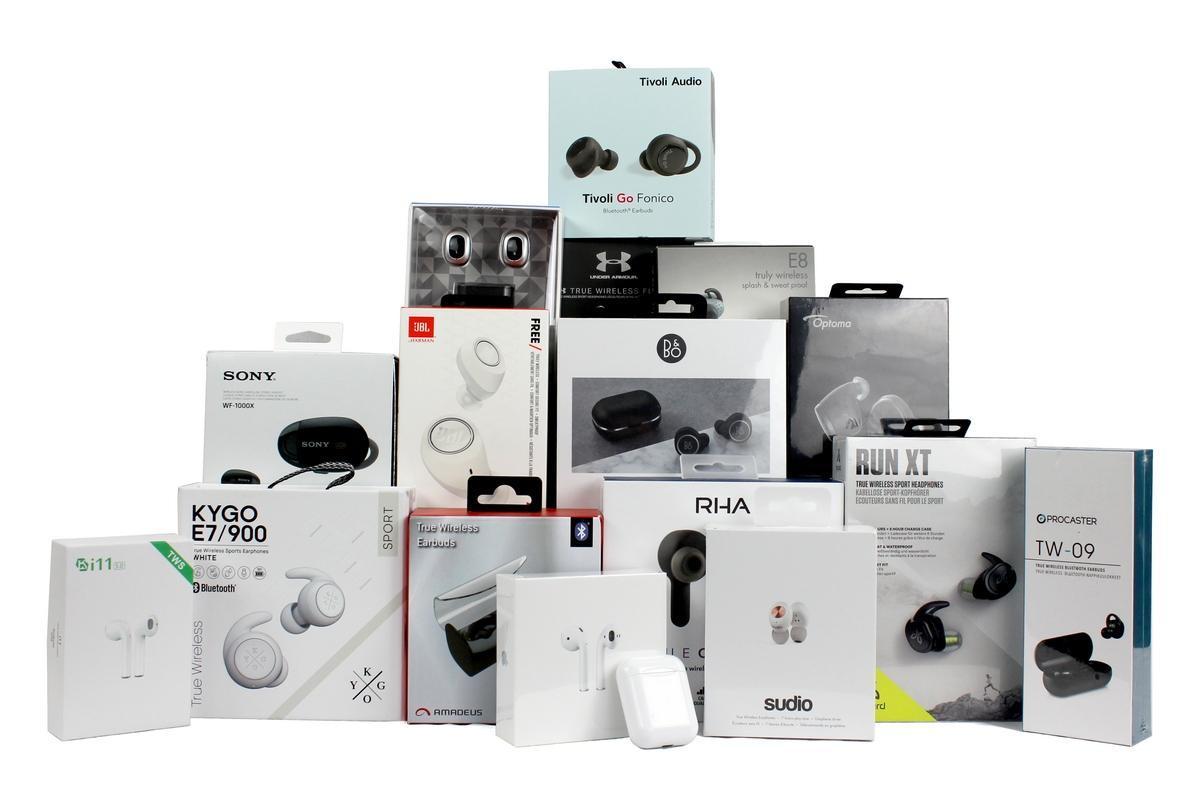
One of the hottest trends in personal audio right now is wireless earbuds. We took a look at 14 models from both well-known and slightly less-known manufacturers – and of course, there’s also Apple’s popular AirPod headphones, which truly ushered in the boom, and the surprise copy of them from China.
Text and images: AVPlus publication
Consistent quality and a couple of surprises
Our comparison of 14 full-fledged wireless headphones represents a fairly good average rating in its product category, even though the price range this time was in principle quite wide.
Of all the cheaper Amadeus Sentio models, priced at 59 euros, the price point did not go unnoticed and did not arouse particular enthusiasm. Instead, the Procaster TW-09 immediately above it was worth its entire price of 79.90 euros and surpassed even some more expensive models in terms of sound quality.
In the lower mid-range segment, both the silver placement in the comparison and the shared bronze medal went to the Sudio Tolv, JBL Free, and Kygo E7/900 headphones, which each cost 129 euros. These headphones proved to be worthy contenders in their category despite minor differences in design and performance.
The upper mid-range category was also home to, among others, the winner of the comparison, JBL Under Armour True Flash Wireless, as well as the second-to-last product, Apple AirPods, which launched the entire true wireless trend.
Of the representatives of the luxury series, B&O certainly convinced, but the stark comparison with cheaper alternatives did not leave the impression that the BeoPlay E8 2.0 would deliver full value for its price of 350 euros. Surprisingly, even the rather expensive Sony WF-1000X fell short in the test despite its features.
With this setup and these results, the nearly unbeatable, all-round compact and well-sounding JBL Under Armour True Flash Wireless is the perfect fit for almost any kind of physical activity; the completely opposite, elegant and slim-looking Sudio Tolv, also a little more subdued in appearance but with excellent sound quality; the similarly more restrained-looking but sound-wise commendable JBL Free; and the exciting and durable Kygo E7/900.
What is the difference between wireless and full-wireless earbuds?
Aren't wireless headphones already wireless?
Not necessarily, if believing is a marketing thing. But there is another side to it as well.
Previously, products sold under the name of wireless earbuds had at least some kind of cable between the left and right ear or between the Bluetooth receiver and the earphone elements. This is because the Bluetooth technology does not support simultaneous connection between two receivers in its basic form. Therefore, there can only be one receiver, from which the signal is further distributed through the wire to the two earbuds.
In fully wireless headphones, or so-called true wireless earbuds, there is no wire connection; the audio signal goes directly from the audio device to both earbuds completely wirelessly. But how?
The connection method used by wireless earbuds is simply ingenious: The audio is first transmitted to the actual Bluetooth receiver in the other earbud, from which it is then wirelessly transmitted to the other earbud. In practice, these two earbud units are therefore paired with each other. The earbuds are also able to take into account the delay caused by the transmission and signal processing so that the audio is heard simultaneously in both ears.
In fact, the transfer delay between the two headphone elements in the best headphones is always calculated when the headphones are turned on, and in principle it can even be continuously monitored. On the flip side, the drawback of the technology is that the continuous transfer from one headphone unit to the other is susceptible to interference and also increases power consumption. There is also a new TrueWireless Stereo Plus technology in development that enables simultaneous transfer of the left and right channels to both headphone units without intermediate transfer.
But we’re not going to get to that just yet; let’s take a look at a bunch of wireless headphones that currently use existing technology.

In fully wireless earphone models, the audio signal is first transmitted to the actual Bluetooth receiver on the other headphone unit, from which it is then sent on to the other headphone unit. This second transmission causes a delay that must be taken into account. In practice, the audio from the first receiving headphone unit must be delayed so that the audio can reach the other headphone unit. Only then is the audio played back simultaneously in both headphones. The synchronization between the headphones must be exactly correct, as the delay distorts the playback. The continuous transmission is also sensitive to interference and increases power consumption.
The TrueWireless Stereo Plus technology from audio chipmaker Qualcomm enables the simultaneous transmission of left and right channels to both headphones. This eliminates the problems associated with eliminating the delay caused by continuous transmission technology. Devices that support this technology simply do not yet exist. Device manufacturers may only begin using TrueWireless Stereo Plus technology in models released in 2020 or later.
Selections from a wide range of offerings
The rise of wireless earbuds actually began as early as the end of 2016, when Apple released its still-current AirPods headphones. Gradually, wireless earbuds began to appear from other device manufacturers as well, including more established headphone brands.
Currently, there are already several dozen brands and models on the market, and the supply is constantly growing. At the same time, the price level of headphones has also decreased. At their most affordable prices, they already cost around 60 euros, or even less. The most expensive wireless headphones, on the other hand, can cost over 300 euros.
”The extent of the supply surprised me!”
The extent of the supply also surprised us, and the comparison test originally planned to be much more limited quickly expanded.
The headphones for comparison were distributed with great popularity into four price categories: the affordable range of 50–80 euros, represented by Amadeus and Procaster. Above that is the lower mid-range category (119–129 euros), which already includes several well-known brands such as JBL, NuForce, Pioneer and Tivoli Audio, and in Finland also a little less known Kygo and Sudio. The next group represents the upper mid-range category (169–189 euros), which also includes familiar manufacturers such as JBL (Under Armour), RHA and Jaybird, as well as the much-discussed AirPod headphones. The most expensive series (265–350 euros) is represented by B&O and Sony.
Most headphones in the different price categories have a very similar basic design, but there is undoubtedly also a necessary variation and detail in the implementation. One clear dividing line, regardless of the price, is the intended use environment for the headphones. While some models are suitable for basic listening at home or at most as a timer for a shopping trip, others are designed more specifically for outdoor activities and sports use.
Listening on battery power
There are obvious advantages in the implementation of cordless headphones, especially in terms of the freedom they offer in terms of wireless connectivity, but there are usually also downsides to things. Perhaps the most significant drawback of cordless headphone technology is the relatively limited battery life. While over 20 hours of playback time in the field for traditional wireless Bluetooth headphones is by no means exceptional today, with full-wireless earbuds, even five hours on a single charge is tight. This is due, first of all, to the fact that the signal transmission technology consumes power, and secondly, because small, only 10-gram earbuds simply don’t have the space for significantly larger batteries.
”With a battery life of a few hours, you just have to get used to it.”
With a few hours of battery life, it’s just a matter of getting it to work. However, the charging of the headphones has been implemented in our comparison models in a clever way, with each one coming with a handy storage case that also serves as a backup power source, providing the headphones with two to four full charges depending on the manufacturer. Some models also have a type of quick charge that charges the headphones in about 5–10 minutes, giving over an hour of playback time.
Listening time for ”cheating”
The listening time for headphones is usually stated as 3 hours / 12 hours with the charging case. This means that the continuous listening time of the headphones is 3 hours and the power bank in the charging case is enough to charge the headphones 4 times (4 x 3 hours = 12 hours). Well, what about the charging time? Usually 1-2 hours. So it is a bit misleading to talk about a 12-hour listening time if it always means long charging breaks between listening sessions.
Careful on the course
While the battery capacity is a potential downside that is independent of the listener, it is the user’s responsibility to take care of the headphones. Although most models fit snugly on the outside ear, the risk of the headphones accidentally falling, for example when wiping hair, beard, or sweat, is always present with others. Especially Apple’s AirPod headphones are very easy to fall out of the ear with even a casual touch, whereas models with ear tips are much more reliably held in place.
The user should also pay attention to the kind of activity the headphones are suitable for. As mentioned, there are clearly optimized models for timing sports performances, such as the JBL Under Armour True Wireless Flash, the Kygo E7/900, and the Jaybird Run XT. All of them have IPX7 protection against splashes, which allows for even a short immersion in water. Therefore, ear sweating is not a problem for these headphones. The lower IPX5 protection, which ensures the headphones can withstand water from all directions, is found in the JBL Freest, NuForce, Pioneer, Tivoli Audi, and RHA models. The manufacturer does not specify the headphones’ potential splash resistance, so their ability to survive in more humid activities remains a mystery.
Individual feelings
The fit of in-ear headphones that go into the ear canal is almost one of the most important factors when evaluating a complete product. The comfort of in-ear headphones that are placed in the ear canal and the sound quality are generally very individual characteristics that are experienced very differently, whether they are wireless or wired. They are also strongly intertwined with each other. The playback profile of the headphones is influenced by the position of the headphones in the ear canal, which in turn is influenced by the shape and structure of the user’s outer ear and the ear canal. The ear adapters or plugs that fit the user’s ear canal are extremely important for achieving a pleasant user experience. Fortunately, all manufacturers – with the exception of Apple – have taken it upon themselves to equip their products with at least a few different sizes of replacement ear adapters, with RHA being the ultimate example, which comes with a whopping 10 pairs of interchangeable silicone and foam ear adapters. Some headphones also have a rubber ring that is threaded onto the edge of the ear unit, creating a kind of loop that, in turn, improves the headphones' stability by gently squeezing the outer earlobe.
Openly or secretly?
In-ear headphones also involve, at their best, a truly excellent ability to isolate external sounds, almost like a pair of earplugs. This, however, is somewhat a two-edged sword. On the other hand, the good isolation is useful when you want to completely isolate yourself from external noise. However, music that is directly piped into the ear canal may start to annoy the ears surprisingly soon if the volume is not kept moderate. The plug may also become painfully constricting in prolonged use. Furthermore, a user who is wandering aimlessly in a completely foreign soundscape may not notice important warning sounds from the environment, for example. Therefore, the best option is a slightly sound-permeable design that does not make the music playback too thin. But this is a difficult compromise, the functionality of which is further affected by the individual shape of the ear.
However, monitoring environmental sounds with headphones is possible with the transparency feature available from JBL, Sonus and B&O, which is undeniably useful when, for example, public transport announcements are blaring or you need to chat with a random friend.
More intelligent control
The wireless earbuds are most likely connected to the smartphone, so it’s no surprise that a few manufacturers have also integrated a controller app into the package. However, their functions and features vary.
Apple AirPods are essentially an informative pop-up box (see photo), The indicator appears on the iPhone home screen when the headphones are removed from the case. It shows the charge level of both the headphone unit and the charging case battery. Fortunately, Apple has not deemed it necessary to include a battery symbol showing the charge level on the top bar of the screen; instead, you have to dig through the control center to find the charge level of the AirPods you are using.
B&O app (see picture) offers the user, among other things, preset or self-adjustable frequency correction profiles. The same application also regulates the transparency of the headphones’ ambient sounds in a step-by-step sliding scale.
Jaybird app (see image) It also offers the possibility to adjust the playback profile of the headphones in the desired direction. The app also includes music listening tips and information about the headphones.
The most advanced controller app is available from Sony (see image). In addition to the noise cancellation and frequency correction profiles, the noise cancellation function is also controlled in the headphones and app. Despite the good idea, the WF-1000X were painfully susceptible to connection problems when using the app, and it also took a really long time to update the software version of the headphones.
What and how was tested?
The testing process initially involved unpacking the headphones from their packaging, inspecting and evaluating the equipment, familiarizing oneself with the instructions and features, and, of course, actually using the headphones. The setup process included setting up the charging station and charging the headphones, pairing the headphones with the phone, and performing a quick test of operation.
”Evaluating the sound quality of in-ear headphones is an exceptionally individual task.”
The actual listening test was conducted by two listeners using several separate Bluetooth transmitters. This allowed us to evaluate the sound quality simultaneously across several pairs of headphones.
During the listening test, the reliability of the headphones’ Bluetooth connection and possible interference were also tested, such as the potential interruption of the connection between the headphone units in a busy environment. The listening test also evaluated the comfort of using the headphones and overall usability, as well as the reduction of external noise. The playback time from full charge to battery failure was also measured, rounding the result to 15 minutes for accuracy.
Sound quality
As mentioned, evaluating the sound quality of in-ear type headphones that are placed in the ear canal is an exceptionally individual process, as the position and fit of the ear canal significantly affect the frequency balance of the playback. For example, bass reproduction is significantly reduced if the headphones are not deep enough in the ear canal, while conversely, bass that is too deep can unintentionally accentuate the sound. Naturally, the size and fit of the selected ear adapter also influence the final result.
On a general level, it can be said that the entire comparison group performed quite well in the critical sound quality assessment, and the differences were relatively small. In particular, we paid attention to the potential colorations and strain on the sound, which at their best enable longer listening sessions when not present.
Deployment and connection quality
The pairing and connection of the headphones was performed on three different smartphones (an iPhone and two Android phones) and via a Bluetooth transmitter in an environment with multiple open and active Bluetooth connections at the same time. In all cases, the headphones detected the paired device relatively quickly and effortlessly, although in some cases manual pairing had to be verified according to the user manual. Some models were able to connect automatically to the nearest Bluetooth transmitter immediately after removing the headphones from the case.
User comfort
In the listening tests, the listeners had the opportunity to choose the sizes and models from the ear adapters included in the sales package and to place the headphones in a comfortable position to achieve the best fit. The review is therefore seeking a combination of the best possible usability and comfort.
Operating time
The listening time provided by the headphones was measured separately for each model by playing music from them continuously from full charge until the connection between the Bluetooth transmitter and the headphones was broken. The battery level of the headphones was then checked again to rule out any possible connection interruption. The final result was calculated after at least one of the headphones remained off.
Equipment
The equipment was evaluated based on how many replaceable earbud pairs or tips came with the retail package, as well as the design and usability of the headphones storage and charging case. As a basic starting point, we considered that each model should come with at least three pairs of earbud sizes and a storage case that is durable enough to withstand normal wear and tear. The only exception was the Apple AirPods, which due to its design does not allow for the use of removable earbuds.
The story continues below the ad content
PRODUCTION ESTIMATES:
Affordable (59-80 €)
Amadeus Sentito – The basics for a low price
Price: 59 €

The most affordable headphone model for comparison is the Amadeus Sentito, in which the basic features of the product category have been roughly taken into account. It is a lightweight, slightly budget-friendly headphone that comes in a plastic case, and it also comes with three pairs of ear adapters and wings. Pairing the headphones and the audio player is done manually, but the manual in Finnish is helpful here.
It is a bit challenging to get the Sentitos to sit symmetrically in the ear, which naturally also affects their sound quality. One of the test subjects achieved the best result by having one ear fitted with an M-sized silicone plug and the other with an L-sized plug. Even then, the Sentitos’ playback was slightly muted in the center region and had quite a bit of bass gain.
The battery life of the Sentio headphones is the weakest in the comparison, only two hours. The retailer promises that the headphones are durable, but there is no more specific ipx rating for the Sentio headphones.
If money is the deciding factor, the Sentitot are a satisfactorily functioning option for full wireless earbuds, but with just a few extra bucks, the quality leap is already noticeable.
+ Cheap price
+ Basic things are in order
– Weak battery life
– A smooth implementation
– Poor sound quality
Procaster TW-09 – Balanced implementation
A GOOD PURCHASE
Price: 79.90 €

Another representative of the most affordable series in the comparison, Procaster, is actually already quite a viable pair of headphones in its category. The TW-09 is a simple, full-wireless headset stripped of all superfluous functions and features, which certainly works just as well with the newer Bluetooth 5.0 connection.
The TW-09s are connected to the repeaters manually, and their sound is somewhat colorless and balanced, which is an absolutely excellent feature and makes it relatively easy to enjoy any kind of music. The repetition is characterized by a pleasant balance across the entire frequency range, which also allows the nuances to stand out.
The Procaster’s plastic-like tube casing is mainly practical, and there are indicator lights on the back to indicate the charging status. The package includes three different size ear adapters and three wings to help keep them in place.
Despite its affordable price, the TW-09 is a hassle-free, balanced, and relatively comfortable companion with which you can enjoy three hours of music on a single charge.
+ Good price-quality ratio
+ Basic things are in order
+ Sound quality
– Avoidable battery life
– A completely stripped-down implementation
PRODUCTION ESTIMATES:
Lower middle class (119-129 €)
JBL Free – A reasonably priced surprise
WE RECOMMEND
Price: 129 €

Our comparison of the two JBL models, the Free (also sold under the name Free X), is perhaps easier to recommend as a suitable headphone for a relaxed basic style. Its strengths include excellent sound quality in its class, splash protection at IPX5 level, a four-hour battery life, and relatively good fit. The package includes three different size ear tips and two gel tips that make it easier to stay in place with the outer ear.
The sound of the JBL Freen is nicely round in the bass range, but there is also enough detail in the treble range. The headphones are also quite easy to position (thanks to the gel-fit tips), so enjoying the sound quality doesn’t require constant adjustment of the position. Setup is also easy and quick thanks to the automation, as the headphones automatically find the playback device. Additionally, with a one-hour quick charge, you can get an hour of playtime from the empty batteries.
If your own listening needs aren’t particularly athletic, the Freet are a great choice for everyday basic listening. The only minor downside is that the case is a bit flimsy in execution and easy to get dirty in the white version.
+ Good sound quality
+ Good fit
+ Excellent battery life and fast charging
– A bit flimsy and dirty (white) casing
Kygo E7/900 – Top-of-the-line series
We recommend reservations
Price: 129 €

Based on the points, the third-placed comparison with the JBL Freen is at least a little unknown so far, but Kygo has managed to pack a punch into its E7/900 headphones with a handful of great features of wireless headphones.
Included are the new 5.0 version of Bluetooth, IPX7-rated splash protection, and one pair of soft foam ear tips that are easier to fit securely in place thanks to the silicone.
Thanks largely to the foam-plastic cones, the reproduction of the E7/900 is at its best balanced, dynamic, and even exciting, while leaving enough air and life in the mid-range and treble regions. This serves many different musical styles and other audio content very well.
Unlike the other models, the Kygon radio is slightly boxy and structurally sturdy, and the audio units connect automatically to each other and the repeat device. If the E7/900 had provided a playback time that was one hour longer than measured, it would have taken first place in the test.
A really good option for both everyday use and fitness!
+ Good sound quality
+ Good fit with foam plugs
+ Robust storage case
– Only 3 hours of playback time
NuForce BE Free 5 – It's all about fit
Price: 129 €

The NuForce BE Free 5, which operates under Optoma, is one of those models in the comparison that has both something good and something to improve. On the principle level, the elegantly restrained buttons are visually impressive, but when placing them in their place, one must be careful not to accidentally press the control buttons that are located on the outside of the audio unit.
BE Free 5 are activated manually by connecting to the repeat device, but in the future they will remember the paired device and automatically connect to it when pulled out of the storage box equipped with a magnet.
Once the BE Free 5s have been placed in their proper positions, their playback is also quite well-balanced. The bass has a suitable authority, and the details at higher frequencies are clearly conveyed. The sound is slightly loudness-oriented in nature, so it is worth taking into account the risk of certain ear fatigue, especially during long listening sessions.
The headphones' battery lasts three hours on a single charge and one hour on a quick charge, giving you an hour of listening time with one charge.
+ Energetic sound
+ Decent appearance
+ Robust storage case
+ Fast charging option
– The control buttons may be pressed accidentally
– Seating with reservations
Sudio Tolv – Convenient and stylish
Price: 129 €

One of the unknown factors in the comparison is the Swedish company Sudio, whose Tolv headphones are, however, a rather pleasant surprise in their class. The overall design is elegant and thought-out, but above all it is sound-wise excellent. The battery life is also commendable at four hours, although the manufacturer’s seven-hour promise is far from being met. Also, there is no mention of the ipx rating, so the Tolv headphones may not be suitable for the most strenuous sports.
The case for the headphones is made of soft rubber, which means that it gets quite dirty quickly, especially in the white version. There are four pairs of ear tips in the package, all of which are silicone. However, the fit is generally very good, and the lightweight buttons are easy to put in place even without the support tabs.
Sonically, Sudio has tuned its headphones correctly. There are nuances and dynamics in the sound, and it’s easy to curb the bass’s dominance by leaving the headphones slightly open in the ear canal.
In short and to the point: a stylish, simple and handy option for basic listening!
+ Vivid sound
+ Appreciable battery life
+ Fit and lightness
– Easily dirtying case (in white version)
Tivoli Audio Fonico – Sound quality ahead of the curve
Price: 129 €

The Fonico headphones, which belong to Tivoli Audio’s new Go product line, may not meet all the hallmarks of their manufacturer externally, but acoustically the overall sound quality is clearly on the higher end of the mid-range.
The Fonicot sound at its best is a little louder, but it is comfortably and unrestrictively balanced, and the bass response is consistently robust. The passive noise isolation also works, making the Fonicos a good option even in a slightly noisy environment.
However, in the comparison, Fonicot was one of the models most affected by connection outages, so for example, in the city, connection problems may occasionally occur in the form of outages. However, in more peaceful home environments, this did not occur.
The headphones also cope with a slightly more humid environment thanks to the IPX5 splashproof rating, and the listening time is also relatively generous at three hours. Otherwise, the overall quality of the Tivoli Audio is solidly at the mid-range level, and the audio performance sometimes even goes beyond that.
+ Good noise insulation
+ Unbiased sound
– Disconnections
PRODUCTION ESTIMATES:
Upper middle class (169-189 €)
Apple Airpods – The starter of the trend
Price: 179 €

Apple's AirPod headphones could well be the subject of their own article, but in our comparison their success is weak: AirPods ranked second last in the ranking, behind Amadeus.
In principle, the AirPod headphones are perfectly suitable as fully wireless headphones, and Apple's expertise in headphones has improved significantly, compared to the original EarPods, for example. Still, the fit of the AirPods in the user's ear canal is completely random, and given the design, there is hardly any passive noise isolation in the headphones. Therefore, ambient sounds leak in quite loudly, and conversely, your neighbor will definitely notice what song you happen to be listening to.
Apple also doesn’t provide a lot of technical information about the AirPods, so the official Bluetooth version and splash resistance remain a mystery. Otherwise, the design is functional and elegantly minimalist. The battery life is also four and a half hours, which is close to the peak times of the comparison.
But still, these headphones are not worth buying for sound quality and comfort; there are better alternatives available.
+ Appearance and design
+ Battery life
– Sound quality
– Poor noise insulation
– Seating comfort
Jaybird Run XT – Pitkälle lenkille
Hinta: 189 €

Erilaisista sporttiluureistaan tunnettu Jaybird ei ole juuri muuttanut malliensa perusrakennetta, mikä on hyvä juttu: Jaybirdit ja etenkin Run XT on tehty liikunnalliseen menoon, ja siinä ne toimivat hyvin.
Run XT:n mukana tulee neljä erilaista korvasoviteparia ja siivekettä, jotka pitävät huolen siitä, että kuulokkeet pysyvät paikallaan. Hikoilusta ja roiskeista ei tarvitse myöskään huolehtia, sillä kuulokkeissa on ipx7-tason suojaus. Jaybirdin pikalatauskin on vertailun sukkelin, sillä vain viidessä minuutissa kuulokkeisiin saa tunnin ajaksi kuunteluaikaa. Varsinainen toistoaika on vertailun parhaimmistoa neljän tunnin ja 45 minuutin mitalla.
Muuten hyvän kokonaisuuden arvosanaa laskee äänenlaatu, joka on Run XT:ssä kauttaaltaan aavistuksen ontto keskialueelta. Tätä voi tosin korjata älypuhelimeen asennettavan ohjainsovelluksen taajuuskorjaimella, mutta luonteeltaan kuulokkeista puuttuu tiettyä keskialueen erottelukykyä verrattuna muihin. Jostain syystä myös yhteys Android-puhelimeen takelteli käyttöönoton yhteydessä.
Muuten Run XT on hyvä kumppani aktiiviseen elämäntapaan.
+ Kestävä ja urheiluun sopiva toteutus
+ Pitkä akunkesto
+ Istuvuus
– Hiukan ontto keskialuetoisto
JBL Under Armour True Wireless Flash – Varma valinta
TESTIVOITTAJA
Price: 179 €

Vertailun toinen JBL-malli on valmistajan Under Armour -sarjaa, joka takaa sopivuuden urheiluun sen lähestulkoon kaikissa ilmenemismuodoissa. True Wireless Flash -kuulokkeiden ja latauskotelon toteutus on poikkeuksellisen raskas ja tukeva, mikä nostaa vakuuttavuusindeksiä heti useammallakin pykälällä. Kuulokkeiden karusta ulkonäöstä huolimatta ne istuvat korviin yllättävän hyvin, ja niiden äänentoisto on Free-mallin tavoin tasapainoista, mukaansatempaavaa ja miellyttävää.
Akunkestoa True Wireless Flasheille mitattiin neljä tuntia ja vartti, mikä jää hiukan valmistajan ilmoittamasta viidestä tunnista mutta on silti vertailun kärkikastia. Latauskotelo taas on vertailun ylivoimaisesti kestävimmän oloinen ja alumiinia.
True Wireless Flasheissa on myös eräänlainen läpikuuntelumahdollisuus, jonka voi helposti kytkeä päälle tuplanapsauttamalla vasenta kuuloketta. Sen avulla saa selvän kaverin jutustelusta ilman, että kuulokeyksikköjä tarvitsee ottaa pois korvista.
Kestävyys, hyvä ääni ja miellyttävä käyttötuntuma nostavat True Wireless Flashit pienellä erolla kakkos- ja kolmossijoihin testin kärkeen.
+ Good sound quality
+ Good fit
+ Appreciable battery life
+ Todella kestävä kotelo
– Ulkonäkö varauksin
– Ei pikalatausta
Pioneer SE-E8TW – Kevyempää käytettävyyttä
Hinta: 169 €

Klassikkomerkki Pioneer on toteuttanut täyslangattomat nappikuulokkeensa melko kevyesti mutta käytettävyyttä vaalien. Kokonaisuus palveleekin monenlaista käyttöä, sillä kuulokeyksiköissä on ipx5-tason roiskesuojaus, akunkesto on melko hyvät kolme ja puoli tuntia ja äänikin on periaatteessa täysin miellyttävää kuultavaa.
Istuvuus jakoi kuitenkin testihenkilöiden mielipiteet, mikä on taas yksi osoitus siitä, että korvakäytävän muoto meillä kaikilla on yksilöllinen ja vaikuttaa keskeisesti kuulokkeen äänentoistoon. Arvioissa kuitenkin kehuttiin SE-E8TW:n muodokasta bassontoistoa sekä yleistä erottelevuutta. SE-E8TW:n varusteisiin lukeutuu myös hiukan paremmin ympäristöääniä lävitseen päästävät silikoniset korvasovitteet.
Vertailukontekstissa SE-E8TW:n säilytyskotelo ei ollut parhaasta päästä, sillä siinä ei ole magneettia kuulokkeiden paikallaan pitämiseen. Lisäksi kansi pitää olla kiinni, jotta kuulokeyksiköt alkavat latautua. Latauksesta ilmoittaa kuitenkin merkkivalo, joten riittää, että napit asettelee hahloihinsa oikein.
+ Korvasovittimet
+ Ilmoitettua pitempi akunkesto
+ Kevyet käyttää
– Heiveröinen säilytyskotelo
– Istuvuusongelmat varauksin
RHA TrueConnect – Kaikkien korville
Hinta: 169 €

Jos vertailussa on yksi malli, jonka luulisi istuvan kenen tahansa korvakäytäviin, niin se on RHA:n TrueConnect. Myyntipakkauksen mukana tulee nimittäin peräti 10 paria erilaisia korvasovittimia niin silikonisena kuin vaahtomuovisena. Myös itse kuulokeyksiköt ovat mukavan hillityt ja kevyet, joten niiden käyttö ja paikalleen asettaminen on suhteellisen helppoa. Neljän tunnin ja vartin akunkestokin on erittäin hyvä tulos.
TrueConnectien kohdalla oli tosin muutamia pieniä yhteysongelmia kuulokkeiden välillä, mutta ne loppuivat pian käyttöönoton jälkeen. Yksi testihenkilö myös mainitsi, että kuulokkeista törröttävä uloke oli hiukan hankala saada asettumaan paikalleen. Muuten istuvuudessa ja käytössä ei ollut valittamista. Ipx5-tason roiskesuojauksen ansiosta TrueConnectit sopivat myös urheilukäyttöön.
RHA:n toistoprofiili on maltillinen, selkeä ja moneen musiikkityyliin sopiva. Basson ja diskantin taso on melko hyvässä balanssissa, mikä jättää myös keskialueelle sopivasti ilmaa ja erottelua. Äänenvoimakkuutta tosin kuulokkeista voisi irrota hiukan enemmän.
+ Runsaasti korvasovittimia
+ Robust storage case
+ Tasapainoinen ääni
– Maltilliset äänenpainevarat
– Rakenteen istuvuus varauksin
PRODUCTION ESTIMATES:
Premium (265-350 €)
B&O BeoPlay E8 2.0 – Luksusluokka parhaimmillaan
Hinta: 350 €

Tanskalaisen B&O:n tuore BeoPlay E8 2.0 edustaa vertailussamme ennen muuta luksussarjaa. Rahalle on kylläkin tarjolla myös vastinetta, sillä E8 2.0:n akunkesto on vertailun parhaimmistoa neljän tunnin ja 45 minuutin toistoajalla, kuulokkeiden kotelo eleganttia nahkaa ja itse kuulokeyksiköt hillityn charmantit.
B&O on kiinnittänyt toteutuksessaan huomiota toimiviin yksityiskohtiin. Varustepuolella mukana on myös vaahtomuoviset korvasovitteet, joiden avulla kuulokkeet on helpompi saada istumaan paikalleen, silikonisten tulppien kanssa kun oli hiukan hankaluuksia. Samoin Android-ympäristössä kuulokkeiden käyttöönotto takelteli.
Mukana on näppärä ohjainsovellus, jolla voidaan paitsi hienosäätää kuulokkeiden ääntä myös kontrolloida läpikuuntelumahdollisuutta. Niinpä kuulokkeita ei tarvitse ottaa pois korvilta esimerkiksi keskustelun ajaksi.
Äänentoistoltaan E8 2.0:t ovat suoraan paketista kohdillaan, joskin basso määrää menoa aika vahvasti. Sitä on kuitenkin helppo hillitä ohjainsovelluksella, jolloin lopputulos on melkeinpä millä tahansa sisällöllä tasapainoista ja rasittamatonta kuultavaa.
+ Appearance and design
+ Miellyttävä ääni
+ Ohjainsovellus
+ Läpikuuntelumahdollisuus
+ Battery life
– Käyttömukavuus varauksin
– Yhteydenmuodostus Android-puhelimeen
Sony WF-1000X – Enemmän ominaisuuksia
Hinta: 265 €

B&O:n ohella vertailun hintavammassa kategoriassa on Sonyn nyt jo hiukan vanhempi WF-1000X, joka tarjoaa täyslangattomuuden ohella myös läpikuuntelu- ja vastameluominaisuudet. Näitä, kuten muitakin kuulokkeiden ominaisuuksia, ohjataan Sonyn omalla ohjainsovelluksella. Samalla päivitetään myös kuulokkeiden ohjelmistoversio, mutta päivitykseen meni testissämme reilusti toista tuntia.
WF-1000X:t olivat myös harmillisen herkkiä yhteysongelmille. Varsinkin taustaäänten hallintaa säätäessä yhteys toiseen kuulokkeeseen katkeili ärsyttävästi. Myös luvatusta kolmen tunnin toistoajasta jäätiin 45 minuutilla, mikä rokottaa Sonyn pistesaldoa tuntuvasti.
Periaatteessa WF-1000X:t ovat äänentoistoltaan, varustelultaan ja käyttömukavuudeltaan kiitettävät kuulokkeet, mutta ohjelmistopuolen epävarmuus ja alhainen akunkesto yhdistettynä kuitenkin merkittävästi kalliimpaan hintaan ja heppoisella saranalla varustettuun koteloon pudottavat mallin vertailun häntäpäähän.
+ Äänentoisto
+ Ominaisuudet
+ Käyttömukavuus
– Yhteysongelmat
– Kotelon toteutus
EXTRA: Airpodsit alle 20 eurolla?

Otimme ”mukaan” vertailuun Wish-nettikaupassa myytävän noin 11 euron hintaiset Apple AirPodsien kiinalaiskopiot i11 TWS:t.

Ulkoisesti niin kuulokeyksikköjä kuin koteloitakin myöten lähes identtiset mallit vaikuttivat aluksi ihan mielenkiintoiselta taisteluparilta, mutta karvas totuus paljastui heti kuulokkeet korviin laitettaessa. i11 TWS:t ovat kaikin puolin aivan raivostuttavan huono kuulokepari.
Pelkästään useammat yritykset nyppäistä kuulokkeet kotelostaan sai verenpaineen nousemaan, vaikka testin suorittajalla on mieshenkilöksi suhteellisen pienet ja sirot sormet. Ja kun kuulokkeet oli viimein saanut kaiveltua kotelon onteloista, niiden rakenne vaikutti nopeassa tarkastelussa siltä, että jos päälle astuu niin murusiksi menevät. Pelkkä hypistely oikeisiin AirPodseihin verrattuna paljasti, että kaikki mahdolliset tuotantokustannusten leikkaukset on tehty.
Ja mitä taas äänenlaatuun tulee, niin vaikka AirPodsitkaan eivät varsinaisesti ole luokassaan mitkään huiput, oli vaihto i11 TWS:ään kuin olisi vaihtanut musiikin soimaan puhelinlankoja pitkin. Musiikissa ei ollut väriä, ei bassoa tai diskanttia, ei oikeastaan mitään muuta kuin välttävästi välittyvää keskiääntä, ja sekin rasittavan nasaalisti.
Tämän perusteella emme suosittele näitä kuulokkeita kenellekään!
PISTETAULUKKO
| ARVOSTELU JA PISTEYTYS (Painoarvo %) | Amadeus Sentito | Procaster TW-09 | JBL Free | Kygo E7/900 | NuForce BE Free 5 | Sudio Tolv | Tivoli Audio Fonico | Apple AirPods | Jaybird RUN XT | JBL Under Armour True Wireless Flash | Pioneer SE-E8TW | RHA True Connect | B&O BeoPlay E8 2.0 | Sony WF-1000X |
|---|---|---|---|---|---|---|---|---|---|---|---|---|---|---|
| Äänenlaatu (40%) | 2 | 3,75 | 4 | 4,25 | 3,5 | 4,25 | 3,75 | 2,75 | 3,25 | 4,25 | 3,5 | 4 | 4 | 4 |
| Yhteyden laatu (20%) | 5 | 5 | 5 | 5 | 5 | 5 | 3 | 5 | 4 | 5 | 5 | 4 | 4 | 2 |
| Käyttömukavuus (20%) | 2 | 3 | 4 | 4 | 3 | 4 | 3,75 | 3 | 4 | 4 | 3 | 4 | 3,5 | 4,5 |
| Käyttöaika (15%) | 2 | 3 | 4 | 3 | 3 | 4 | 3 | 4 | 5 | 4 | 3 | 4 | 5 | 2 |
| Varusteet (5%) | 3 | 3 | 3 | 4 | 3 | 3 | 3 | 1 | 4 | 3,5 | 4 | 4 | 4 | 4 |
| YHTEENSÄ (100%) | 2.65 | 3.7 | 4.15 | 4.15 | 3.6 | 4.25 | 3.45 | 3.35 | 3.85 | 4.275 | 3.65 | 4 | 4.05 | 3.4 |
| SIJOITUS | 13. | 7. | 3. | 3. | 9. | 2. | 10. | 12. | 6. | 1. | 8. | 5. | 4. | 11. |
OMINAISUUSTAULUKO
| HINTALUOKKA | ||||||||||||||
|---|---|---|---|---|---|---|---|---|---|---|---|---|---|---|
| Merkki ja malli | Amadeus Sentito | Procaster TW-09 | JBL Free | Kygo E7/900 | NuForce BE Free 5 | Sudio Tolv | Tivoli Audio Fonico | Apple AirPods | Jaybird RUN XT | JBL Under Armour True Wireless Flash | Pioneer SE-E8TW | RHA TrueConnect | B&O BeoPlay E8 2.0 | Sony WF-1000X |
| Price | 59 € | 79,90 € | 129 € | 129 € | 119,90 € | 129 € | 129 € | 179 € | 189 € | 179 € | 169 € | 169 € | 350 € | 265 € |
| Edustaja, maahantuoja tai ostopaikka | Power | Verkkokauppa.com | Harman Consumer Finland Oy | Power | Autostudio | Tura Scandinavia | Loudgroup | Giant | Jaybird | Verkkokauppa.com | Loudgroup | Audiokauppa | B&O Helsinki | Sony Europe |
| More information | Linkki | Linkki | Linkki | Linkki | Linkki | Linkki | Linkki | Linkki | Linkki | Linkki | Linkki | Linkki | Linkki | Linkki |
| Bluetooth version | 4.2 | 5.0 | 4.2 | 5.0 | 4.2 | 5.0 | 5.0 | ei ilm. | 4.1 | 4.2 | 4.2 | 5.0 | 4.2 | 4.1 |
| NFC-paritus | - | - | - | - | - | - | - | - | - | - | - | - | - | x (kotelo) |
| Handsfree-toiminto | x | x | x | x | x | x | x | x | x | x | x | x | x | x |
| Toisto-ohjaus | x | x | x | x | x | x | x | x | x | x | x | x | x | x |
| Kuunteluaika (max) | 2-3 h | 4 h | 4 h | 3 h | 4 h | 7 h | 3,5 h | 5 h | 4 h | 5 h | 3 h | 5 h | 3,5 h | 3 h |
| Mitattu kuunteluaika | 2 h | 3 h | 4 h | 3 h | 3 h 15 min | 4 h 15 min | 3 h | 4 h 30 min | 4 h 45 min | 4 h 15 min | 3 h 30 min | 4 h 15 min | 4 h 45 min | 2 h 15 min |
| Puheluaika (max) | 2-3 h | 4 h | ei ilm. | ei ilm. | ei ilm. | ei ilm. | ei ilm. | 3 h | ei ilm. | ei ilm. | ei ilm. | ei ilm. | ei ilm. | ei ilm. |
| Valmiusaika (max) | 180 h | 60 h | ei ilm. | 100 h | 10 h | ei ilm. | 85 h | ei ilm. | ei ilm. | ei ilm. | ei ilm. | ei ilm. | ei ilm. | 35 h |
| Latausaika (max) | 2 h | 2 h | < 2 h | 2 h | 1,5 h | 1,5 h | 1,5 h | ei ilm. | ei ilm. | 2 h | 1 h | 1 h 40 min | 2 h | 1,5 h |
| Akun kapasiteetti | 40 mAh | 50 mAh | 85 mAh | 45 mAh | 55 mAh | 50 mAh | 45 mAh | ei ilm. | ei ilm. | 110 mAh | ei ilm. | ei ilm. | 85/60 mAh | ei ilm. |
| IP classification | ei ilm. | ei ilm. | IPX5 | IPX7 | IPX5 | ei ilm. | IPX5 | ei ilm. | IPX7 | IPX7 | IPX5 | IPX5 | ei ilm. | ei ilm. |
| Korvasovitteet | 3 pr | 3 pr | 3 pr | 4 pr | 4 pr | 4 pr | 3 pr | - | 4 pr | 3 pr | 6 pr | 10 pr | 5 pr | 7 pr |
| Other | 3 pr korvasiivekkeet | 3 pr korvasiivekkeet | 2 pr geelipehmusteet, saatavana mustana ja valkoisena | 3 pr korvasiivekkeet, 1 pr silikonirengas, saatavana mustana ja valkoisena | 3 pr korvasiivekkeet, saatavana tummanharmaana ja sinisenä | Saatavana mustana ja valkoisena | 4 pr korvasiivekkeet | - | Ohjainsovellus, 3 pr korvasiivekkeet, 1 pr silikonirengas, saatavana musta-keltaisena ja harmaa-sinisenä | 3 pr korvasiivekkeet, läpikuuntelutoiminto | 3 pr korvasiivekkeet, saatavana mustana, keltaisena, harmaana ja pinkkinä | Korvasovittimista 3 pr vaahtomuovisia | Ohjainsovellus, läpikuuntelutoiminto, saatavilla sinisenä, harmaana, kalkinvärisenä ja mustana | Ohjainsovellus, läpikuuntelutoiminto, vastamelutoiminto, 2 pr korvasiivekkeet |
| Paino (yksi kuuloke) | 4 g | 5 g | 7 g | 5,5 g | 6 g | 4,5 g | 5,5 g | 4 g | 7,5 g | 8,5 g | 6 g | 6,5 g | 6,5 g | 5,5 g |
| LATAUSKOTELO: | ||||||||||||||
| Akun kapasiteetti | 320 mAh | 500 mAh | 1 500 mAh | 460 mAh | 500 mAh | 500 mAh | 460 mAh | ei ilm. | ei ilm. | 1 500 mAh | ei ilm. | ei ilm. | 530 mAh | ei ilm. |
| Latausaika (max) | 3 h | 2 h | ei ilm. | ei ilm. | 1,5 h | ei ilm. | 2 h | ei ilm. | ei ilm. | 2 h | 3,5 h | ei ilm. | 2 h | 2–3 h |
| Latauskerrat säilytyskotelolla | 3 | ei ilm. | 4 | 3 | 3 | 4 | 2–3 | ei ilm. | 2 | 4 | 2 | 4 | 3 | 2 |
| Latausjohto ja -liitin | 15 cm, micro-usb | 15 cm, micro-usb | 28 cm, micro-usb | 60 cm, usb-c | 30 cm, micro-usb | 13 cm, micro-usb | 100 cm, micro-usb | 105 cm, lightning | 30 cm, micro-usb | 30 cm, micro-usb | 52 cm, usb-c | 52 cm, usb-c | 125 cm, usb-c | 50 cm, micro-usb |
| Dimensions (l x w x h) | 72 x 32 x 30 mm | 90 x 35 x 30 mm | 77 (halkaisija) x 32 mm | 57 (halkaisija) x 30 mm | 74 x 39 x 40 mm | 60 x 50 x 35 mm | 80 x 35 x 34 mm | 42 x 52 x 19 mm | 75 x 40 x 45 mm | 85 x 42 x 30 mm | 65 x 40 x 48 mm | 75 x 40 x 27 mm | 70 x 35 x 47 mm | 102 x 40 x 24 mm |
| Weight | 32 g | 46 g | 88 g | 44 g | 52 g | 43 g | 49 g | 39 g | 55 g | 102 g | 49 g | 78 g | 54 g | 67 g |
Most read today
Latest
Subscribe to the newsletter
Subscribe to our newsletter and stay up to date with the latest news in technology and entertainment electronics.
Survey
Quiz
Nokia phones
Related Posts
Philips The Roller and The Tube – Moving sound with its own style
Philips The Roller and The Tube bring back the 1980s boombox spirit without cassettes or radio. It comes with Bluetooth, a battery, Auracast, and...
Cayin Jazz 70 – genuine tube sound and style at a reasonable price
The tube amplifier doesn't need to cost several thousand euros. The new Jazz 70 from Cayin brings classic EL34 tube technology, visible tubes, analog meters, and hand-crafted controls...

The use of artificial intelligence in music is growing rapidly, but there is still a lot to be learned about its use – at least in Finland.
Artificial music evokes significantly more reservations in Finns than the use of artificial intelligence in general. Artificial intelligence is rapidly becoming a part of everyday life, but the output it produces...
The new arrival of CDs is also reflected in devices – the Argon Audio CD1 is a new CD player priced at 399 euros
The arrival of vinyl records has been ongoing for a long time, and now a similar trend is also evident in CD records. Argon Audio responds to this interest with the new CD1 player,...
Audio-Technica ATH-AL5NC combines an open design and wireless connectivity – battery life up to 75 hours
Audio-Technica expands its range of open headphones with the ATH-AL5NC model, which is the manufacturer's first wireless open headphone. In addition to Bluetooth connectivity, it also features LDAC, noise reduction, and sound leakage...
The Marantz MCR 60n combines CD, vinyl, streaming, and TV audio into one device
Marantz has introduced the new MCR 60 multi-functional device, which continues the manufacturer's long series of compact Melody systems. A web player, CD player, and...
 Suomi
Suomi  English