
Smart home easily and affordably

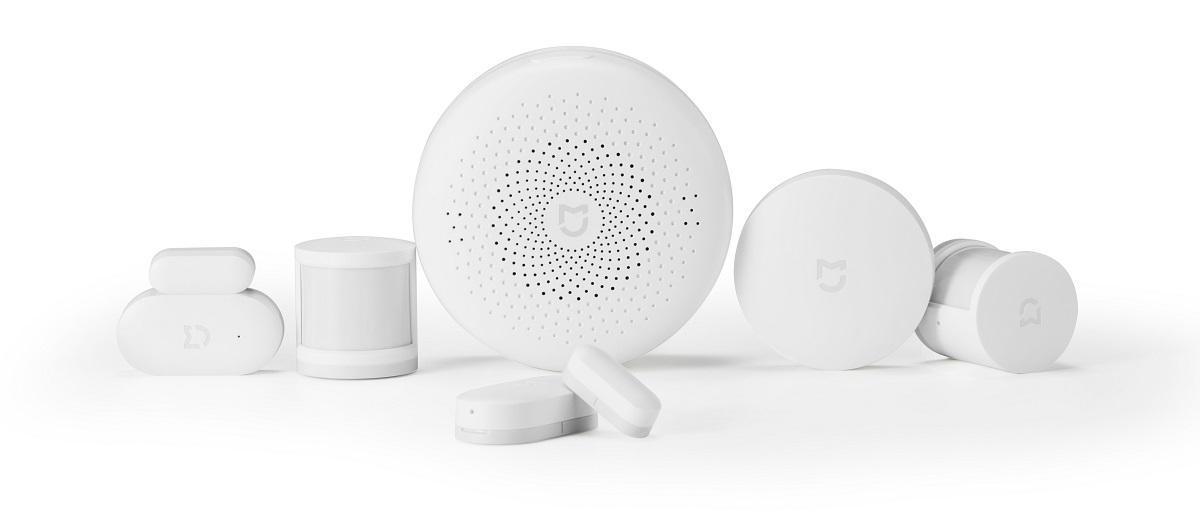
For many, the smart home is still a relatively unfamiliar concept. It often involves humorous aspects, such as home-care robots. Although in few homes, human robots are a daily part of life, in many smart homes robotics and other forms of intelligence are already quite advanced. For example, robot vacuum cleaners are already commonplace in many homes, and motion-activated LED lights are familiar devices for many people.
Most often, by smart home we mean a home that uses devices that can do more than just turn them on or off and that can be configured to do things automatically. The needs of the smart home’s occupants and the functions of the devices that help them can be diverse. However, the goal is to facilitate everyday tasks and chores by automating them using current technology.
For such automation, an intelligent home hub needs to be connected to the local network. It is a small device that is directly plugged into a wall outlet and controlled via a phone app. It distributes commands to the various smart home devices, such as sensors, lights, cameras, outlets, air purifiers, robotic vacuum cleaners, and many other smart home devices in a centralized manner.
Home security is often a concern for those who live in many single-family homes. Guests moving around the yard, wildlife, and sometimes even familiar people should be detected in time. The smart home hub is also suitable for controlling security systems. Motion detectors, window and door sensors, vibration sensors, surveillance cameras, and smart lights can all be controlled using the hub and its management app. This creates a comprehensive home security system that will alert or perform other automatic actions when it detects unusual movement.
Monitoring home conditions is also possible by leaving it to the smart home devices to take care of. For example, changes in temperature, humidity, and air pressure, as well as the detection of water leaks, can all be useful for increasing home automation and safety. For example, a temperature sensor can automatically activate the fan when the temperature rises above 20 degrees Celsius. An air purifier can turn on when the air humidity sensor threshold is reached. A floor-level water sensor warns of water leaks and prevents water damage.
Smart lighting brings not only light but also ambiance to the home. By combining lights and sensors, you can achieve a lot to improve the comfort of the home. You can easily change the color and brightness of the lights with LED lights. Additionally, you can automate the lighting, for example, based on movement, the time of day, and the ambient light level. Traditional incandescent bulbs are easy to replace with smart bulbs equipped with the same socket. More versatile lighting is also provided by smart LED strips, ceiling lights, and table lamps.
In addition to automation, many users still require physical switches. However, smart home switches can be significantly more versatile than traditional switches. First of all, wireless connectivity and battery operation allow for the placement of the switches freely almost anywhere. Additionally, various functions can be programmed into the smart switches, depending on how many times the switch is pressed, for example. With just one tap, you can turn on the lighting in the living room, and with two taps, you can turn on the fan. With a long press, you can turn on the home security systems or, for example, turn off all the lights in the house.
Xiaomi Mi Smart Sensor Set - smart home package
The Xiaomi Mi Smart Sensor Set includes not only a smart home hub, but also two motion detectors, two window and door sensors, and one wireless switch. By combining these elements, you can create a smart home that provides a lot of security and automation for managing various smart devices. The Mi Control Hub smart home hub, which can be connected to a wireless Wi-Fi network, acts as the brain of the system, serving as an alarm system and night light. It can connect up to 32 wireless Zigbee or Wi-Fi smart devices, sensors, and switches that are compatible with the Mi Home mobile app.
The Xiaomi own smart home control device lineup includes the Mi Motion Sensor, the Mi Window and Door Sensor, the Mi Wireless Switch, the Mi Smart Plug, the Mi Bedside Lamp 2, the Mi LED Desk Lamp 1S, the Mi LED Ceiling Light, the Mi LED Smart Bulb Color, and the Mi LED Smart Bulb. In addition to these, the smart home network can be connected to, among other things, Mi and Roborock robotic vacuum cleaners, Mi air purifiers, Mi air humidifier, and Mi fan. The smart home devices do not need to be solely Xiaomi Mi products; the smart home network can be connected to smart home devices from the Xiaomi ecosystem, such as Aqara, Yeelight, and Imilab, LED lights and surveillance cameras.
The Xiaomi smart home can be controlled in many different ways, but the simplest way is with the Mi Home phone app. Setting up each smart home device takes just a couple of taps or by scanning a simple QR code in the Mi Home app. The Xiaomi smart home can also be controlled via voice using Google Assistant or Amazon Alexa virtual assistants. This provides convenient voice commands such as ”Hey Google! Turn on lights!” for added convenience in managing the smart home.
Price and availability
Xiaomi Mi Smart Sensor Set smart home package: 99 euros.
Other smart home control devices, LED lights and surveillance cameras range between 16.90 and 129 euros.
Further information: Mistore.fi
https://www.mistore.fi/smart-home-lifestyle/hubit-sensorit/
https://www.mistore.fi/smart-home-lifestyle/valaistus/
Most read today

Latest
Subscribe to the newsletter
Subscribe to our newsletter and stay up to date with the latest news in technology and entertainment electronics.
Survey
Quiz
Nokia phones
Related Posts

Philips The Roller and The Tube – Moving sound with its own style
Philips The Roller and The Tube bring back the 1980s boombox spirit without cassettes or radio. It comes with Bluetooth, a battery, Auracast, and...

QUESTION: How much are you willing to pay for a phone?
The development of phones has also changed the differences in price categories. Previously, features seen only in expensive models are now found in even cheaper phones. Therefore, the question is not...
Cayin Jazz 70 – genuine tube sound and style at a reasonable price
The tube amplifier doesn't need to cost several thousand euros. The new Jazz 70 from Cayin brings classic EL34 tube technology, visible tubes, analog meters, and hand-crafted controls...

The use of artificial intelligence in music is growing rapidly, but there is still a lot to be learned about its use – at least in Finland.
Artificial music evokes significantly more reservations in Finns than the use of artificial intelligence in general. Artificial intelligence is rapidly becoming a part of everyday life, but the output it produces...

The new arrival of CDs is also reflected in devices – the Argon Audio CD1 is a new CD player priced at 399 euros
The arrival of vinyl records has been ongoing for a long time, and now a similar trend is also evident in CD records. Argon Audio responds to this interest with the new CD1 player,...

Audio-Technica ATH-AL5NC combines an open design and wireless connectivity – battery life up to 75 hours
Audio-Technica expands its range of open headphones with the ATH-AL5NC model, which is the manufacturer's first wireless open headphone. In addition to Bluetooth connectivity, it also features LDAC, noise reduction, and sound leakage...
 Suomi
Suomi  English