
DJI Osmo Pocket 4P gets two lenses and 4K/240 fps slow motion
The new flagship model in DJI’s Pocket series uses a 20mm wide-angle camera and a separate 60mm telephoto camera. It also features 17-stop dynamic range, ActiveTrack 8.0, and, at its best, 4K/240 fps slow motion video recording.

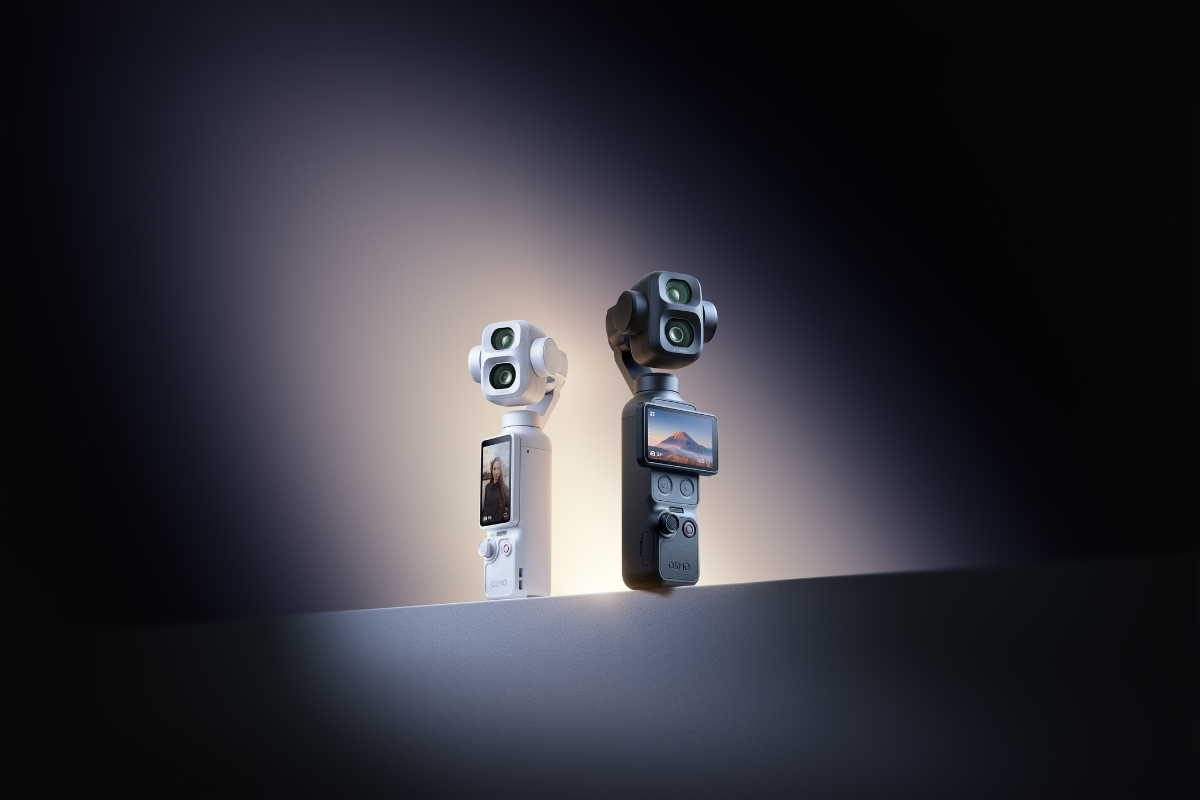
The DJI Osmo Pocket camera lineup has been expanded with the Osmo Pocket 4P model, which for the first time uses two separate cameras. Alongside the main camera’s 20mm wide-angle lens, a 60mm telephoto lens has been placed, allowing the camera angle to be changed significantly without the need for separate lenses or a larger camera setup.
The new product is being positioned as the flagship of the DJI Pocket series in the current lineup. In Finland, the price of the Osmo Pocket 4P Standard Combo has been announced as 619 euros, and the price of the wider Vlog Combo is 709 euros. For comparison, the single-camera Osmo Pocket 4 costs 519 euros in DJI’s Finnish online store, and the previous Osmo Pocket 3 currently costs 359 euros.

In addition to the wide-angle lens, a separate telephoto camera was added.

The main camera of the Osmo Pocket 4P model uses a new 1-inch CMOS sensor, a focal length equivalent to 20 millimeters, and an aperture of f/2.0. The sensor is paired with LOFIC technology, and when using the D-Log 2 color profile, the dynamic range is declared at its best at 17 stops. Recording is done in 10-bit format, so there is more leeway in the color material for post-processing.
The second camera is based on a 1/1.28-inch sensor. Its 60mm focal length and f/1.8 aperture are designed specifically for tighter framing and portraiture. DJI claims the telephoto camera has triple optical zoom and up to 12x zoom.
The solution changes the way the Pocket series is used quite significantly. In the previous Osmo Pocket 3 model, a single 1-inch sensor and a 20mm lens were used, so changing the angle of view was based on digital zoom. The maximum speed of the Pocket 3 in 4K burst mode is 120 frames per second.
ActiveTrack 8.0 tracks the target even when zooming out

The stabilization is provided by the three-axis mechanical gimbal familiar from the Pocket series. Alongside it, ActiveTrack 8.0 object tracking is used to track, for example, people, animals, and vehicles. The tracking is said to work in compatible shooting modes with up to 12x zoom.
The camera can also be set to automatically focus on multiple subjects. This is especially useful in situations where the camera is used alone to take a photo and you don't want to use another person to continuously manage the framing.
The Osmo Pocket 4P model is advertised at 230 grams. It is promised a runtime of 210 minutes at best, and the battery is said to charge from empty to 80 percent in 18 minutes. According to DJI’s model comparison, the lighter Osmo Pocket 4 lasts longer on a single charge, up to 240 minutes, so the Osmo Pocket 4 has a focus on the larger camera system.
Price and availability in Finland
The Osmo Pocket 4P is available in black and pearl white. The standard Combo costs 619 euros in Finland. The Vlog Combo is listed at 709 euros, and the package includes, in addition to the basic equipment, a DJI Mic Mini 2 transmitter, a mini tripod, and a carrying case.

The most significant innovation in the Osmo Pocket 4P is therefore not a single precision or image resolution number, but the ability to fit two distinctly different focal lengths into the same small, mechanically stabilized camera. The Pocket series has previously attempted to fill the gap between the phone and a larger camera system, but a separate telephoto camera makes the new model a more flexible option for situations where the angle of view needs to be changed quickly during shooting.
Further information: DJI.
Most read today
Latest
Subscribe to the newsletter
Subscribe to our newsletter and stay up to date with the latest news in technology and entertainment electronics.
Survey
Quiz
Nokia phones
Related Posts

QUESTION: How much are you willing to pay for a phone?
The development of phones has also changed the differences in price categories. Previously, features seen only in expensive models are now found in even cheaper phones. Therefore, the question is not...
Cayin Jazz 70 – genuine tube sound and style at a reasonable price
The tube amplifier doesn't need to cost several thousand euros. The new Jazz 70 from Cayin brings classic EL34 tube technology, visible tubes, analog meters, and hand-crafted controls...

The use of artificial intelligence in music is growing rapidly, but there is still a lot to be learned about its use – at least in Finland.
Artificial music evokes significantly more reservations in Finns than the use of artificial intelligence in general. Artificial intelligence is rapidly becoming a part of everyday life, but the output it produces...
The new arrival of CDs is also reflected in devices – the Argon Audio CD1 is a new CD player priced at 399 euros
The arrival of vinyl records has been ongoing for a long time, and now a similar trend is also evident in CD records. Argon Audio responds to this interest with the new CD1 player,...

Audio-Technica ATH-AL5NC combines an open design and wireless connectivity – battery life up to 75 hours
Audio-Technica expands its range of open headphones with the ATH-AL5NC model, which is the manufacturer's first wireless open headphone. In addition to Bluetooth connectivity, it also features LDAC, noise reduction, and sound leakage...
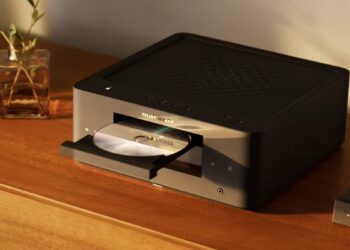
The Marantz MCR 60n combines CD, vinyl, streaming, and TV audio into one device
Marantz has introduced the new MCR 60 multi-functional device, which continues the manufacturer's long series of compact Melody systems. A web player, CD player, and...
 Suomi
Suomi  English