
Philips TAB8301 nostaa solakan soundbarin 3.1.2-kanavaiseksi
Philipsin vuoden 2026 uutuudessa käytetään erillistä keskikanavaa, kahta ylöspäin suunnattua korkeuselementtiä ja kompaktia langatonta subwooferia. Saman malliston pienempi TAB8200 testattiin vastikään AVPlussan laajassa soundbar-vertailussa.

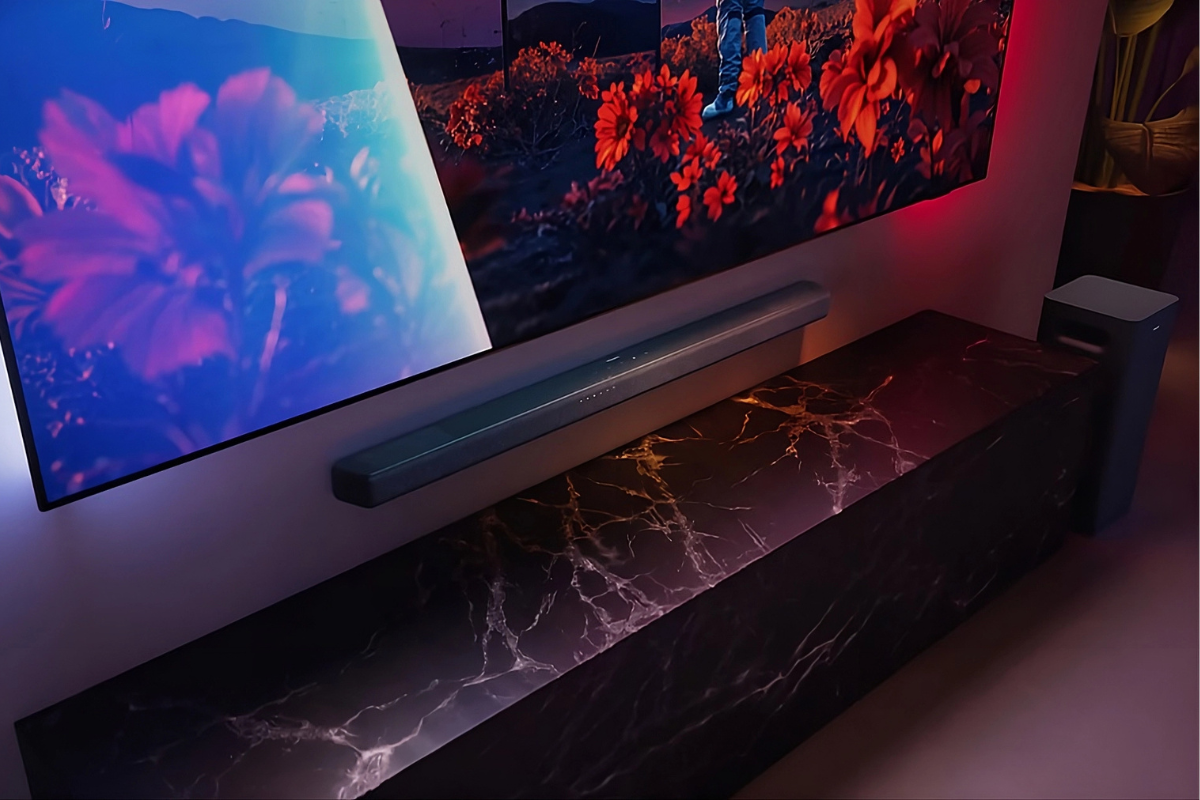
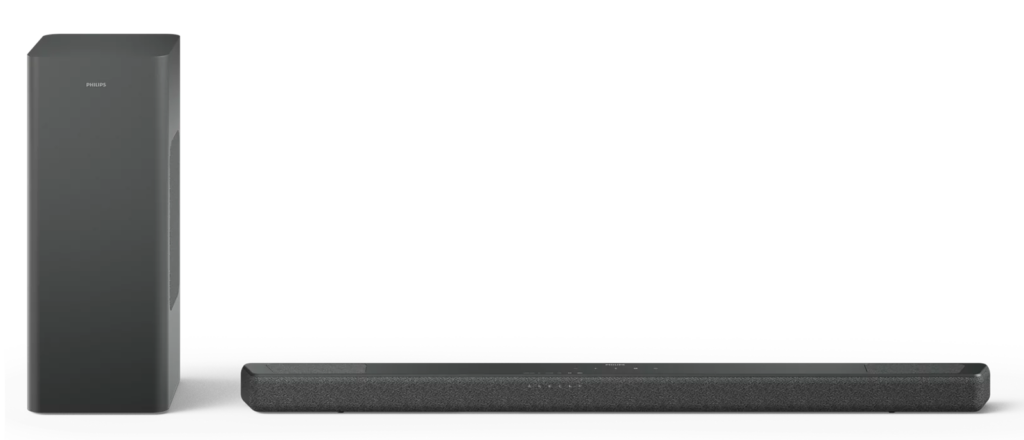
Philipsin soundbar-mallistoon on lisätty TAB8301/10, jossa erittäin matalaan runkoon on rakennettu 3.1.2-kanavainen kaiutinjärjestelmä. Dolby Atmos- ja DTS:X-yhteensopivan soundbarin mukana toimitetaan erillinen langaton subwoofer, ja järjestelmän enimmäistehoksi ilmoitetaan 380 wattia. Jatkuvaa RMS-tehoa kokonaisuudelle luvataan 190 wattia.
Uutuus jatkaa samaa helposti sijoitettavan soundbarin ajatusta, johon tutustuttiin jo pienemmän Philips TAB8200:n yhteydessä. Tämä TAB8301:n ”pikkuveli” testattiin AVPlussan toukokuussa julkaistussa soundbar-vertailussa, jossa se asetettiin vastakkain JBL:n, Samsungin ja TCL:n mallien kanssa. TAB8200 erottui vertailussa erityisesti poikkeuksellisen sirolla rakenteellaan ja pienellä, monipuolisesti sijoitettavalla subwooferillaan.
TAB8301:ssä tuttua perusratkaisua on viety pidemmälle lisäämällä varsinainen keskikanava sekä kaksi fyysistä, ylöspäin suunnattua korkeuselementtiä. Samalla kanavamäärä on kasvatettu TAB8200:n 2.1-kanavaisesta rakenteesta 3.1.2-kanavaiseksi.
Keskikanavalla tavoitellaan selkeämpää puheääntä
Soundbarin etukanavat muodostetaan vasemmasta ja oikeasta kanavasta sekä niiden väliin sijoitetusta keskikanavasta. Keskikanavalla pyritään ankkuroida elokuvien, sarjojen ja televisio-ohjelmien puheääni kuvan keskelle, jolloin dialogin pitäisi erottua taustaäänistä aiempaa selvemmin.

Puheääntä voidaan korostaa myös erillisellä dialogintehostustoiminnolla. Äänensävyä voidaan mukauttaa neljällä EQ-asetuksella, jotka on tarkoitettu viihteelle, musiikille, puheelle ja mahdollisimman alkuperäiselle toistolle. Lisäksi käytettävissä ovat basson ja diskantin säädöt sekä kuvan ja äänen keskinäisen viiveen korjaus.
Mukana on myös IntelliSound-äänenkäsittely, jota voidaan käyttää tekoälyavusteisessa tilassa, valmiilla asetuksilla tai käyttäjän omilla säädöillä.
Korkeuselementeillä rakennetaan Dolby Atmos -äänikuvaa
TAB8301:n 3.1.2-merkinnän viimeinen numero viittaa kahteen korkeussuuntaan tarkoitettuun kanavaan. Ne on toteutettu ylöspäin suunnatuilla laajakaistaelementeillä, joiden ääntä heijastetaan katon kautta kohti kuuntelupaikkaa.
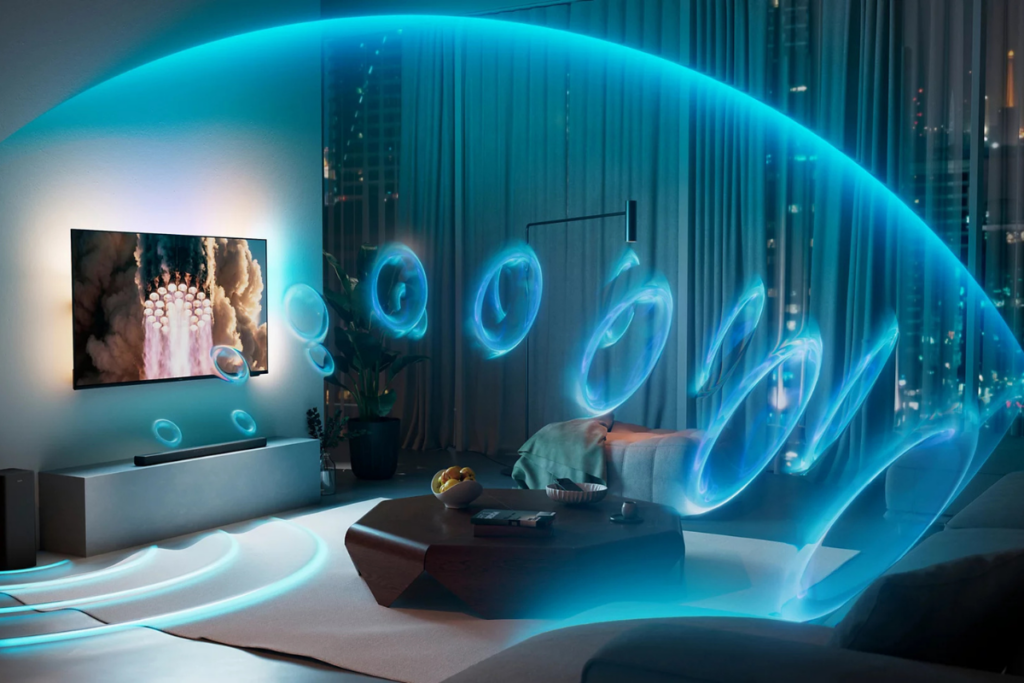
Ratkaisulla pyritään muodostamaan Dolby Atmos -ääniraitojen vaatimaa pystysuuntaista tilavaikutelmaa ilman kattoon asennettavia kaiuttimia. Tukea on lisätty myös DTS:X:lle ja DTS Virtual:X:lle. Näistä DTS Virtual:X:llä voidaan luoda virtuaalista tilaäänivaikutelmaa myös sellaisesta materiaalista, jossa varsinaisia korkeussuuntaisia kanavia ei ole.
Erillisiä takakaiuttimia järjestelmään ei kuulu, eikä Philipsin teknisissä tiedoissa mainita mahdollisuutta laajentaa kokonaisuutta langattomilla surround-kaiuttimilla. TAB8301 on siten tarkoitettu käyttäjälle, joka haluaa keskikanavan ja korkeusääntä ilman olohuoneeseen levitettäviä lisäkaiuttimia.
AVPlussan testissä tuttu kompakti subwoofer
AVPlussan vertailussa TAB8200:n vahvuudeksi nousi erityisesti pieni koko. Soundbar oli vertailuryhmän selvästi siroin, ja sen langaton subwoofer voitiin sijoittaa joko pystyasentoon tai kyljelleen. Matalimmillaan subwoofer mahtui esimerkiksi sohvan alle.
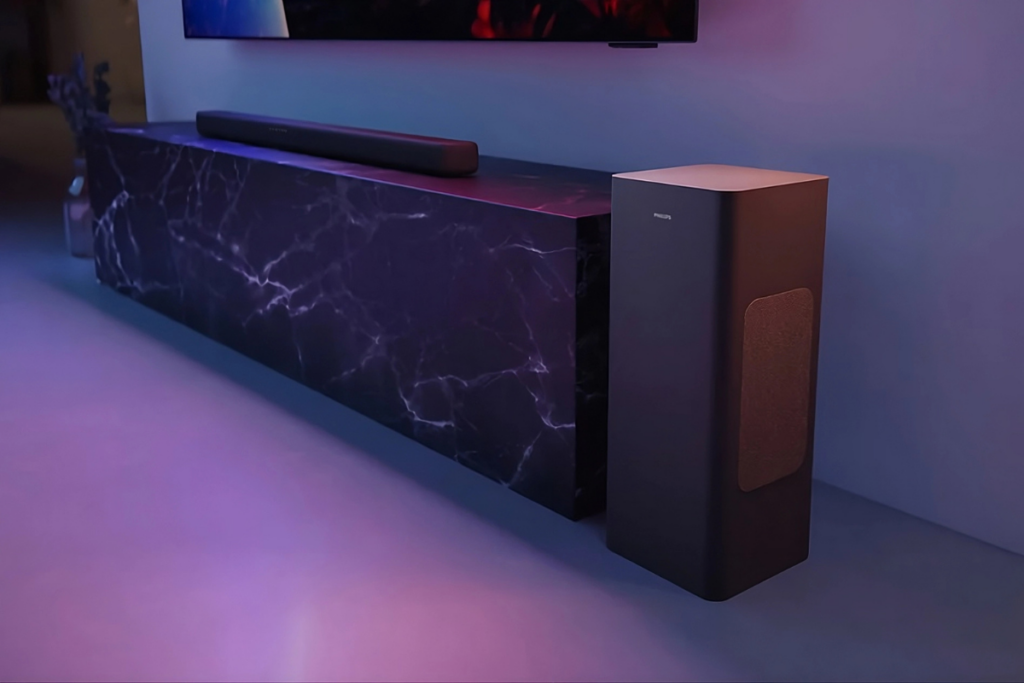
Sama sijoitteluperiaate on säilytetty TAB8301:ssä. Bassokotelon mitat ovat 155 × 391 × 161 millimetriä, ja painoa sillä on 3,8 kilogrammaa. Bassotoistosta vastataan 6,5-tuumaisella elementillä, jonka toiminta-alueeksi ilmoitetaan 35–180 hertsiä. Kotelo on toteutettu bassorefleksiperiaatteella.
Myös itse soundbar on edelleen hyvin matala, vaikka se on TAB8200:aa hieman korkeampi. TAB8301:n leveys on 826 millimetriä, korkeus 44 millimetriä ja syvyys 55 millimetriä. Painoa päälaitteella on vain kilogramma. TAB8200:n korkeus oli 37 millimetriä, joten uusien kanavien lisääminen on kasvattanut runkoa seitsemällä millimetrillä.
Magneettinen kiinnitys on suunniteltu Philips-televisioille
TAB8301 on suunniteltu erityisesti matalalla jalustalla varustettujen Philips Ambilight -televisioiden yhteyteen. Yhteensopivien televisioiden kanssa voidaan hyödyntää magneettista kiinnitysratkaisua, jolla soundbar saadaan asetettua lähelle television rakennetta ilman suurta näkyvää rakoa.
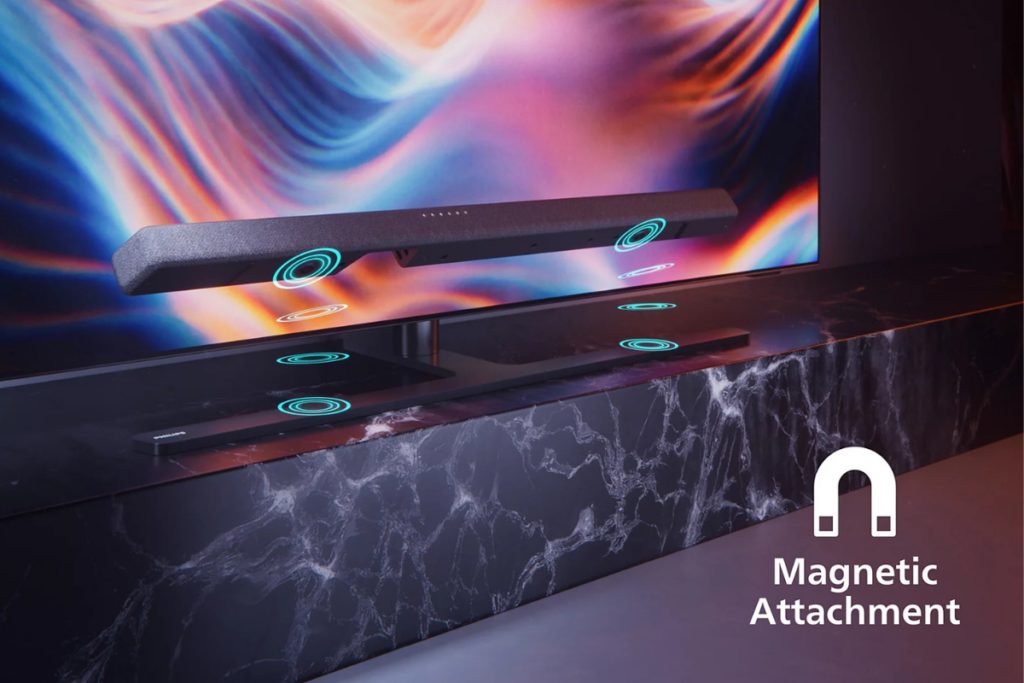
Soundbar voidaan asentaa myös seinälle. Tarvittavat seinäkiinnikkeet toimitetaan laitteen mukana. EasyLink- eli HDMI-CEC-ohjauksen ansiosta äänenvoimakkuutta voidaan hallita television kaukosäätimellä. Philips-television yhteydessä samalla säätimellä voidaan vaihtaa myös valmiita EQ-tiloja sekä säätää bassoa ja diskanttia.
Bluetooth päivittyi versioon 6.0
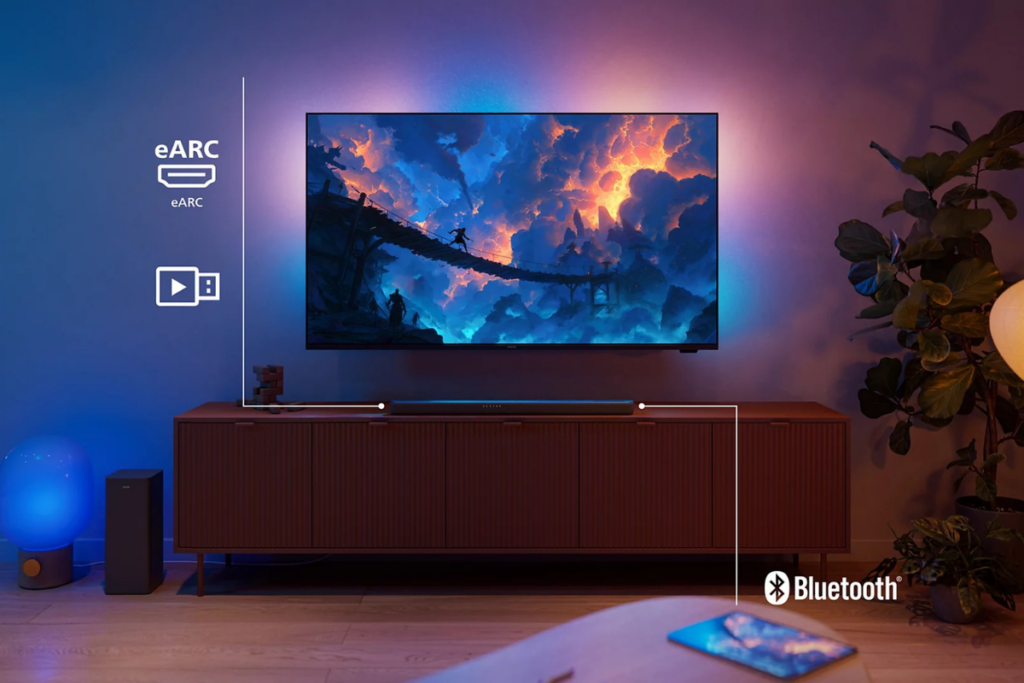
Televisioon TAB8301 kytketään ensisijaisesti HDMI eARC -liitännällä. Sen kautta voidaan välittää muun muassa Dolby Atmos-, Dolby TrueHD-, Dolby Digital Plus-, DTS:X- ja DTS Digital Surround -ääntä.
Muita liitäntöjä ovat optinen digitaalitulo, 3,5 millimetrin AUX-tulo ja USB. USB-muistilta voidaan toistaa MP3-, WAV- ja FLAC-tiedostoja. Erillistä HDMI-sisääntuloa tai videosignaalin läpivientiä ei teknisissä tiedoissa ole mainittu.
Langattomaan musiikintoistoon käytetään Bluetooth 6.0 -yhteyttä. Mukana on myös LE Audio -tuki, jolla tavoitellaan yhteensopivien laitteiden kanssa vakaampaa yhteyttä ja pienempää viivettä. TAB8200:ssa käytettiin Bluetooth 5.3:a, joten myös langatonta yhteyttä on päivitetty uuden mallin yhteydessä.
Ääniasetuksia voidaan hallita kaukosäätimen lisäksi Philips Entertainment -sovelluksella. Sovelluksesta voidaan valita äänilähde ja EQ-asetus, ottaa virtuaalinen surround-toisto käyttöön sekä säätää muita laitteen toimintoja.
Most read today

Latest
Subscribe to the newsletter
Subscribe to our newsletter and stay up to date with the latest news in technology and entertainment electronics.
Survey
Quiz
Nokia phones
Related Posts
Philips The Roller ja The Tube – Liikkuvaa ääntä ihan omalla tyyliillä
Philips The Roller ja The Tube tuovat 1980-luvun boombox-hengen takaisin ilman kasetteja tai radiota. Tilalla ovat Bluetooth, akku, Auracast ja...

QUESTION: How much are you willing to pay for a phone?
The development of phones has also changed the differences in price categories. Previously, features seen only in expensive models are now found in even cheaper phones. Therefore, the question is not...
Cayin Jazz 70 – genuine tube sound and style at a reasonable price
The tube amplifier doesn't need to cost several thousand euros. The new Jazz 70 from Cayin brings classic EL34 tube technology, visible tubes, analog meters, and hand-crafted controls...

The use of artificial intelligence in music is growing rapidly, but there is still a lot to be learned about its use – at least in Finland.
Artificial music evokes significantly more reservations in Finns than the use of artificial intelligence in general. Artificial intelligence is rapidly becoming a part of everyday life, but the output it produces...
The new arrival of CDs is also reflected in devices – the Argon Audio CD1 is a new CD player priced at 399 euros
The arrival of vinyl records has been ongoing for a long time, and now a similar trend is also evident in CD records. Argon Audio responds to this interest with the new CD1 player,...

Audio-Technica ATH-AL5NC combines an open design and wireless connectivity – battery life up to 75 hours
Audio-Technica expands its range of open headphones with the ATH-AL5NC model, which is the manufacturer's first wireless open headphone. In addition to Bluetooth connectivity, it also features LDAC, noise reduction, and sound leakage...
 Suomi
Suomi  English