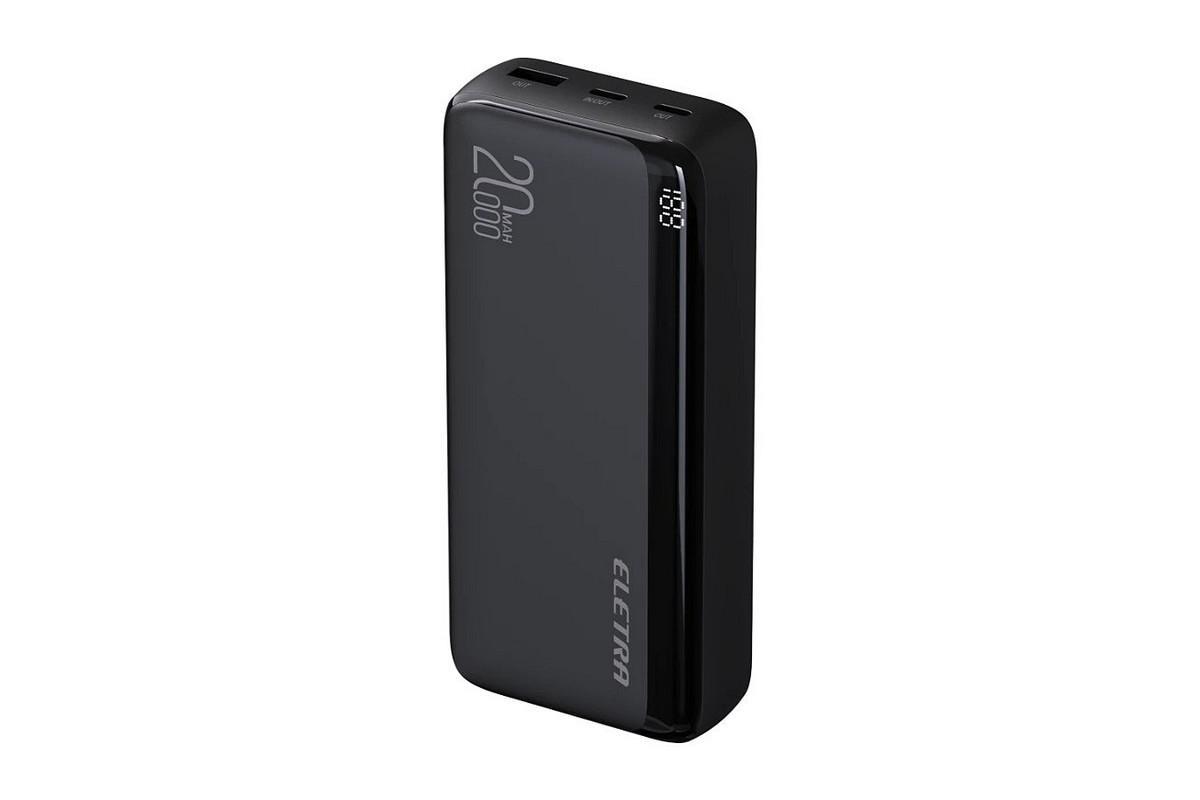
There are dozens, if not hundreds, of different backup power sources on the market. Finding the right one can be challenging. This was demonstrated by We also tested ten backup power sources.
Here are a few tips for purchasing a backup source (+ reading the tests, because there are quite a few similar effects in different products).
1. What size backup power source is suitable for your intended use?
The physical size of the backup power source affects whether it can be carried in the pocket of your pants/jacket, or how much space it takes up in your handbag or wallet. The best backup power source is not necessarily the largest model in every case, as a larger battery size always increases the device’s physical dimensions and weight. The surface material should also be considered based on its intended use: For example, an aluminum-coated backup power source may scratch the phone’s screen when in the same pocket. On the other hand, aluminum-coated is more durable and stylish.
2. Where were you going to use your backup power source?
The intended use varies, for example between charging a mobile phone or tablet, but also for powering an emergency light in a car, snowmobile, bag, etc. A LED light in a backup power source is very practical for this type of use. There are also backup power sources on the market that are specifically designed to start a car.
3. How much capacity do you need?
Capacity is the ampere-hour (mAh) of backup power, and it is of great importance. If the goal is to charge a large number of tablets, it is strongly recommended to choose a backup power source with a high mAh count. The battery size of some tablets may even be nearly 12,000 mAh. Then it is clear that a small backup power source is of little use. You can easily determine the capacity of your own tablet or phone by typing the name of your device and the mAh value in Google.
Here are some examples of charging the phone:
< 5000 mAh, for occasional additional power needs (1-2 charges)
10,000 mAh, weekend trips or short business trips (2-5 charges)
13,000 mAh, about 5 days of travel (4-7 charges)
20,000 mAh, for trips lasting about a week (8+ charges)
(Note that the capacity of your phone's battery and the frequency of phone use affect the actual numbers that are displayed)
4. Do you plan to take your backup power source on the plane?
The maximum size of batteries that can be taken on most airlines’ flights is 100 Wh. Watt-hours are calculated by multiplying the power source’s ampere-hour rating by its nominal voltage. The milliamp-hour (mAh) is then divided by 1,000 and then multiplied by the voltage, which is 5 volts for USB backup power sources. For example, with a 20,000 mAh backup power source, the watt-hour value is 20,000/1000 x 5 = 100 Wh. A 20,000 mAh backup power source is therefore the maximum that can be taken on board an aircraft.
5. What else should be taken into account is that my choice is the best backup power source for me?
The warranty period should be long (at least 6 months) and the product should be easy to take to a service center or for repair. It is a good idea to keep this in mind when purchasing products from foreign online stores.
(Powerbank.fi website purchase tips, used as the source of the text)
More on the topic: Comparison test of backup power sources
Remember to get a good cable
The higher the charging current, the more important it is to use a high-quality USB cable with a minimum possible resistance. The importance of a good cable increases if the supply voltage of the backup power source is already low.
With a high-quality cable with a length of less than half a meter, the resistance is about 0.10 ohms.
If the charging current is two amps and the voltage at the USB power source is five volts, the voltage at the port of the charging device remains at 4.8 volts, and charging does not slow down automatically.
With a long, low-quality cable, the resistance can be three times higher, and the charging current is likely to be halved as the voltage drops by even one ampere below the USB standard of 4.7 volts. In addition, each adapter in the cable increases the resistance.
Do not store it empty
Deep discharge is the biggest enemy of the lithium-ion battery.
Fortunately, the electronics in the backup power source take care of ensuring that the lithium battery’s charge level does not drop too low. However, it’s not advisable to leave the power bank drained for weeks at a time.
Similarly, fully charged batteries and hot sunshine also shorten the battery life.
If the device is not used for more than a few months, it is advisable to store it in a dry and cool place when the reserve level is about halfway.
A spot protected from sunlight is usually sufficient, but you can extend the battery’s lifespan the most by storing a backup power source in the refrigerator in an airtight freezer bag with silica gel pouches that absorb moisture.