
Sound for home theater setup for under a ton – Dynavoice speaker set

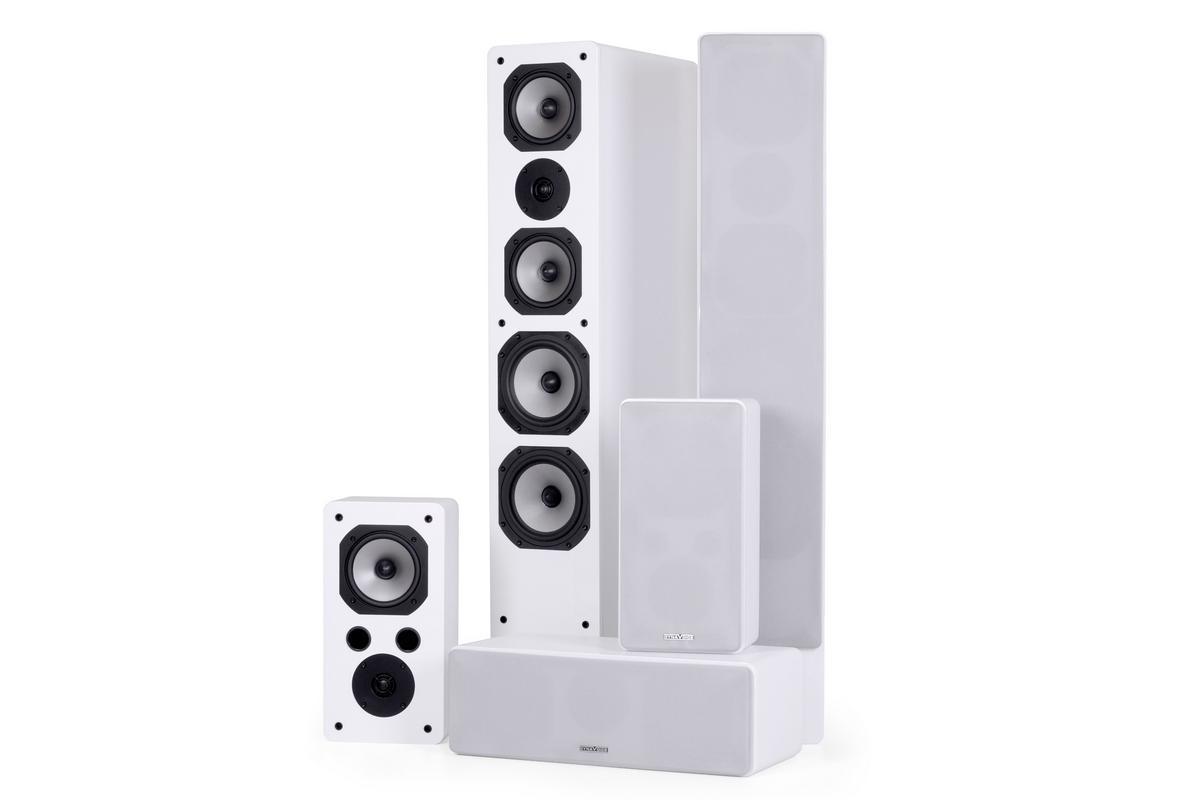
If you can get a perfect and sturdy 5.0 speaker system like this for under a ton, then what the hell? You can still get them cheaper, but it’s not the same thing.
Text: Teppo Hirvikunnas
Photos: Teppo Hirvikunnas and the manufacturer
Dynavoice from Sweden is a relatively unknown brand of speaker in Finland compared to, for example, Jamoon, JBL, and many other well-known manufacturers.
Even though Dynavoicea has been sold here for several years now, the brand has not been promoted very actively. In Sweden, however, Dynavoice is very well known, and its advertisements appear almost every month in Hifi&Musik and HemmaBio magazines.
This is therefore a seriously impressive speaker brand, and it cannot in any way be compared with all those cheap knock-off products out there. Therefore, the price of this speaker series should be considered affordable, even if you go for the ton-series. Especially when you consider what you get for the money.
The Dynavoice Challenger series includes the Challenger M-65 floor speakers, the Challenger S-5 surround speakers, and the Challenger C-5 center speakers. The package price for the series is 923 euros.
Powerful main speakers
The main speakers of the M-65 are large three-way speakers with two 165 mm bass drivers, two 135 mm mid-range drivers and a 25 mm woofer between them. The frequency response is 240 and 2,500 Hz. The mid-range and tweeter elements form the so-called D'Appolito element configuration. The speakers have a total weight of 54 kilograms, or 27 kilograms per speaker.
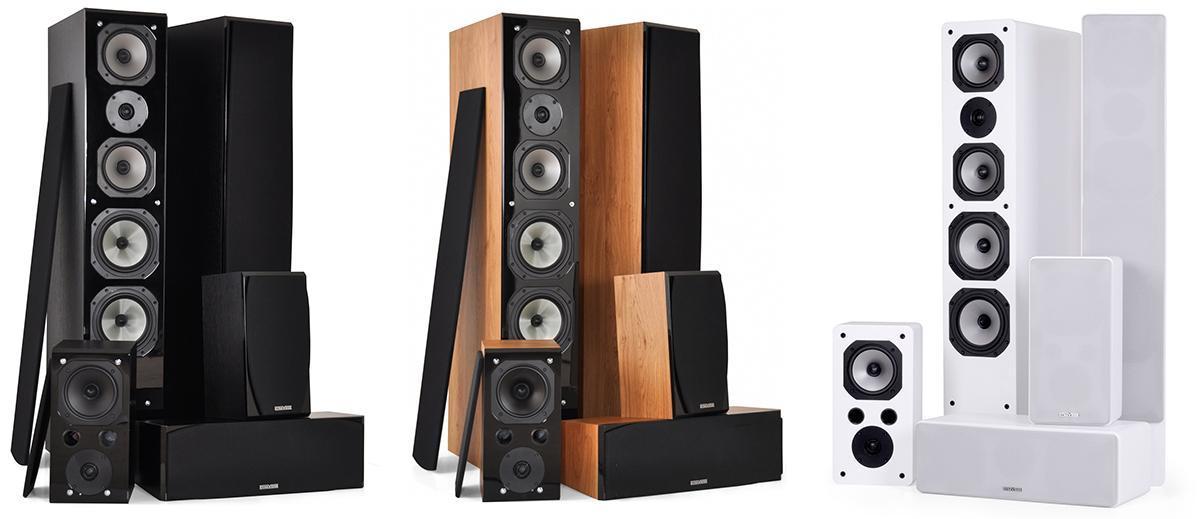
The speakers (and the entire series, for that matter) are available in three different finishes: black, white, and oak/black. The housing body is always a wood veneer imitation, with the front panel being glossy black or white, and in the oak option the front panel is also glossy black. The white front cloth color is light gray and the others are black.
The enclosure is divided into sections so that the bass have their own enclosure volume and the mid-range and treble sections have their own. The enclosure structure is sturdy, and it is supported from the inside by spacers. The amount of damping material in the enclosure is quite low.


The quality of the work is mostly of a good level, but the affordable price is already visible in some details, such as the gap between the front panel and the side walls. This, however, is more clearly emphasized in the white finish itself.
The enclosure is reflex-tuned for the bass drivers with up to four reflex tubes located behind the enclosure. To seal the reflex openings, the speakers come with two foam plugs (per speaker). By sealing the reflex openings, the bass frequency reproduction can be affected. This usually dampens the bass output. We will return to this in more detail later.
The connectors are made with the most appropriate gold-plated screw terminals, and the speakers can also be wired in pairs. In this case, the speaker has its own wires for the bass drivers and the mid-range/treble drivers. In some cases, this is said to improve the reproduction. The speaker can also be wired in pairs with two amplifiers, in which each of the audio bands divided by the crossover filter is amplified with its own amplifier. This also essentially allows for the volume relationship of these audio bands to be adjusted. For example, with this test, all the amplifiers in the home audio amplifier test published in the same magazine allow for such a so-called biamp connection.
At the top of the connection panel there is a kind of loop (jumper), the placement of which can be adjusted to affect the volume of the discant playback. There are four options: -2, 0, +2 and +4 decibels.
The water filter is located directly behind the junction panel. The design and internal wiring are of a good standard for its price range.
Massive and dynamic sound
The sound balance of the Dynavoice Challenger M-65 is rich and deep, but at the same time not obtrusive. With the treble control set to +2 or +4, the sound gets more treble, but the mid range still remains slightly overshadowed by the bass. The bass area dominates the sound – especially if the speakers have to be placed close to a wall or corner of the room. Any interface near the speaker’s immediate vicinity increases the bass level by three decibels, and placing the speaker in a corner increases it by six decibels.
Bass boost works best with rock/metal music and, with some adjustments, also in movies, but it can still be too dominant. However, its character is smooth, and a suitable setting can easily be found with the amplifier's bass controls. Especially if the AV amplifier still has some kind of room correction and a manual frequency correction.
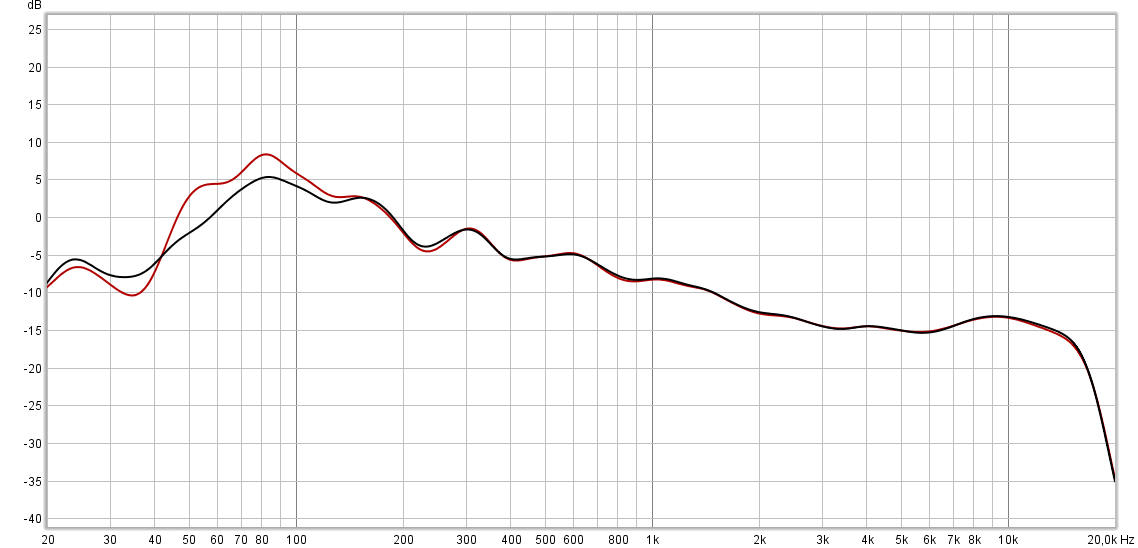
The power response of the Dynavoice Challenger 65 in the listening room with bass reflex tubes open (red) and tubes closed (black). Tightening the tubes significantly attenuates the 45–100 Hz range, and in fact the 30–40 Hz range is amplified. We recommend trying to tighten the tubes.
One option is also to seal the speaker's speaker tubes. As mentioned, the speaker comes with two speaker plugs per speaker, but there are actually four speaker tubes and the plugs are a bit loose. The bass reduction achieved by sealing the speaker tubes is therefore not, in our opinion, great enough. On both speakers, we sealed all the tubes with foam plugs. The bass level dropped significantly, and the mid-range came out better.
The speakers are sensitive, and you can get a lot of sound from them with quite reasonable amplification levels. The sound is also dynamic in its own way.
Back and in the middle
The Dynavoice Challenger home theater system includes the S-5 rear speakers, also known as the so-called surround speakers, and the C-5 center speaker. The speakers use the same elements, so in this regard they should match each other in terms of sound balance, which is especially important for the center speaker. For example, if in a movie scene there is a moving train or a talking person on the left side, its sound should not change during the transition as the sound moves from one speaker to another. Very understandable, isn’t it?.
Center channel area

In a home theater system, the center speaker plays an important role. Most of the movie’s sound, especially the dialogue, is reproduced from the center speaker. Of course, it’s best to direct the lowest frequencies to the main speakers, because the center speaker isn’t able to reproduce them properly.
The center speaker should be neutral in its reproduction – above all, in terms of the center frequency – or similar to the main speakers in terms of its balance. The reasons for this were already mentioned earlier.
Dynavoice meets these criteria quite well. The mid-range reproduction is clear. Of course, it does not match the reproduction of the main speakers, because the speaker arrangement is horizontally aligned compared to the main speakers. This affects, among other things, the direction of the speaker.
However, the overall balance is quite well-suited in Dynavoice. And once again, blocking the reflex tubes and adding a damping agent have a positive effect on repetition.
Back speakers on the wall
The S-5 tweeters are structurally conventional two-way reflex speakers, but the arrangement of the elements is reversed compared to conventional speakers: Normally, the treble is placed higher in the enclosure and the bass-midrange lower, whereas here they are the opposite. This is because the tweeters are usually mounted at a significantly higher listening height, which makes it natural that the treble is then closer to the listener’s seating position.
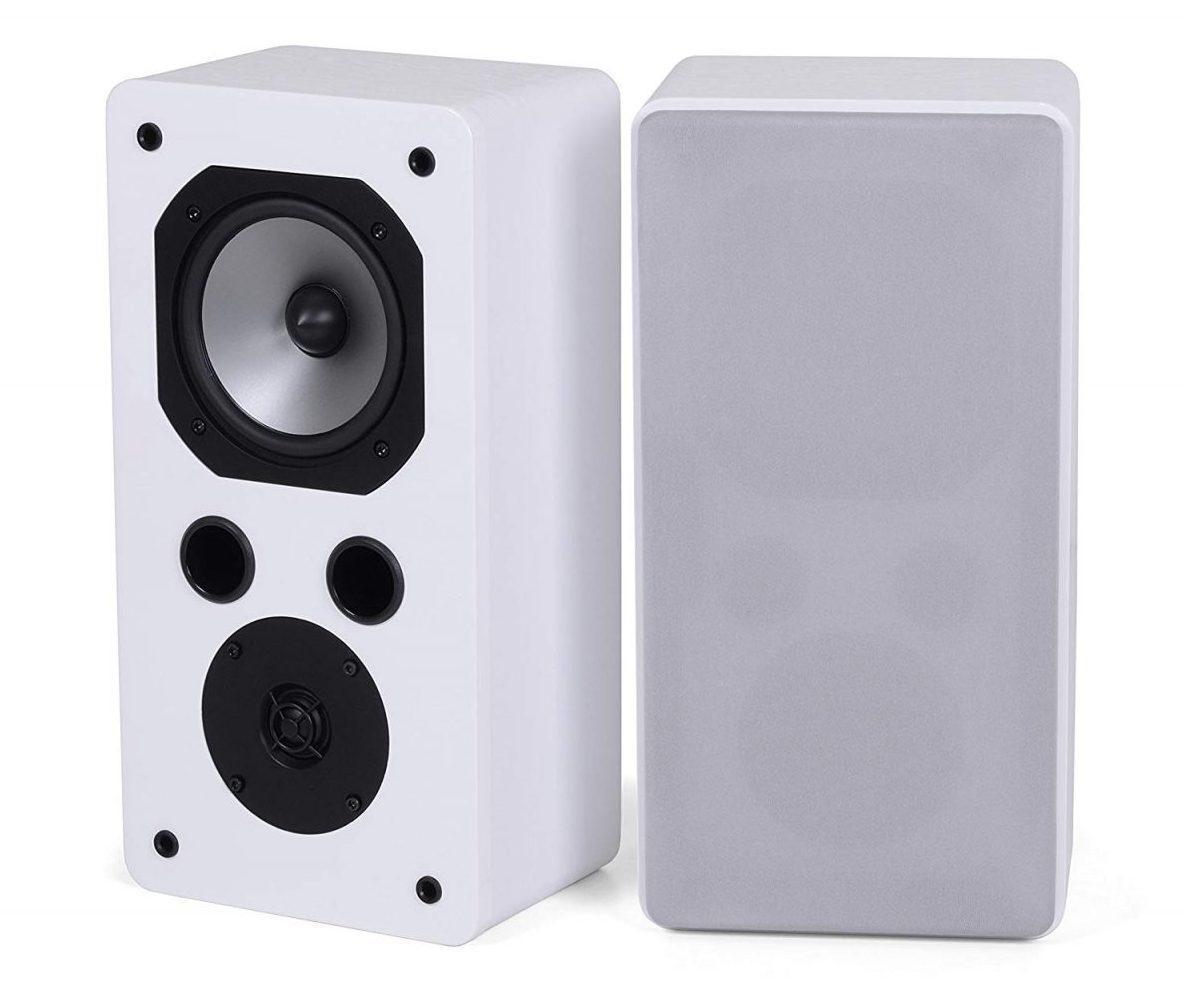
The enclosures are designed to be mounted on a wall, and therefore their depth is only about 13 centimeters, and there are ready-made mounting screws according to the VESA standard behind the speakers. The reflex tubes are also placed on the front wall of the enclosure.
There are not quite as strict requirements for the sound quality of the rear speakers that repeat the sound of the main speaker, but it is advisable that their basic balance is balanced and that, for example, the treble does not sound emphasized.
The sound from the Dynavoice S-5 speakers is fairly balanced and consistent in terms of mid and treble frequencies with the main speakers. The only thing to note is the emphasis on higher bass frequencies and even the hum that is largely due to the placement of the speakers in the wall. Of course, in room audio, bass frequencies are hardly needed, and somehow this might even have been a reason for the good separation of the room audio.
However, if you want to try to adjust the sound, then in this case blocking the reflex tubes also helps, and you should put a noticeably more amount of damping material in the housing. Now it’s just a name.
Clogged pipes and more insulation?
Why does blocking the reflex tubes and adding a damping agent improve the sound? Why hasn’t it been done already? The reasons are simple. They reduce the sensitivity of the speaker, and the ”bass response” becomes muffled. That bass response is in quotes because very often it’s an emphasized repetition of the lower bass range rather than the actual low frequencies. With reflex tuning, the bass response initially sounds powerful, but very soon it starts to interfere. The apparently powerful bass response also covers up the really low frequencies at the front. Poor reflex tuning also impairs the accuracy of impact sounds.
Calculating the sensitivity is also behind the amount of damping agent. The more damping agent there is in the speaker's enclosure, the more it will absorb sound energy.
Well, that’s exactly what the damping material is for: to attenuate the reflections and resonances that arise inside the enclosure, which would otherwise be carried through the elements’ cavities. And believe it or not, the damping material also makes the enclosure seem, as it were, more real to the bass elements, allowing the reproduction to extend lower in the frequency range.
Especially in budget speakers, there is a strong temptation to save on costs and make the speaker as sensitive as possible. In the comparison situation, a more sensitive speaker sounds louder and sounds better for a moment.
More expensive than its price
The Dynavoice Challenger 5.0 speaker system is a visually appealing package that can be chosen from three different finishes. The affordable price is visible in a few minor finishing details, but it hardly bothers anyone.
Overall, the main speakers in this series are bulky and dynamic, although they also have a slightly darker tone. They are suitable for both movie use and listening to music. But with minimal adjustment options. Especially in the smaller listening mode, the bass may sound too loud. The speakers like to have plenty of space around them.
As a complete home theater setup, the Dynavoice 5.0 series performs well for its price, and it certainly delivers good value for money, both in terms of sound quality and especially in terms of quantity. The series produces decent bass and a good movie experience. Even without subwoofers.
+ Massive and dynamic sound
+ Size and appearance in its price range
+ Basses in movie use
+ Clear sound in the center channel
– The level and ambiguity of bass playing (with reservations)
– Not quite a perfect finish
TABLE DATA:
| Dynavoice | Challenger M-65 | Challenger S-5 | Challenger C-5 |
|---|---|---|---|
| Price | 595 € per person | 199 € per person | 129 € / piece |
| Importer / Representative | Hifitalo | << | << |
| More information | www.hifitalo.fi | << | << |
| Type | Floor speaker | Subwoofer | Center speaker |
| Structure | 3-way, reflex | 2-way, reflective | 2-way, reflective |
| Power duration (RMS/Max.) | 175 / 250 W | 75 / 100 W | 120 / 170 W |
| Sensitivity | 93 dB/1W/m | 87 dB/1W/m | 87 dB/1W/m |
| Nominal impedance | 4 Ohm | 4 Ohm | 4 Ohm |
| Frequency ranges | 240 / 2,500 Hz | 3,700 Hz | 2,800 Hz |
| High voice | 25 mm rim | 25 mm rim | 25 mm rim |
| Middle area | 2 x 130 mm | - | - |
| Bass (or basso/midrange) | 2 x 165 mm | 1 x 130 mm | 2 x 130 mm |
| Dimensions (l x w x h) | 198 x 1100 x 395mm | 193 x 376 x 133 mm | 495 x 164 x 195 mm |
| Weight (speaker) | 27 kg | 3.7 kg | 6.5 kg |
| Color options | White, black and amber | << | << |
| All information provided by the manufacturer |
EXTRA: Adds bass and height
The Dynavoice set is easy to upgrade to several decibels higher – even to a Dolby Atmos 7.2.4 system at a relatively affordable price.
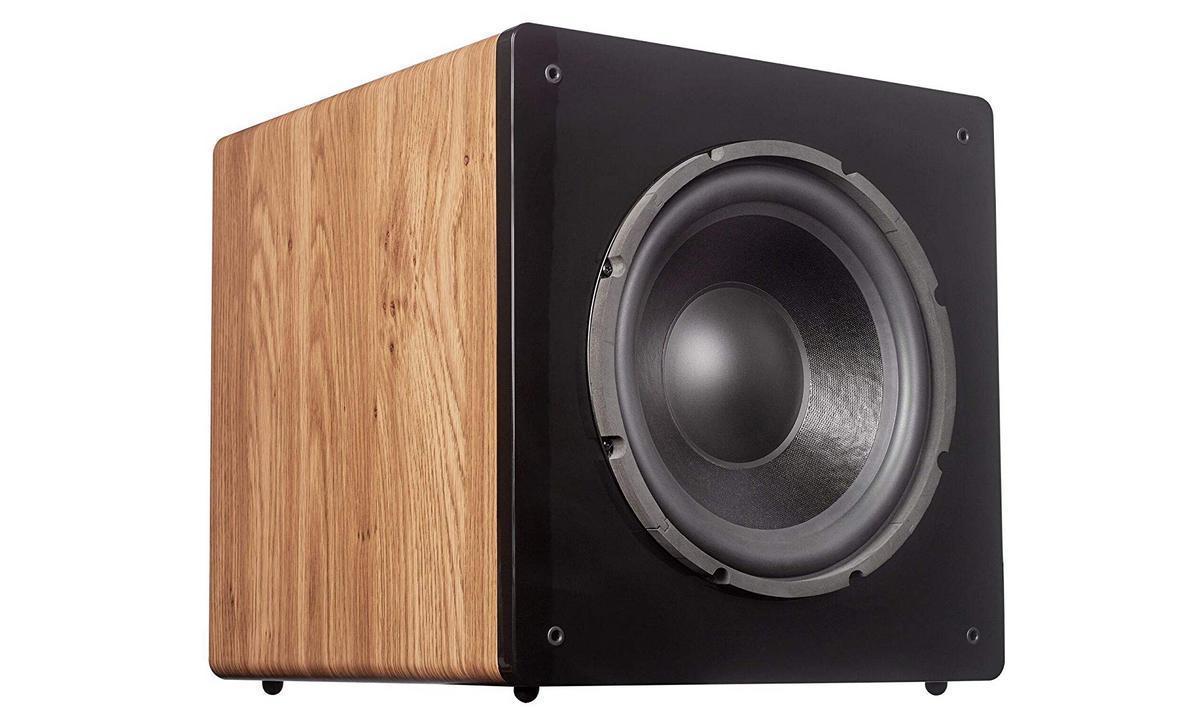
With the Dynavoice Challenger SUB-12 active subwoofer, the low-frequency soundstage instantly shifts from octaves of bass to a lower and more powerful one, and in fact this also enables wider adjustment options for the bass range. The price of a single Challenger SUB-12 subwoofer is approximately 449 euros.
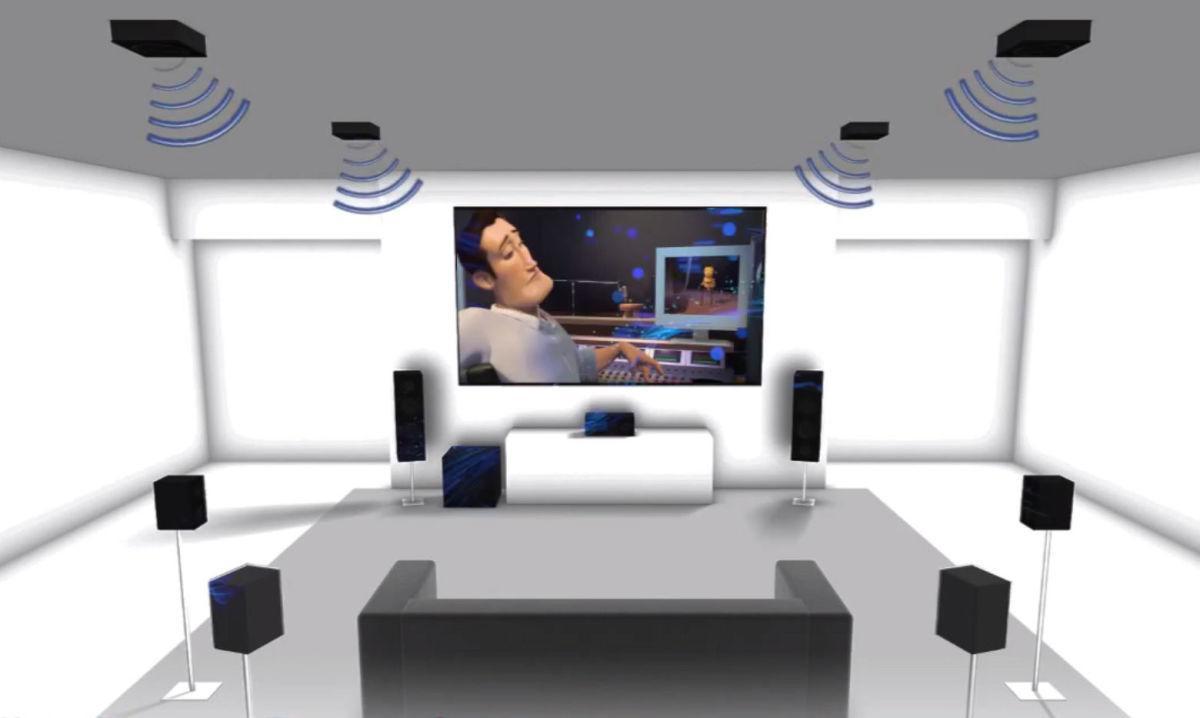
In the Atmos surround system, the sound world also moves above the listener.
In some speakers, this is done with ceiling-mounted speakers. The best and most appropriate way is to use speakers that are placed in the upper part of the listening room.
In the 7.2.4 system, therefore, one additional rear speakers and two pairs of ceiling speakers are required.
The Dynavoice S-5 surround speakers are a convenient and affordable option for this (199 €/pair). As a 7.2.4 system, even with two subwoofers, the price of the entire system would still be under 2,500 euros.
Most read today
Latest
Subscribe to the newsletter
Subscribe to our newsletter and stay up to date with the latest news in technology and entertainment electronics.
Survey
Quiz
Nokia phones
Related Posts

IN THE TEST: TCL 65C7L – Bright Mini LED with Wide Color Reproduction
TCL has invested heavily in Mini LED TVs in recent years and has also brought high brightness, rich local contrast, and comprehensive gaming features to clearly...
TCL Z100 and Z100-SW FlexConnect speakers – Easily almost like a real home theater
Dolby Atmos FlexConnect promises to solve one of the eternal problems of multichannel sound: the speakers don't need to be exactly in the right positions. The TCL Z100 speakers can...

IFA 2026 – these were the most interesting AV and technology innovations from Berlin
The Berlin IFA 2026 was not built around a single major announcement. TVs with RGB backlighting are making a strong entrance, soundbars are growing into full multi-channel systems, and projectors...
Sony expands the ULT POWER SOUND series with three festive speakers – flagship model delivers up to 2,150 watts
Sony has introduced three new ULT POWER SOUND series party speakers. The new products are the ULT TOWER MAX, ULT TOWER 7 and ULT...
Sonos updates its audio system with three new models – Beam Ultra, Ace Ultra and Sonos 27 expand the lineup
Sonos has unveiled two new audio devices and a next-generation software platform in one go. The new products announced in early September include the compact Beam Ultra soundbar,...
Monitor Audio revamped the Silver series after a five-year hiatus – seven 8G models for stereo and home theater
The long-lasting Silver speaker system from Monitor Audio has moved into the eighth generation. The new Silver Series 8G consists of seven models that can be used to build a traditional...
 Suomi
Suomi  English