
Huawei P20 flagship unveiled – triple camera, curved display and AI


Huawei unveiled the P20 and P20 Pro flagship smartphones yesterday in Paris. The most impressive feature is the camera technology. Behind the Pro model is a triple camera developed in collaboration with Leica, which is new in smartphones.
It includes a “monster camera” equipped with a 40-megapixel sensor and an f/1.8 aperture. A similar-sized sensor has been seen in the Nokia Lumia 1020 before. Other common features of the camera in that phone are also present, as the P20 models’ cameras use the data contained in the neighboring pixels to improve the image quality, just like Nokia does.
The second camera is also equipped with a respectable 20-megapixel sensor. It is monochrome and has an aperture of f/1.6. The third rear camera has an optical image stabilizer, a telephoto lens, an eight-megapixel sensor, and an aperture of f/2.4. The triple camera also offers triple optical zoom, and the hybrid zoom that uses all three cameras is five times.
The P20 basic model has a dual camera with resolution of 20 and 12 megapixels. The front camera is the same in both models, with a resolution of 24 megapixels and an aperture of f/2.0. The camera’s low-light capabilities are said to be better than before.
In video recording, Huawei joins the ranks of the Samsung Galaxy S9 and Sony Xperia XZ2 with a 960 fps recording speed in 720p HD quality. Similarly, in the P20, peak speed is achieved only in short bursts.
The addition of artificial intelligence to cameras is currently the trend for flagship phones. The smart features introduced in the Mate 10 Pro are now also present in the P20. The camera is able to recognize objects, dog breeds, dishes, and shooting situations, based on which it can adjust the photo settings. Additionally, the image stabilization function uses artificial intelligence, thanks to which it should be possible to take four-second shots from the wrist. The artificial intelligence function also aims to predict autofocus. The artificial intelligence function can be turned off if desired.
Common to the phones is, for example, the 18.7:9 aspect ratio, a fingerprint reader on the front of the phone, and the trendy notch at the top of the screen on the top models. The operating system is Android 8.1 Oreo, which is equipped with EMUI 8.1. The processor is the same as in the Mate 10 Pro, a Kirin 970. It is an eight-core processor and includes an artificial intelligence module. The storage capacity is the same in both models at 128 gigabytes, and it cannot be expanded with a memory card. The phones also support Dolby Atmos sound.
There are also differences. In the Pro model, the battery capacity is 4,000 milliampsh, while in the basic model it is 3400 milliampsh. The Pro also has an IP67 rating for water and dust resistance, unlike the basic model. Other differences between the Pro and basic model include the size and technology of the display. The Pro’s display is 6.1 inches and has an amoled panel with a resolution of 2240 x 1180 pixels. The basic model has a smaller 5.8-inch display with a resolution of 2244 x 1180 pixels, and its technology is rgbw LCD. The Pro has six gigabytes of memory, compared to four gigabytes in the basic model.
The phones will be available for pre-order today and deliveries will start on April 16. Prices are
P20: 649 euros. The color options in Finland are black, blue and pink-gold.
P20 Pro: 849 euros. The color options in Finland are the eye-catching Twilight gradient color: black and blue.
Most read today

Latest
Subscribe to the newsletter
Subscribe to our newsletter and stay up to date with the latest news in technology and entertainment electronics.
Survey
Quiz
Nokia phones
Related Posts

Philips The Roller and The Tube – Moving sound with its own style
Philips The Roller and The Tube bring back the 1980s boombox spirit without cassettes or radio. It comes with Bluetooth, a battery, Auracast, and...

QUESTION: How much are you willing to pay for a phone?
The development of phones has also changed the differences in price categories. Previously, features seen only in expensive models are now found in even cheaper phones. Therefore, the question is not...
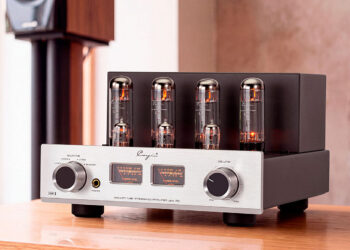
Cayin Jazz 70 – genuine tube sound and style at a reasonable price
The tube amplifier doesn't need to cost several thousand euros. The new Jazz 70 from Cayin brings classic EL34 tube technology, visible tubes, analog meters, and hand-crafted controls...

The use of artificial intelligence in music is growing rapidly, but there is still a lot to be learned about its use – at least in Finland.
Artificial music evokes significantly more reservations in Finns than the use of artificial intelligence in general. Artificial intelligence is rapidly becoming a part of everyday life, but the output it produces...

The new arrival of CDs is also reflected in devices – the Argon Audio CD1 is a new CD player priced at 399 euros
The arrival of vinyl records has been ongoing for a long time, and now a similar trend is also evident in CD records. Argon Audio responds to this interest with the new CD1 player,...

Audio-Technica ATH-AL5NC combines an open design and wireless connectivity – battery life up to 75 hours
Audio-Technica expands its range of open headphones with the ATH-AL5NC model, which is the manufacturer's first wireless open headphone. In addition to Bluetooth connectivity, it also features LDAC, noise reduction, and sound leakage...
 Suomi
Suomi  English