
In a quick test of the Sony LinkBuds: The human headphones surprise positively


In recent years, there have been a really large number of wireless headphones available. However, we rarely see bold solutions that stand out from the crowd in them. The Sony LinkBuds are an exception.
Text: Joni Nikkola
Photos: Manufacturer
Wireless headphones are now a big deal in the headphone market. They are being introduced by one manufacturer after another. The idea is the same in all of them: there is no wire running between the headphones, nor between the headphones and the playback source, such as a phone. Usually, there is also a charging case included, which has its own battery to provide extra power during trips. However, there are rarely any revolutionary solutions to be seen in the headphone elements themselves.
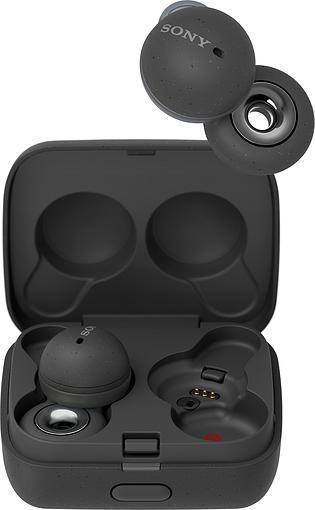
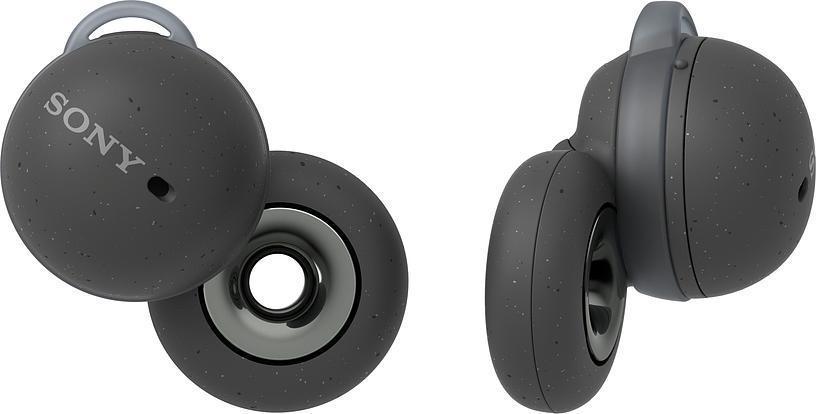
Sony announced in early January the rare special Linkbuds wireless earbuds. They have no traditional headphone elements and no protruding parts that stick out into the ear canal. Instead, there is a ring in front of the ear canal with a hole in the middle. Can such a design work?
Almost imperceptible
The weight of the Sony Linkbuds headphones is only four grams per piece, which isn’t much. The dust and water resistance rating is IPX4, which means that the headphones are resistant to water from all directions. However, they shouldn’t be dropped into a water trap or into a swimming pool.
The headphones’ own battery is promised to provide 5.5 hours of play time, plus an additional 12 hours with the case. During a meal or coffee break, you can get more playing time, as a 10-minute quick charge should add 90 minutes of playtime. The battery life isn’t exceptionally good in any way, but it’s more than enough for most cases.
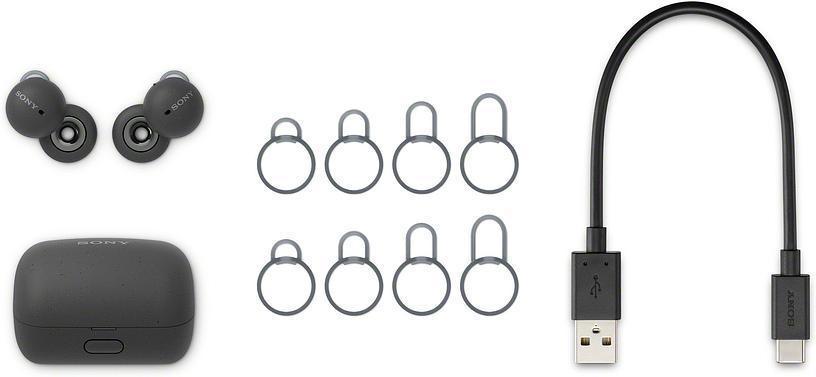
The headphones come with five different-sized ear adapters that can be used to support the earlobe. The package also includes a charging case and a USB charging cable. The sound quality of the calls has also been improved using machine learning and artificial intelligence. In machine learning, Sony says it used 500 million audio samples as learning material.
Persistence is doubtful
One important factor in earplugs is fit. There are many ways to improve it. One of the most reliable ways in traditionally designed full-wireless headphones is earplugs of different sizes. These allow the headphones to be anchored firmly in the ear canal. Especially in sports headphones, a strap running around the ear or a wing that supports the earlobe to help keep the headphones in place.
The LinkBuds only offer the support provided by the wings, as there is nothing to be crammed into the ear canal. Quietly sitting at home or taking a light walk feels sufficient, but when pushing harder the support feels a bit uncertain.
For example, for a cycling trip in the rain, I didn't feel like taking headphones with me. If one of the headphones spins into the ditch, there's no way I'm going to keep looking for it.
Otherwise, there are no complaints about comfort and usability. The headphones connect with the Sony Headphones app very conveniently. This app is also used, for example, as a companion to Sony’s popular noise-canceling headphones. The first time you connect, the app also performs a Reality 360 Audio calibration. This three-dimensional audio format has already proven to be beneficial in the past.
One interesting feature is the Wide Area Tap function. This means that tapping functions can be activated by tapping the front of the ear instead of the headphones. Surprisingly, it works really naturally. One would hope that this feature would become more common in other earphone models as it makes managing the headphones much more relaxed.
The sound surprises
I have to admit that the atmosphere before the testing of the LinkBuds’ sound was skeptical. Until now, the traditional headphone elements, which have won the competition, have not really been a hit in the in-ear headphones world. Often alternative playback methods such as neck speakers, sound glasses, and earphone wires have worked well in a limited range of applications, but there is still plenty of room for improvement when it comes to listening to music.
The LinkBuds managed to surprise with their sound quality, even though they don’t manage to beat even the best traditional headphones. The bass extends somewhat to the lower octave, although it’s relatively weak. The overall reproduction is quite high-frequency-rich, but the treble is relatively round in tone and therefore not tiring. With the equalizer in the Headphones app, you can still adjust the frequency response to your liking more.
The experience is different than with regular earplugs. The sound seems to come from further away than right from the ear canal or the immediate vicinity of the ears. The headphones are also not as accurate in terms of small positional changes as many earplugs that are placed in the ear canal.
The sound in its clarity somewhat reminds me of listening to headphones. The playback is also very smooth and natural. It’s not perfect, nor is it anything like flawless high-end audio, but it’s still better than average in terms of headphones sound.
The comfort level is also exceptionally good in terms of audio quality, especially when you don’t have to worry about headphones falling off. The headphones are really lightweight and almost invisible in the ears. When listening at moderate volume, you can hear the sounds of the environment perfectly. When listening a little louder, it was difficult to hear, for example, the wife chatting from downstairs. Many of the features speak in favor of office use.
Most read today

Latest
Subscribe to the newsletter
Subscribe to our newsletter and stay up to date with the latest news in technology and entertainment electronics.
Survey
Quiz
Nokia phones
Related Posts
Philips The Roller ja The Tube – Liikkuvaa ääntä ihan omalla tyyliillä
Philips The Roller ja The Tube tuovat 1980-luvun boombox-hengen takaisin ilman kasetteja tai radiota. Tilalla ovat Bluetooth, akku, Auracast ja...
Cayin Jazz 70 – genuine tube sound and style at a reasonable price
The tube amplifier doesn't need to cost several thousand euros. The new Jazz 70 from Cayin brings classic EL34 tube technology, visible tubes, analog meters, and hand-crafted controls...

The use of artificial intelligence in music is growing rapidly, but there is still a lot to be learned about its use – at least in Finland.
Artificial music evokes significantly more reservations in Finns than the use of artificial intelligence in general. Artificial intelligence is rapidly becoming a part of everyday life, but the output it produces...
The new arrival of CDs is also reflected in devices – the Argon Audio CD1 is a new CD player priced at 399 euros
The arrival of vinyl records has been ongoing for a long time, and now a similar trend is also evident in CD records. Argon Audio responds to this interest with the new CD1 player,...

Audio-Technica ATH-AL5NC combines an open design and wireless connectivity – battery life up to 75 hours
Audio-Technica expands its range of open headphones with the ATH-AL5NC model, which is the manufacturer's first wireless open headphone. In addition to Bluetooth connectivity, it also features LDAC, noise reduction, and sound leakage...
The Marantz MCR 60n combines CD, vinyl, streaming, and TV audio into one device
Marantz has introduced the new MCR 60 multi-functional device, which continues the manufacturer's long series of compact Melody systems. A web player, CD player, and...
 Suomi
Suomi  English