
In the experiment with iFi Audio Go Link: Give the headphones an extra boost

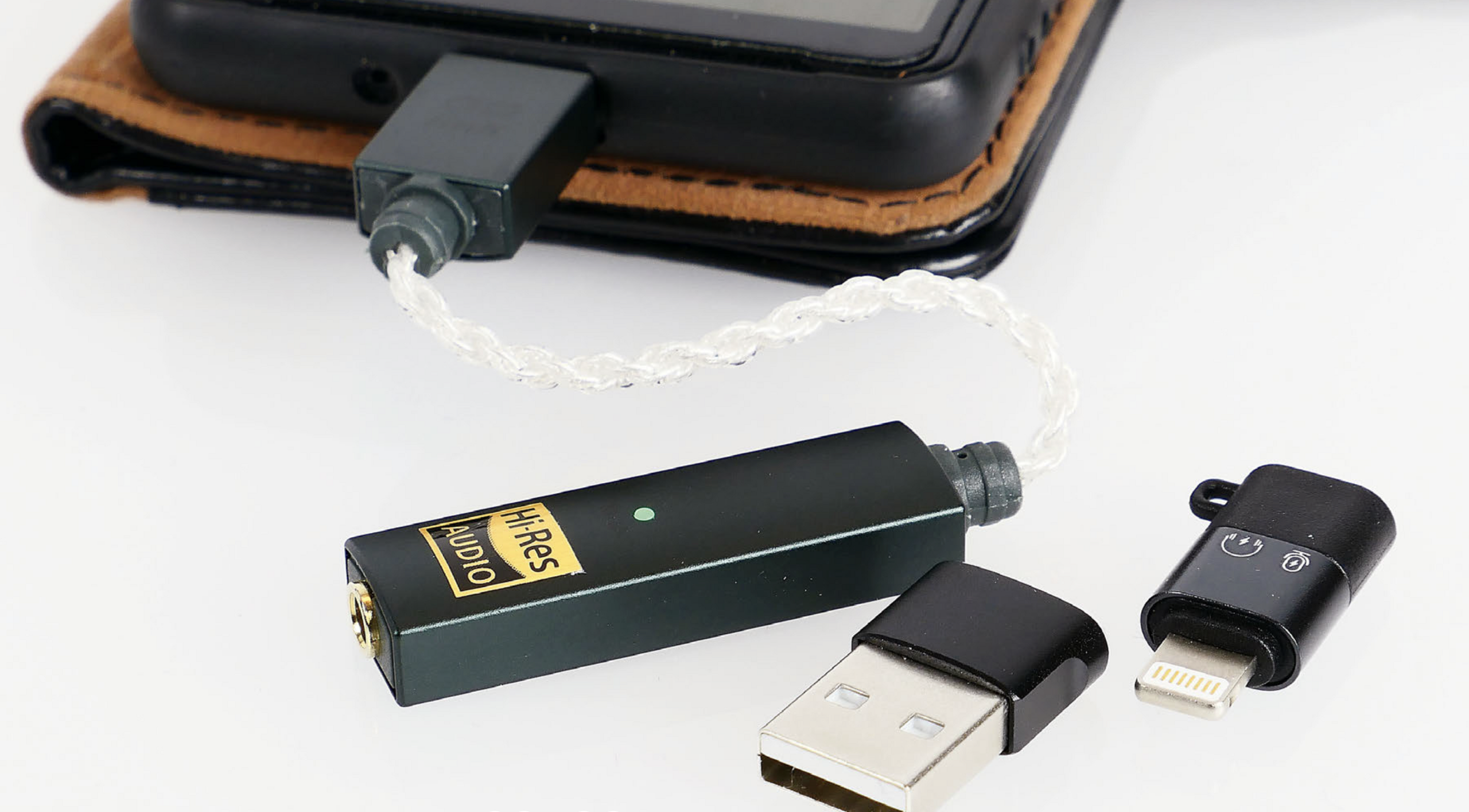
When you want to listen to wired headphones on your phone or laptop, a USB DAC and a separate headphone amplifier are a convenient way to upgrade the sound. One affordable but effective option is the iFin Go Link.
Text: Joni Nikkola Photos: AVPlus delivery and manufacturer
The headphone connections on smartphones and computers are usually not quite at the highest level of audio quality. Heavier hi-fi headphones usually can’t reproduce music in an optimal way with their power alone. On the other hand, nowadays even phones often don’t have headphone connections. If you want to listen to music with wired headphones, you will most likely need an audio amplifier.
In addition to the headphone connection, the DA converter is another bottleneck, especially in cheaper phones. Often, mobile manufacturers don’t even tell you what kind of circuit and quality the conversion takes place with. Accessory manufacturer iFi Audio recently introduced a pocket-sized Go Link headphone amplifier/DAC for both of these needs. The price is a modest 59 euros.
As a manufacturer, iFi Audio is known for its wide range of accessories for various types of hi-fi enthusiasts. Almost all of them are compact in size. The range mainly includes devices for use on the go or for desktop use, as well as various tools that promise cleaner sound quality.
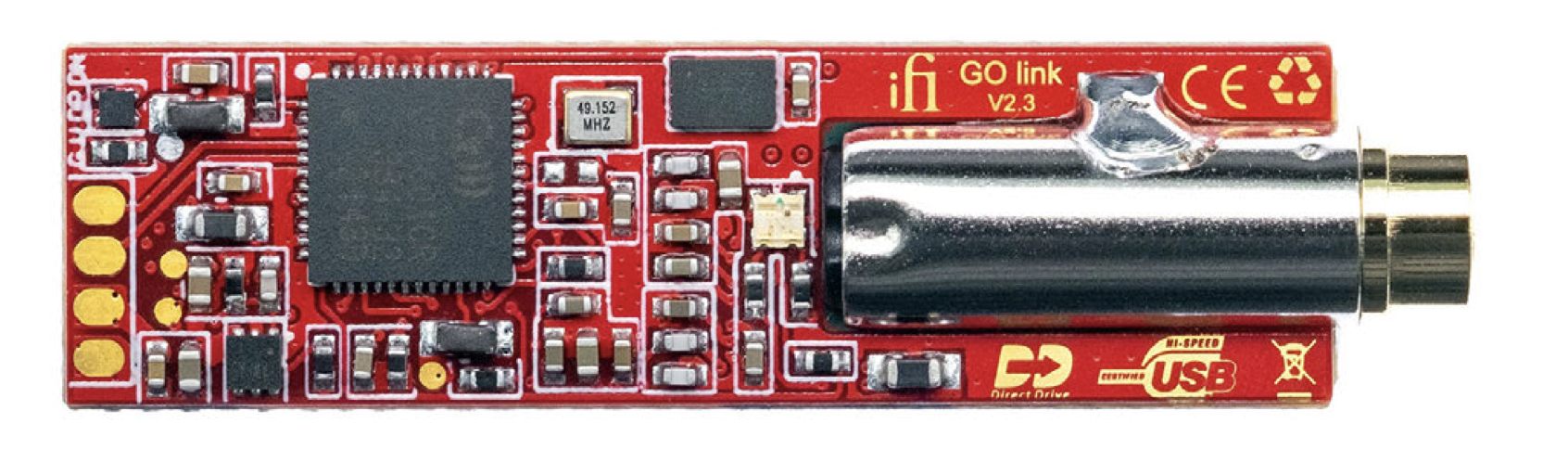
The conversion is handled by the ES9219MQ/Q circuit, which enables the device to support PCM playback in 32-bit and 384-kHz quality, DSD at 11.2 megahertz quality, and additionally dxd and mqa.
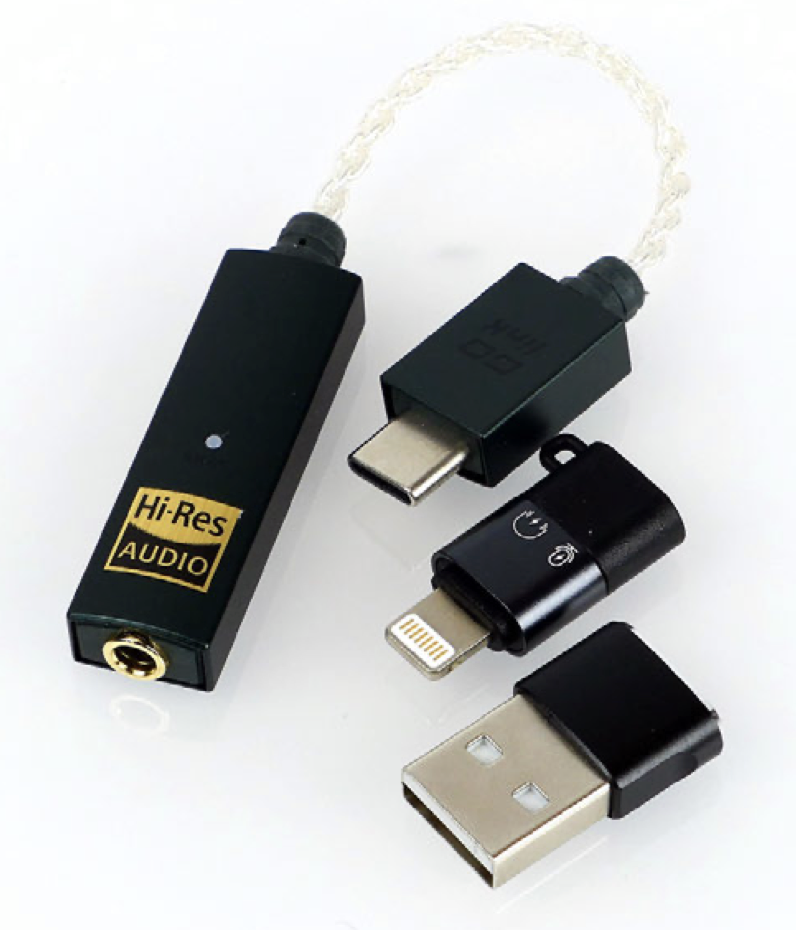
The Go Link, which fits in a pocket, is the smallest and most affordable iFin audio amplifier/DAC among the products. The compactness is further emphasized by the fact that the headphone and USB connectors are separate from each other, and there is a braided cable between them. In addition to the device itself, the package includes an USB-A adapter and, for Apple device users, a Lightning adapter. The USB connector is attached to a thick casing, so the phone’s protective case may have to be removed in some cases. However, this was not a problem with the silicone case for the Xiaomi Redmi Note 9.
The device is connected to the phone via USB-C, and there is a 3.5mm connection for headphones. Despite its small size, the device is capable of 32-bit and 384-kilohertz PCM audio playback, as well as DSD256 and DXD384 playback. MQA playback is also supported, which is used, for example, in the best Masters quality of the Tidal streaming service. The conversion is handled by the ES9219MQ/Q circuit.
Time Domain Jitter Eliminator technology is said to reduce jitter, or the irregular nature of the digital signal. The result should be less distortion, clearer sound, and a wider dynamic range. The signal noise ratio is said to be at least 125 dBA and the dynamic range at least 122 dB(A), which are both high numbers. The total harmonic distortion is said to be less than 0.004 percent, which is also a good figure.
There are no buttons or touch controls on the device. It is therefore extremely simple. Volume control is done using the computer or phone’s own controls, as is answering calls or controlling playback. The indicator LED shows the audio signal that is being played at any given time. The green light flashes when the PCM signal is played at 44.1–96 kHz sampling frequency, the yellow one at 176.4–384 kHz quality, the cyan one for DSD64 and DSD128 playback, the blue one for DSD256 playback, and the magenta one for MQA playback. The device played back high resolution and MQA files during the test, as it should.
Jatka artikkelin lukemista
Tämä artikkeli kuuluu AVPlus Extra -sisältöön. Jatka lukemista 1 krediitillä.
Login if you have purchased
Lukuoikeus artikkeliin
Tämän artikkelin lukeminen maksaa 1 krediitin. Lukuoikeus avaa artikkelin kokonaisuudessaan ja tallentaa sen käyttäjätilillesi. Alkaen 0,39 €Most read today
Latest
Subscribe to the newsletter
Subscribe to our newsletter and stay up to date with the latest news in technology and entertainment electronics.
Survey
Quiz
Nokia phones
Related Posts
Nothingin uudet Headphone (1) Pro -huippukuulokkeet kolmella elementillä – Ei varauksetonta etua
Nothing on esitellyt Headphone (1) Pro -kuulokkeet, joiden erikoisuutena on kolmesta erillisestä elementistä koostuva äänentoistojärjestelmä. Kahden perinteisen dynaamisen elementin lisäksi...
CD-levyt tekemässä paluuta? Musical Fidelity esitteli uuden B1xcd-soittimen
Suoratoiston aikakaudella myös perinteiset CD-levyt näyttävät kiinnostavan musiikinharrastajia uudelleen. Tähän kehitykseen uskoo ainakin Musical Fidelity, joka on esitellyt uuden B1xcd-CD-soittimen....
Audio-Technicalta lähes 3 800 euron huippukuulokkeet – japanilaista käsityötä ja uutta tekniikkaa
Audio-Technica on esitellyt ATH-AWX7000-kuulokkeet, jotka sijoittuvat valmistajan suljettujen kuulokkeiden malliston huipulle. Japanissa valmistettavissa kuulokkeissa yhdistyvät uusi kalvotekniikka, tarkkuusvalmistetut 58 millimetrin...
TESTISSÄ: JBL EasySing Mics ja Mic Mini – mikrofonit tekoälypohjaisella lauluäänenpoistolla
Nyt karaokelaulannan pariin pääsee helpommin kuin koskaan ennen. JBL EasySing Mics ja EasySing Mic Mini lupaavat poistaa tekoälyn avulla lauluäänen...

KOKEILUSSA JBL PartyBox 130 on ääntä tykittävä bilekaiutin – myös karaokeen
JBL PartyBox 130 yhdistää järeän äänentoiston, näyttävät valotehosteet ja monipuoliset liitännät vielä suhteellisen helposti mukana kuljetettavaan kaiuttimeen. Se soveltuu niin...

Motorola tuo Bosen äänen ja vastamelun 199 euron nappikuulokkeisiin – akunkesto jopa 37 tuntia
Motorola on esitellyt uudet Moto Buds 2 Ultra -vastamelukuulokkeet, joiden äänentoisto on viritetty yhteistyössä Bosen kanssa. Varustukseen kuuluvat kaksielementtinen hybriditekniikka,...
 Suomi
 English