
In an interview with MR Hifi – ”The merchant of experiences”

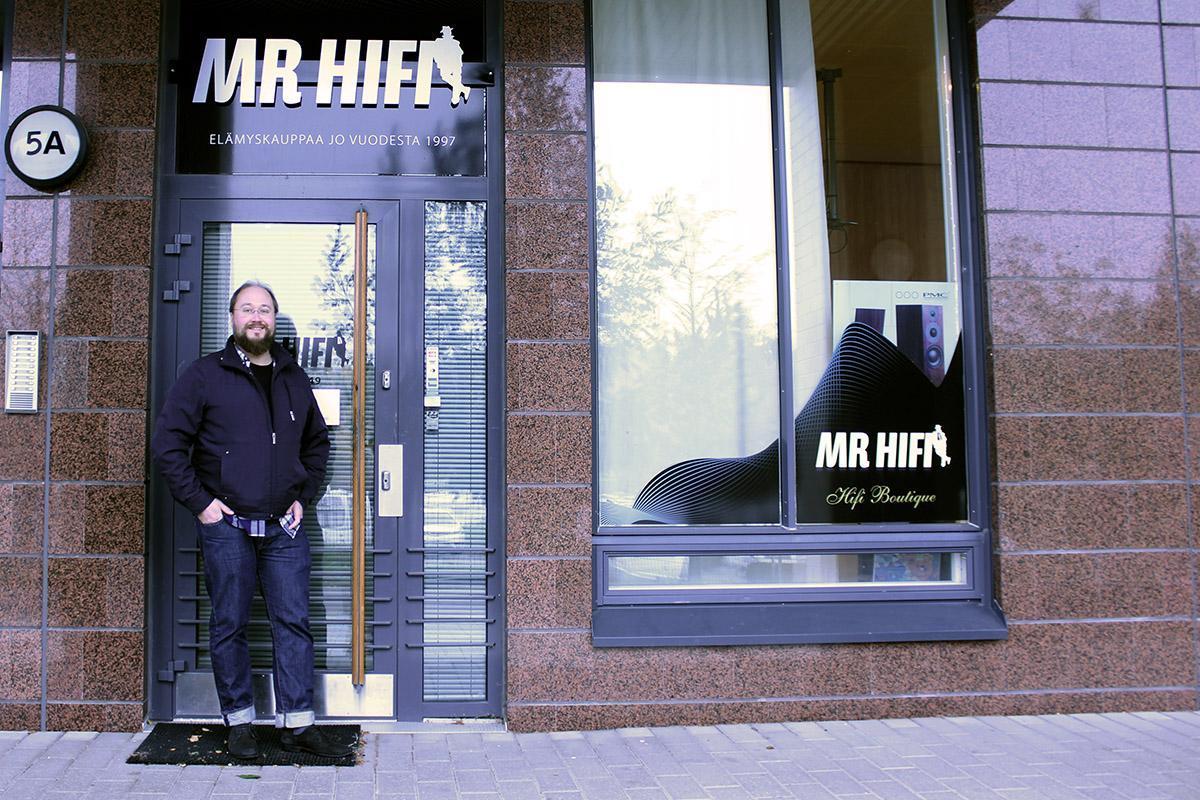
Mikko Raumanen has been running his business dedicated to uncompromising audio reproduction in Helsingin Rastila since 1997. Instead of selling just hi-fi equipment, his goal is to offer his customers something more technological – genuine experiences in music.
Text and photos: Heikki Kivelä
Rastila, part of Vuosaari, is located about twenty minutes by metro from the heart of Helsinki in a small-town-like and peaceful area with a history dating back to the Middle Ages. It is also home to MR Hifi, founded and run by Mikko Rauma in 1997, which is also known among customers as Mister Hifi.
The wings of history and modern high-fidelity audio meet each other every spring when the cabinets in the main building of the Rastila manor built in the early 19th century are filled with carefully selected products from MR Hifi. This year, for the fourth time, the manor event has become a tradition of going with the flow and using two channels – vinyl and super audio CDs.
Where did the idea for organizing such a unique event come from?
”The original idea came from the fact that there are hardly any similar trade events in this country that are done with meticulous attention to better sound quality., Mikko Raumanen sums it up.
The Kartanot event with its arrangements draws a large part of the resources of the entrepreneur who has been in the industry for 23 years, but the work is well worth it. Although nothing is sold directly at the event, the opportunity to meet new and old customers is a delight from Raum.
”Although it is said that no one listens to hi-fi anymore, still, last time we had four hundred hi-fi enthusiasts at the event, it was only for one Saturday.”
The actual implementation of the event has been carefully considered. For example, the manor’s reception rooms have had to be adapted not only to look good but also to sound good. This, in turn, has required the use of even creative solutions in some places.
”Even with home theater, you can do a lot. For example, a hundred empty Ikea cardboard boxes were taken to the large room for acoustics and they were trimmed to fit. The dempings were made with Konto’s wood products. The sound worked really well for the PMC Fenestrio and the large Brystone speakers.”
When we discuss the Kartano event, its atmosphere, and the visitors, one key aspect is conveyed in Raumasen’s words, which seems to warm the long-term merchant and expert’s mind:
”The visitors” incredibly passionate and intense presence at the event is amazing. When there is a love for a sport and a sparkle in the eyes, that’s the reason why I keep doing it.”
However, Raumanen himself does not initially admit to being a hifi enthusiast. It sounds incredible at first glance, given his history in the hifi world. But the reason for this becomes clear when Mikko explains his background.
Music first
If one theme stands out in Raumasen’s speeches above all others, it is ”music first”It’s no wonder that the path to becoming a record shop began naturally from the childhood home where I listened to music.
”Music was always present in our home. Both of my sisters played classical music, and my father always put emphasis on good sound, even though he wasn’t really a true audiophile. The separate devices from Tandberg he bought sometime in the 1970s made sure that I was exposed to a fairly good sound from a very young age. Vinyl has been around ever since.”
The real interest in audio equipment arose in the late 1980s and 90s. When Mikko was 15, he devoured music without prejudice, seeking out genres across all boundaries and following his own taste. After a while, with the help of his friends, he found a musical genre that resonated even more strongly than the others.
”My then best friend was a listener of progressive rock, so I had to go through all the possible prog bands, from King Crimson to Gentle Giant, from Yess to Pink Floyd and so on. The works of that era have become so deeply ingrained in me that they are almost sacred to me. For example, I don’t even want to use something from Pink Floyd’s Echoes in my demos, so that the magic of the band’s best record never gets lost.”
To the shop rat Raumanen moved from a point that is probably familiar to every music fan, even the most serious ones:
”I bought and sold devices to try them out, and at some point I realized, wait a minute, there’s something here that could stick with me for a lifetime. That became the vision that this could become my life’s work. Then I went straight into full-time retail on Valentine’s Day 1997.”
This was a kind of artistic outlet where the hobby turned into something else. Although a background in the hobby is essential for the work, according to Raumanen he can no longer look at the audio field without a commercial perspective. Professionalism has simultaneously brought strengths to the work but also made the hobby more difficult.
”The challenge of pursuing this hobby itself is posed by, for example, the fact that I am constantly exposed to such high-quality sound in this store – the audio enthusiast within me dies down quite quickly. If I go to somewhere where the playback quality isn’t particularly good, I can even get ill from it. I absolutely cannot tolerate, for example, impurities in the sound. Moreover, pursuing this hobby requires a certain independence, which is lost when it becomes a way of life.”
On the other hand, the experience gained over the years makes it possible for Raumanen to reflect on her own experiences in her daily customer service work.
”I remember being really vulnerable at the very beginning of my hobby. When you didn’t know what you wanted and what you liked, the whole thing was kind of a mess. I think of this as a kind of trial and error process. What I’m saying to beginners now could have far-reaching consequences in the future. However, I had a very self-driven attitude, so I was able to find my own career.”
The career Raumanen has had has taken him with it:
”Once you get hooked on a good sound, there’s no going back.”
But what is the secret to that great sound?
Ears forward, forward
What makes Mikko Rauma a rather exceptional hi-fi dealer is how he approaches the luxury audio sector he represents. In his opinion, the mere price or status does not dictate the quality of a device; rather, the background must be good and uncompromising audio quality.
”In my opinion, talking about hi-fi and high-end is boring. It would be better to simply talk about listening to music, playing music, and experiences. Who can make an expensive speaker, but does it necessarily have to be high-end? It all starts with deep, soul-stirring sound reproduction, which often just happens to cost a lot – or not necessarily, if the components are assembled correctly.”
According to Rauma’s view, ”the devices are slaves that serve the music agenda”From this starting point, every customer of MR Hifi has the opportunity to carefully explore the product of their choice before the stores open – either in the Rastila listening room or, if necessary, at home.
”Here we mostly listen to music and through that we do business. If the music doesn’t come to the core, then there’s no business there either. It’s not that complicated. And I think we should talk more about this. I understand the technical aspect, but that pretty quickly gets sidelined.”
Still, whether it was about the working principles of the speakers, different device combinations, or the differences between digital and analog playback, Raumanen calmly dispels both the technical-theoretical perspectives and his own opinions. Regardless of the device or configuration, one measure is always superior to the others.
”I evaluate everything myself with my own ears. I’m an independent, free entrepreneur, so I’m also able to sell and offer brands that look like me. Not everyone has to agree with everything. I strive to sell what I fully believe in and what I feel produces that particular feeling.”
What produces the exact right feeling is a more complex whole. However, certain basic elements are involved, and no device works without them:
”If we talk about the essential thing, that is, whether the soul of the music comes through the devices, then it’s either there or it’s not. It’s terribly difficult to define what appeals most to a particular thing, but maybe for me it’s a kind of realism, an acoustic presence. The sound has to be sensitive, and it has to come out quickly and spontaneously. This involves both repetition and rhythm.”
An example of proper discipline
What better way to get a small taste of Rauma’s ideal sound than to pause the conversation for a moment and listen to some music? The set, prepared in advance, consists of PMC’s Fact.8 floor speakers, Accuphase’s pre- and main amplifiers, and Melco’s high-resolution music library, from which Mikko selected music from Johnny Cash’s late-produced American series.
The first impression of the band's performance is a certain, confusing ease. There is an presence, sensitivity, and cohesiveness in the sound that not only emphasizes the charismatic fragility that characterizes the aged Cash's voice but also Rick Rubin's meticulously tailored production, which lacks no emotional intensity. The images are reinforced in the interpretation of Diana Krall that we are listening to next.
The ease and realism conveyed by the listening are, in part, precisely the qualities that Raumanen strives for in the products he represents.
”I want there to be some connection between that feeling of the listener being there in the performance space and the sound. I hate it when there’s too much fuzz or reverb in front of the sound, because then you have to strain to listen. But on the other hand, the repetition shouldn’t be too taxing either. The equation is tricky because the sound has to come out very articulately, sensitively, and quickly, but it shouldn’t be tiring. Of course, that requires a few things.”
While some consider the presence of repetition to be a natural part of the upper midrange, which in turn depends in part on things like the speaker's frequency response, the repetition profile in general, and even the room, Raumasen's perspective on the matter is more multidimensional.
”In my opinion, this is not just a matter of frequency range. And how would one even measure the most preferred sound? It’s much more than just the uniformity of the treble range or the bass range, for example. Of course, the measurement results have to be correlated at some level, but in my opinion they are not very interesting. There are actually many things that cannot be measured. Exploring just frequency range is simply simplifying things.”
With Raumasen on one matter, the subjective differences in sound quality are easy to agree with completely:
”There is no instrument more precise than the human ear and the brain, and sound is made with them.”
Different kinds of dreams
As far as the vision of Rauma’s ideal sound has evolved over the years hand in hand with technological progress, what would then be the definitive configuration of those dreams right now?
”If, for example, the best speakers in this room were mixed together, then the right one could come out of it. But that ideal probably doesn’t even exist yet, and probably never will.”
As the dream team is more closely examined, Rauma’s speech again fades away the essence of the sound of a truly dedicated hobbyist:
”I argue that with the perfect set, there is still a kind of compromise. Although the big PMC’s, for example, come very close to achieving what I think is the perfect one, I immediately think of their aesthetics. If we talk about the real dream-dream set, it should look different.”
From the perspective of the retailer, there are still surprisingly many people in Finland who are pursuing their dreams. Although the market has become fragmented today and people are investing their money in things like cars, home decor, and other hobbies instead of sound equipment, customers still come in who find music experiences to be the highlights of their lives.
This is shown by, for example, the sales of PMC speakers. The price tag for the manufacturer’s most affordable model is 2,500 euros, but the most expensive Twenty series, priced at around 9,000 euros, has been sold through MR HiFi.
”Even ordinary Finnish wage earners can buy sets worth 50–60,000 euros if they understand what they serve. This gives me hope that there are smart people and a group of music lovers in this country. It also makes me feel a little envious that I could also have a set like that in my own home.”
And what else does Raumanen dream about?
”Last summer my wife and I spent a month in Lapland. It’s a complete contrast to this. The dream is that we might get a place there someday.”
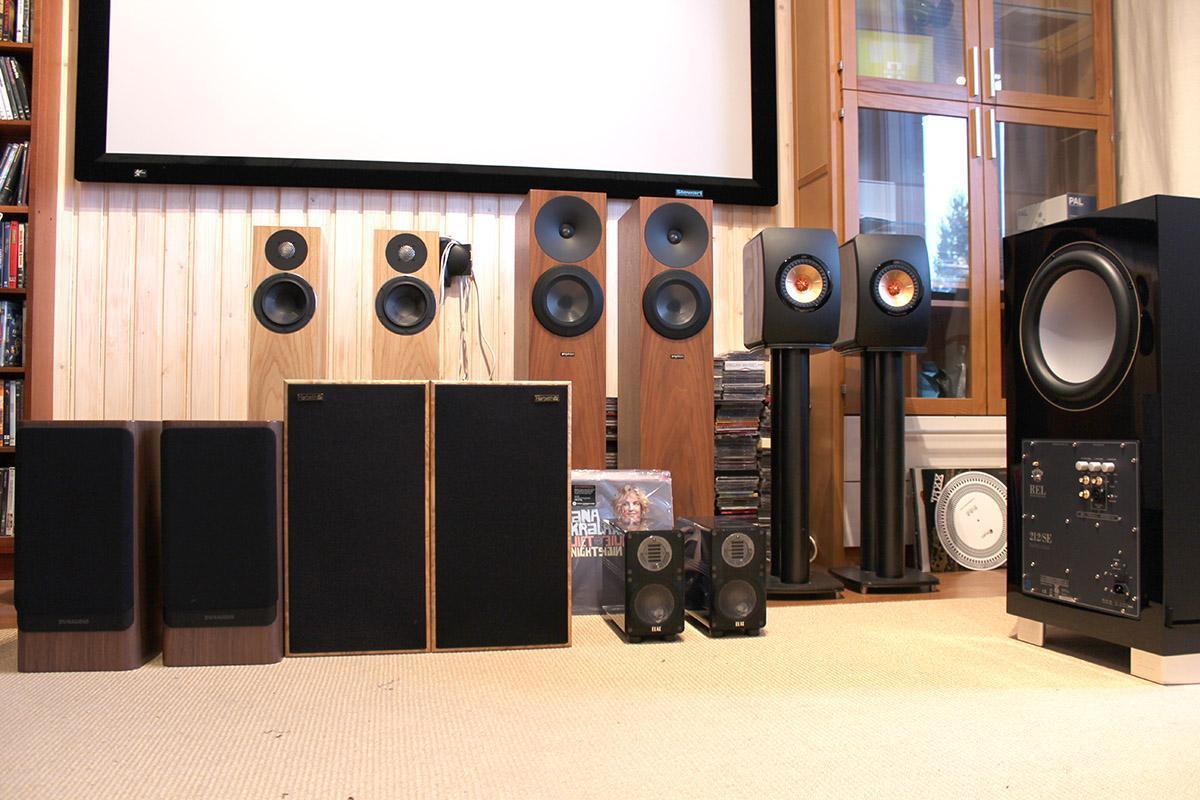
The loudspeakers featured in MR Hifi’s main showroom during our visit: Dynaudio, Harbeth, PMC, KEF, Amphion and Elac. On the right is the REL’s bulky 212SE subwoofer.
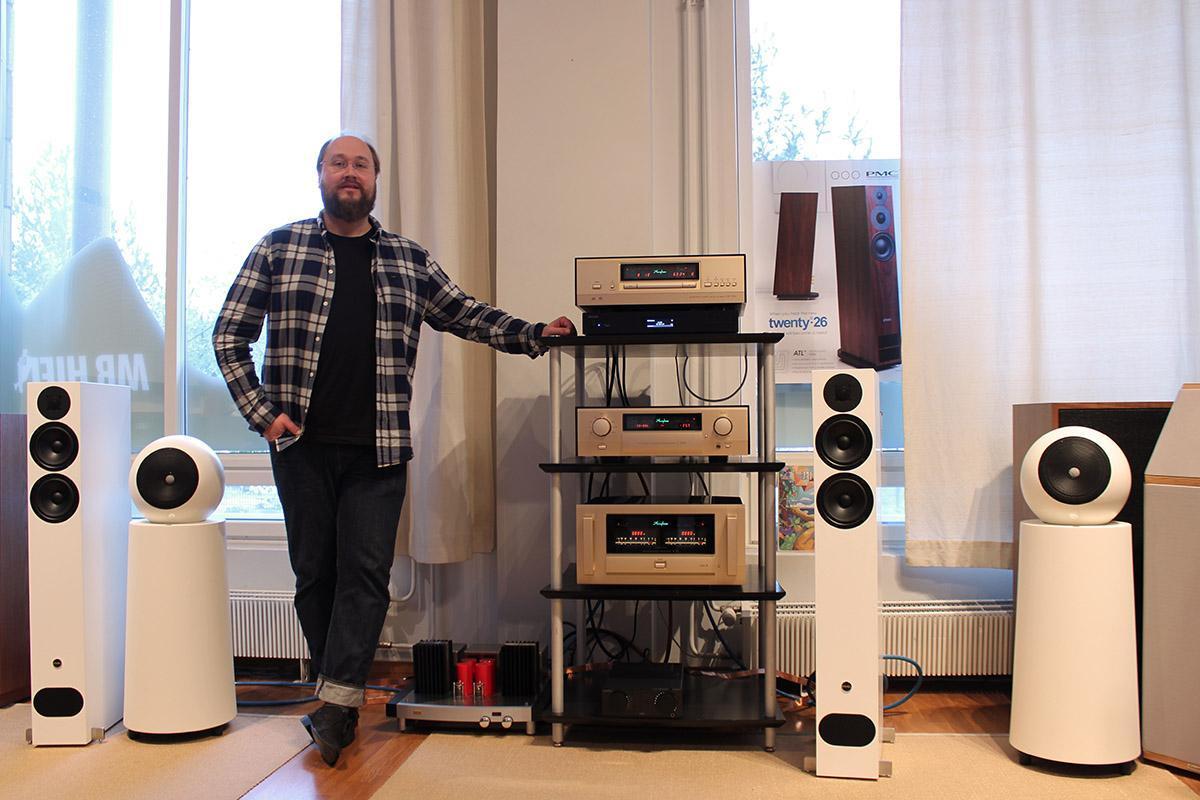 In Mikko Raumasen’s opinion, the ideas behind the repeat performances include sensitivity, realism and spontaneity. The PMC–Accuphase–Melco combo, which was roaring with power, provided a small taste of this.
Most read today

Latest
Subscribe to the newsletter
Subscribe to our newsletter and stay up to date with the latest news in technology and entertainment electronics.
Survey
Quiz
Nokia phones
Related Posts
Philips The Roller ja The Tube – Liikkuvaa ääntä ihan omalla tyyliillä
Philips The Roller ja The Tube tuovat 1980-luvun boombox-hengen takaisin ilman kasetteja tai radiota. Tilalla ovat Bluetooth, akku, Auracast ja...
Cayin Jazz 70 – genuine tube sound and style at a reasonable price
The tube amplifier doesn't need to cost several thousand euros. The new Jazz 70 from Cayin brings classic EL34 tube technology, visible tubes, analog meters, and hand-crafted controls...

The use of artificial intelligence in music is growing rapidly, but there is still a lot to be learned about its use – at least in Finland.
Artificial music evokes significantly more reservations in Finns than the use of artificial intelligence in general. Artificial intelligence is rapidly becoming a part of everyday life, but the output it produces...
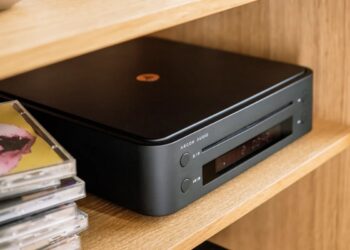
The new arrival of CDs is also reflected in devices – the Argon Audio CD1 is a new CD player priced at 399 euros
The arrival of vinyl records has been ongoing for a long time, and now a similar trend is also evident in CD records. Argon Audio responds to this interest with the new CD1 player,...

Audio-Technica ATH-AL5NC combines an open design and wireless connectivity – battery life up to 75 hours
Audio-Technica expands its range of open headphones with the ATH-AL5NC model, which is the manufacturer's first wireless open headphone. In addition to Bluetooth connectivity, it also features LDAC, noise reduction, and sound leakage...
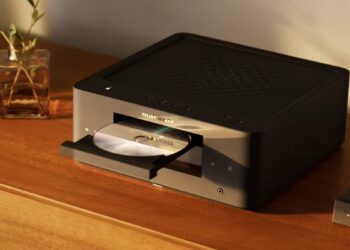
The Marantz MCR 60n combines CD, vinyl, streaming, and TV audio into one device
Marantz has introduced the new MCR 60 multi-functional device, which continues the manufacturer's long series of compact Melody systems. A web player, CD player, and...
 Suomi
Suomi  English